





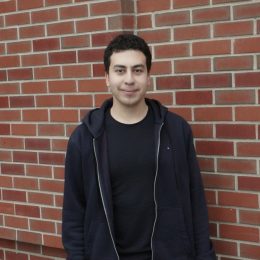
When I first arrived in the United States as an international student from Turkey, I found myself navigating a fascinating series of culture shocks.
I vividly remember sitting in a dining hall during my first few weeks at Binghamton University, listening to my peers passionately debate who would win the World Series. Initially, I assumed it must be a massive, multinational tournament involving teams from every continent. When I realized it was a domestic league played almost exclusively by North American teams, it made me smile.
It was a charming cultural quirk, but it also offered a profound realization. For many people here, the center of the universe is naturally and firmly drawn around their own borders.
Stepping inside those borders and onto an American college campus feels like entering a meticulously curated alternate reality. The United States represents just about 4.2 percent of the global population, which means that about 96 percent of the human experience happens under entirely different rules. Yet, within the invisible walls of the campus bubble, that outside world is often reduced to mere background noise, overshadowed by the immediate demands of academic and social life.
Nowhere is this isolation more visible than in our casual, everyday relationship with resources. Every morning, hundreds of students line up at campus cafes, casually swiping their cards for a $6 iced coffee before rushing to class. Looking at the broader global picture makes this daily routine deeply humbling. According to World Bank data, nearly half the world’s population — roughly 4 billion people — fights to survive on less than $6.85 a day. In many parts of the Global South, the price of that single, thoughtlessly purchased morning beverage represents an entire family’s total daily income.
However, this effortless relationship with small daily luxuries exists directly alongside the paralyzing, systemic costs of just being here. For an international student, the crushing stress of higher education carries a different, almost existential weight. We don’t just face the standard anxiety of U.S. tuition; we navigate significantly steeper out-of-state costs, often amplified by unforgiving currency exchange rates, without the safety net of federal aid. We justify these massive investments with the hope of building a secure future. Yet, as we prepare to enter an increasingly volatile market — where AI advancements and economic shifts are driving mass layoffs and scaling back entry-level hiring — that future feels incredibly fragile.
That fragility carries a distinct, ticking weight depending on where you are from. For domestic students, this job instability is a massive career hurdle. For international students, it is a ticking clock. A shrinking job market means fewer companies are willing to sponsor work visas, transforming a tough job hunt into a looming expiration date on our legal right to remain in the United States. The anxiety is no longer just about paying off debt. It is about the very real threat of having to pack up our degrees and leave.
Yet, as consuming as these personal and professional anxieties are, it is crucial to recognize that they still unfold within the safety of a highly secure, prosperous nation. There is a profound economic privilege in the fact that our absolute worst-case scenarios involve financial debt or visa expirations, rather than war, famine or total state collapse. When a society’s foundation rests on such massive economic and geographic security, it becomes dangerously easy to ignore crises outside its borders, breeding a unique kind of geopolitical detachment.
I recently came across a viral street interview online that perfectly encapsulated this disconnect. A young woman was asked about her thoughts on the escalating geopolitical tensions and the possibility of a war involving Iran. Her response was chillingly indifferent, stating that she didn’t care about global conflicts. Her only concern was which bikini she would wear to the beach the next day. It is a stunning display of privilege to be so shielded from global realities that the prospect of war is less pressing than beachwear.
This level of detachment reveals a fascinating psychological adaptation. When a society is protected from actual survival threats, the human brain subconsciously manufactures its own crises. We elevate minor inconveniences to the level of catastrophic events. We let a delayed online order, a briefly lagging WiFi connection during a crucial moment or a friend leaving a text message on “read” completely ruin our week. When you are raised in a culture that positions itself at the absolute center of the world, the slightest personal disruption feels like an apocalyptic event.
I point out this stark contrast not to invalidate the genuine pressures of college life or the very real fears about an AI-driven job market. Feeling stressed about your future is a natural human reaction. Nor is the goal to induce a sense of guilt, which is an unproductive emotion. Rather, viewing our campus lives through a global lens should invoke a grounding sense of gratitude.
Ultimately, realizing that the world does not revolve around our immediate environment is incredibly liberating. It lifts the suffocating weight of manufactured, artificial stress off our shoulders. Seeing our daily anxieties for what they truly are — a luxury born of geographic luck — allows us to approach our education not as a high-stakes survival mission, but as the extraordinary privilege it actually is. We should absolutely chase our degrees, navigate the changing job market and work tirelessly to build our futures. But occasionally, we need to pause, consciously pop the bubble, look beyond the 4 percent and redefine our place in the world.
Omer Mungan is a sophomore double-majoring in history and philosophy, politics and law.
Views expressed in the opinions pages represent the opinions of the columnists. The only piece that represents the view of the Pipe Dream Editorial Board is the staff editorial.