





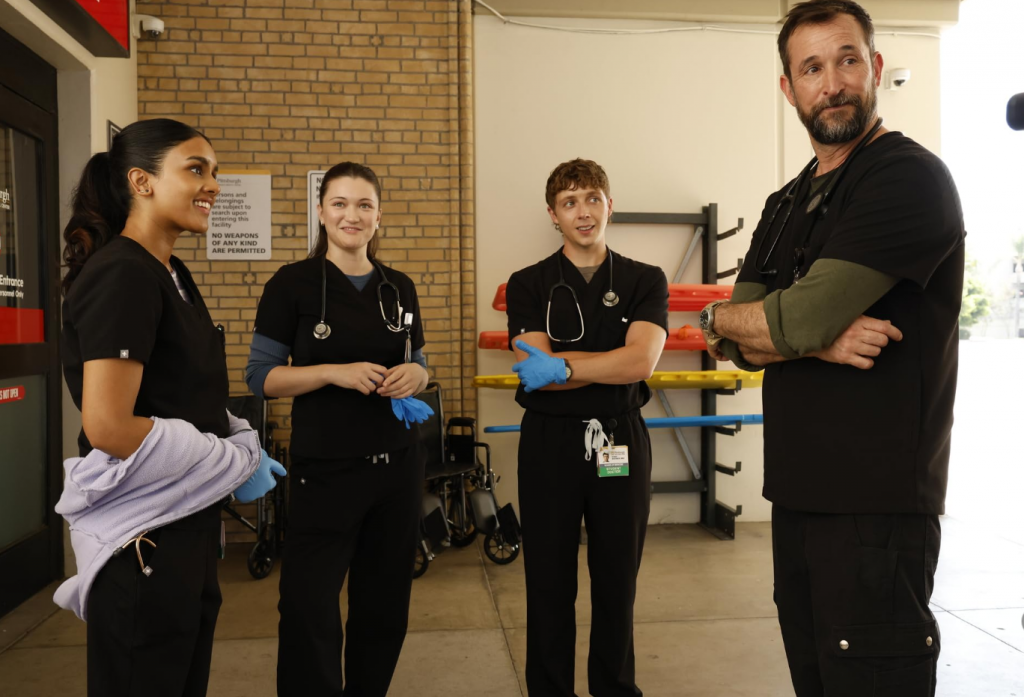
On Thursday evening, viewers clocked out of their second shift in the emergency room, following an emotional close to the season two finale of the hit HBO Max show “The Pitt.” After an intense 15-episode arc, fans of the show are left to reflect on the hard truths of emergency medicine and the importance of empathy.
The series follows former “ER” star Noah Wyle, who plays Dr. Michael “Robby” Robinavitch, the compassionate yet physically and emotionally burned-out attending physician of the emergency department at the fictional Pittsburgh Medical Trauma Center, dubbed “The Pitt” for its overworked and exhausted environment. The show’s selling point is its unique narrative style. Each season spans just one shift at The Pitt from 7 a.m. to 10 p.m., with each episode playing out in real time over the course of an action-packed hour.
Season 2 takes place on the Fourth of July, 10 months after the first season. Thanks to the summer heat, fireworks, barbecues and booze, this season hits the ground running with medical emergencies and interpersonal drama. With such a high volume of admits, it’s no doubt an intense first shift for The Pitt’s new class — including student doctors James Ogilvie and Joy Kwon, nurse Emma Nolan and attending physician Dr. Baran Al-Hashimi. Many beloved characters also make their return, including punchy charge nurse Dana Evans and senior resident Dr. Frank Langdon, returning for his first shift after a 10-month rehab program. Most importantly, however, is that this is Robby’s final shift before a three-month motorcycling sabbatical, deemed by many of his colleagues as a “spirit quest.”
“The Pitt” works so well for quite a few reasons. Its pacing makes it extremely engaging. The real-time episode structure perfectly reflects the high-intensity atmosphere of an emergency department, while still finding time for character development through casual chatter, heated arguments or emotional bathroom breakdowns. Weekly releases also help keep the audience engaged in conversation about the show each week, rather than letting viewers binge-watch the season, which causes discussion to quickly fizzle out.
The writing and production are also phenomenal. At its core, “The Pitt” is a medical drama. Unlike others in the genre, however, it doesn’t go out of its way to create elaborate or overly dramatic story lines. Each patient who enters The Pitt feels like a real person, perhaps one we may feel like we know or relate to. The show rarely shows patients without medical staff present, allowing the viewer to learn about and understand the patient in real time through the physicians’ or nurses’ eyes, shaping the narrative’s perspective.
“The Pitt” also receives constant praise for its extreme attention to detail and medical accuracy. From intubations to a hilar flip and even the long, hard work needed to treat a priapism, each scene feels authentic, never letting the viewers’ immersion in the hospital slip.
The show sheds light on important, yet often overlooked systemic issues, most notably through its depiction of a sexual assault nurse examiner. “The Pitt” tackles an issue that for too long has been avoided on television, emphasizing the emotional toll the meticulous forensic work has on both victim and provider. The writers refuse to back down from keeping viewers aware of these issues because, as Dr. Al-Hashimi says, “just because you know [the healthcare system] is broken, doesn’t mean you stop trying.”
The second season feels like a strong natural progression from the first, which perfectly reflects the chaotic nature of an urban emergency department, especially through the eyes of a first-rotation med student. Ten months later, however, both the newcomers and viewers have matured enough to see the cracks in the department’s foundation, shifting the focus toward the staff’s mental health. While this focus left some of the second season’s plot points feeling less resolved than the first, it was a perspective that was no doubt needed. Whether it’s addiction, loneliness, self-doubt, emptiness or dark, intrusive thoughts, each character on “The Pitt” struggles in ways that any viewer could relate to in some capacity.
Writing characters with such real struggles lets viewers know that they are not alone. Above all else, this season proved that empathy and understanding go a long way.
The second season of “The Pitt” is a raw, unfiltered depiction of the constant battles emergency healthcare workers fight day in and day out. With high-stakes medical emergencies, emotional heart-to-hearts, relatable moments of vulnerability and an excellently paced natural flow to the story, “The Pitt” stands out as a breath of fresh air for a genre that often falls short.
“The Pitt” is a must-watch for all, medical drama fans or not, as the second season explores not just healthcare, but what it means to be human.