





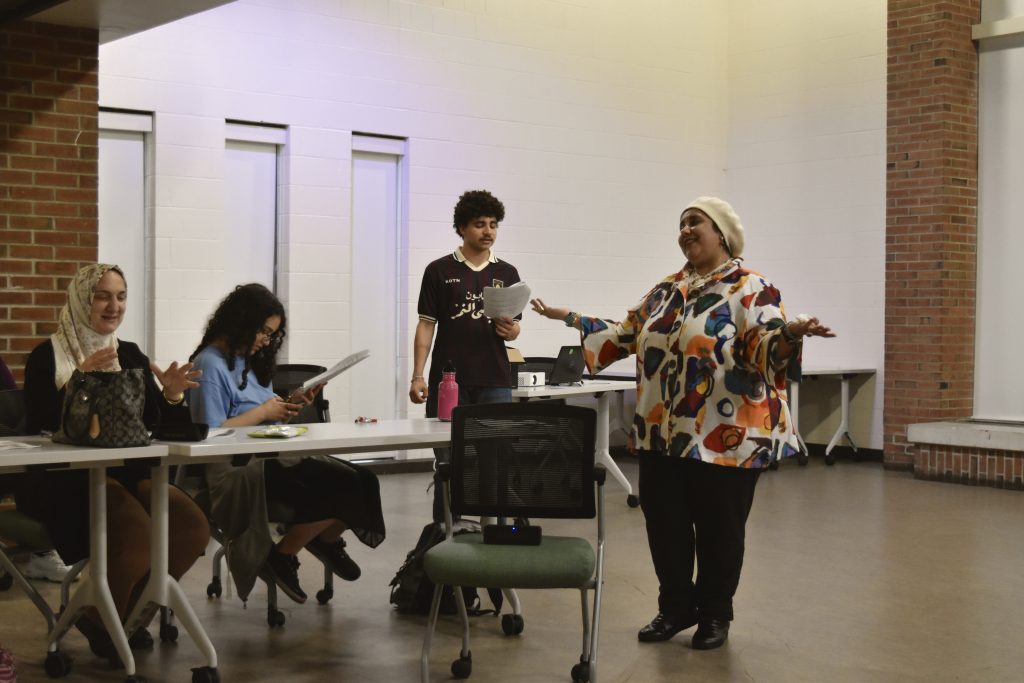
The Middle Eastern and Mediterranean Studies Student Association hosted its first-ever talent show on April 15 from 5:30 to 7 p.m. to promote awareness and appreciation of Middle Eastern culture within the campus community.
This semester’s talent show was themed around song and dance, primarily featuring traditional songs in Arabic, Persian, Hebrew and Turkish.
“This is the first event in which we incorporated all the languages, like Arabic, Persian, Hebrew and Turkish.” Farida Badr, a senior lecturer of Middle Eastern and Ancient Mediterranean studies and the faculty leader of this event, said. “And I was communicating with many graduate students in the Turkish department and also Dr. Omid in the Persian department, so we tried to make it happen and I think everyone enjoyed it.”
A total of eight songs were performed, with audience members encouraged to participate in the talent show. One particular performance of note was the Farsi song “Baraye,” a piece of music written to rally protestors part of the Woman, Life, Freedom movement, launched in 2022 in Iran following the death of Mahsa Amini, a Kurdish woman arrested by the Iranian morality police. The movement seeks to obtain greater rights for women within the country and Baraye has remained a vital part of their protest efforts.
This event marks one of the first events hosted by the newly formed MEAMSSA. The organization strives to introduce students to food, dance, songs and traditions and to potentially inspire them to become more involved with those cultures on Binghamton University’s campus and beyond.
For next semester, Badr hopes to host a Middle Eastern cook-off, celebrating the variety of cultures and cuisines that the University community offers. She also discussed the possibility of a cultural exchange program between University students and their counterparts studying at universities in the Middle East.
“For example, I have some students now studying medicine, so maybe they could join some of the students who are studying medicine in their countries and then they communicate with them through their languages,” Badr said.