





Has anyone ever just been sitting on the couch when out of nowhere, your dad drops the most insane story you’ve ever heard in your life? My dad has plenty of “dad lore” — stories that sound increasingly unbelievable the more you think about them.
But there was always one story that stood out to me — his experience at Live Aid.
As he told me during a phone call, “It was just an amazing day because it brought so many people together, and you’d look and they had the screen with London and then they’d have us in Philadelphia … they’d switch [the screens] back and forth between acts.” There were, of course, other details — but I’ll leave those out for the sake of professionalism.
A concert split between Wembley Stadium in Wembley, England and JFK Stadium in Philadelphia, and broadcast in real time across the globe, Live Aid became a massive fundraising effort for famine relief in Ethiopia. It brought together artists like Queen, David Bowie and Led Zeppelin, turning music into something far larger than performance. Around 72,000 people filled Wembley Stadium, another 89,000 crowded JFK Stadium and an estimated 1.5 billion additional people gathered around their televisions to watch the performances — nearly a third of the world’s population in 1985.
It’s the kind of thing that doesn’t sound real. So many people all over the world focused on one single moment simultaneously. I may not have been there to witness it myself, but I’ve heard enough dad lore to believe it actually happened.
That’s because creativity is one of humanity’s most powerful forces — not merely because of our capacity to create something out of virtually nothing, but because its impact extends far beyond ourselves.
I believe that Live Aid demonstrates what creativity is capable of at its best — fostering a collective experience where everyone involved can simultaneously feel and believe in something.
While that kind of collective experience used to be possible, today, the very idea feels unachievable. Not because creativity has disappeared. In fact, it’s the opposite.
We live in a digital age — a time that has fundamentally changed how we relate to creativity. The influx of content in today’s world hinders our ability to create. Why create something to call your own and risk it being imperfect when there’s an abundance of finished products waiting for you? This results in a mental block, producing a series of anxieties that prevent us from adding our own version of art to this world — a concept I will refer to as “creative hesitation.”
“You used to have to stand in line at a physical Ticketmaster location, which were located in various stores,” my dad said as he described how he got his tickets. There used to be a barrier to accessing content, whether that be standing in line for concert tickets or the responsibility of going to your local record store to purchase the newest hit album. Today, that barrier has been entirely erased.
Anything we want to watch, listen to or experience is available in an instant. Platforms like Spotify grant users access to millions of songs in their back pocket. Netflix offers thousands of movies and shows with the click of a button. TikTok delivers an endless stream of content at our fingertips. These are not necessarily bad things, but they do come at a cost.
Because content is both endless and instant, it often becomes easier to consume than create. As a result, creativity risks shifting from something we actively participate in to something we passively consume. And when fewer people contribute, the chance for shared moments narrows. That matters because collective experience is a fundamental component of what it means to be human. When that begins to fade away, a bit of humanity does too.
Furthermore, these platforms don’t stop at providing content. Algorithms, for instance, are tailored precisely to what we like to see. They are purposefully designed to study our habits and give us more of them. In doing so, each of us moves through our own stream of content, shaped entirely by past behavior rather than common experience. Two people can use the same app, but experience it in entirely different ways.
This results in two important effects. First, creativity has become increasingly individualized — shifting from what was once a shared experience to a more private one, limited to ourselves or smaller groups. Second, while algorithms are largely designed to learn our preferences, by extension, they are also built to keep us watching, reinforcing the very passivity that fuels creative hesitation. And the more we consume, the less opportunity we have to create anything ourselves.
As the world progressed, human creativity was forced to adapt. I’m not arguing that it shouldn’t have, but in adapting, we seem to have lost some of what had made that creativity special. Recently, I read Rick Rubin’s book, “The Creative Act: A Way of Being,” which I highly recommend.
“Creativity is not a rare ability,” Rubin writes. “It is not difficult to access. Creativity is a fundamental aspect of being human. It’s our birthright. And it’s for all of us.”
If it is our birthright, then we should have the capacity to reverse the effects of creative hesitation. And, good news, it doesn’t require a concert that a quarter of the world pays attention to — although that’d be cool. We can begin on a much smaller scale — writing an imperfect short story, playing an instrument poorly or even simply scribbling in your notebook while you tune out the lecture.
As for me, I think I’ll pick up my guitar and one of the very limited songs I know how to play, even if I mess up a chord a couple of times.
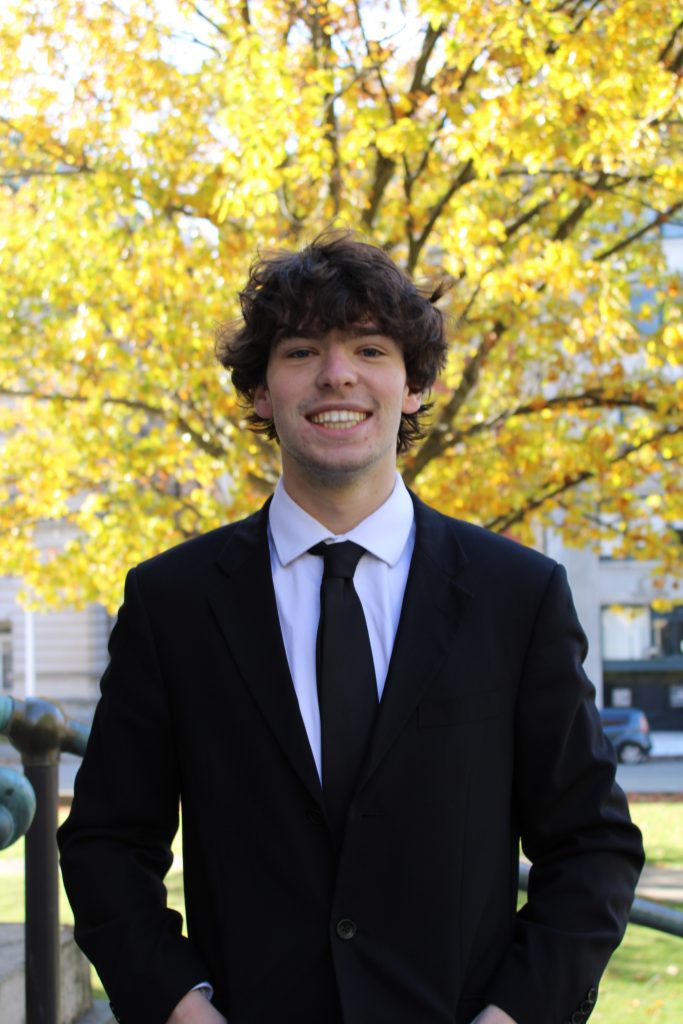
Ronan Goddard is a sophomore majoring in philosophy, politics and law.
Views expressed in the opinions pages represent the opinions of the columnists. The only piece that represents the view of the Pipe Dream Editorial Board is the staff editorial.