





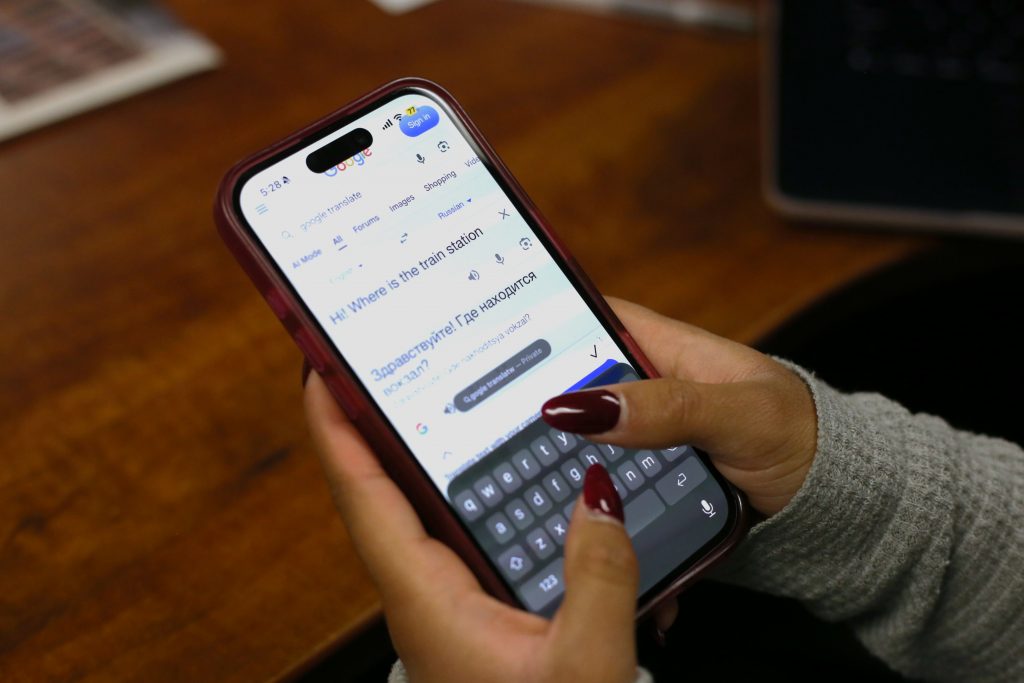
Studying abroad was an anomaly to everything I thought I knew. It was a unique blend of being a foreigner while slowly feeling like a local in a country I’m not from. Aside from embracing the European lifestyle — espressos, sun and streets older than some countries — I can safely say that I have learned something that will stick with me forever. Since my first day here, I have come to appreciate the importance of getting comfortable with being uncomfortable.
During my first month here, whenever I stepped outside, I felt like my verbal communication was stifled. Aside from my elementary Spanish, I was helpless. On top of that, Catalans dominated the Barcelona social scene, so I was even more of a lost cause. Walking along streets and neighborhoods where I couldn’t understand anything put me in a position as an obvious outsider, my worst fear.
I was embarrassed and confused — why did I come to Spain in the first place when I could have stayed with my friends in the comfort of my Hinman College dorm? My difficulties in communication led to uncomfortable moments where I’d end up with a cold, dry sandwich because I couldn’t figure out how to say I wanted it warmed up. I coped by only venturing out when another flatmate was acting as a buffer if I ever needed it.
I had never been placed in a situation where I couldn’t immediately adapt to my environment or its expectations. I guess that was my personal form of “culture shock.” I wanted to try practicing speaking Spanish, but I couldn’t handle the annoyed, confused expressions and worst of all, the pity stares. The pressure was on, and I didn’t know if I could take it.
But as I began exploring the city, I continuously had to put myself out there. I would recite a couple of introductory sentences before entering a store, then hope for the best. At first, I made it past the kindling of conversation, then completely bombed the rest.
But I started to like the challenge. So I did it again, and again and again. And what I realized was that some days — not all — it actually worked, and I could get through whole interactions without switching languages.
I began to like failing, because I was learning from the embarrassment and the confusion. I learned that when you are in enough situations where you are put on the spot, you adapt. The blank stares I was met with did not deter me from trying; it became my fuel to try even harder.
When you start from scratch, you have to trust yourself and let go of the little things. The thoughts that used to plague my mind — were my jokes funny, why did I say the sentence like that — suddenly fell to the back of my mind. And what a relief it was to not overthink every glance or smile and just be myself, because it truly didn’t matter in the first place.
Embracing defeat, admitting you don’t know and asking for help are the antithesis of every human’s ego, including mine. And revealing your hand of cards, so to speak, is embarrassing. But my lack of knowledge and understanding of the language provided me with a new connection to myself and how I perceive the world. Shedding these defensive layers led me to learn more than I have in any class. I was pushed out of the nest, and I had to either think fast or await the imminent thwack of face-planting into the ground.
Sometimes, what you need is not more practice, but to go out, try something new and fail — and fail a lot. Those moments where all the lines become blurred, and you can’t figure out what to do next, are the times when you transform the most. That discomfort used to send shivers down my spine, but maybe they were never shivers in the first place. Maybe it was my body signaling me to push forward to reach new heights. I am still trying to build a thicker skin, but now I can go into the process with a thicker skin and a couple of bruises. Getting lost in translation was how I found my way back to myself.
So, the next time you are confronted with choices, especially challenging ones, ask yourself, “Which one will let me grow? Or better yet, force me to grow?”