





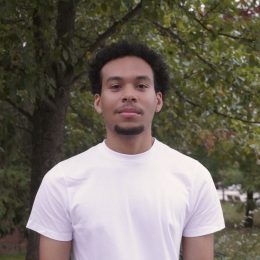
“This is some white people shit.” My father’s words linger in my head just as much as my mother’s fear for my safety.
This spring break, I flew to Los Angeles to meet with my friend Maxim to go rock climbing. He drove us to Joshua Tree National Park, a desert two hours from Los Angeles, covered in massive boulders and cacti. We have a history of mountaineering and hiking together, and for me, climbing was a new extreme of the outdoors.
I was excited to try climbing, but also hesitant. While learning the difficult process of top-rope climbing — tying in, belaying my partner and trusting the rope — I questioned how something this dangerous and technical could even be worth the fun. Yet I still felt drawn to it.
There was a creeping unease in my first attempt to climb. Before I could even mount the rock, I was consumed by a conviction that wasn’t my own. It wasn’t the risk of injury or falling that gave me pause, but an instinct to racialize this hobby as an Afro Latino with a voice telling me this isn’t for me.
It’s easy to trace that feeling back to a comment from my parents, but it really comes from years of listening and learning through the lens of my family, friends, media and peers.
My parents are supportive of anything I pursue. They mean no wrong with jokes about what white people get themselves into. They’re right — nature-based outdoor activities like climbing are dominated by white people with access to money and the privilege of pursuing dangerous hobbies. American Alpine Club’s 2019 climbing report found that, of 7.7 million participants, 85 percent were white. Growing up in a Dominican-Caribbean household, I was made conscious that I was not a white kid.
Sociology explains this influence as socialization — the ways the people and institutions that raise us teach us norms, values and, in my culture, who belongs where. To a younger me, extreme outdoor activities were a white man’s game. Leaving home, I involuntarily acquired attitudes toward race, despite having the agency to think and act for myself. These internalized messages only grew louder as I got older and started navigating spaces that felt foreign to me.
The nature gap is not just a social issue, but also a systemic one. Living in New York City, my closest connection to nature is Van Cortlandt Park and the Bronx Zoo. It’s challenging to connect to nature in New York City. The breathtaking views of upstate New York aren’t accessible by the subway. Feeling trapped in this concrete jungle I call home, and the culture of being socialized in an Afro-Latino household, nature feels farther than it actually is. Having had the privilege of studying abroad in Spain during my first year of college, I was introduced to mountaineering by Maxim and I finally got to answer the call of nature. I hiked cinematic landscapes in Portugal, Spain and Andorra — healing my inner child who wanted to explore the world beyond my local park.
According to analyses of federal data cited by the National Health Foundation and NC State’s College of Natural Resources, nearly 70 percent of visitors to national forests, wildlife refuges and national parks are white, even though people of color make up about 40 percent of the U.S. population. Surveys indicate that people of color have less access to parks, trails and outdoor recreation due to socioeconomic inequalities. Factors such as income, transportation, time off and access to gear all contribute to obstacles to participating in outdoor recreation.
When these barriers to the outdoors are paired with socialization that reinforces this segregation, hundreds of thousands of youth are discouraged from potential passions, bonding experiences and healthy relationships with the natural world around them. Traveling to these new places and meeting people in hiking shops, I felt a sense of community, but I also noticed who wasn’t there.
I felt a sense of pride seeing a lack of diversity at Joshua Tree, and acknowledging my presence as important only fueled my desire to climb. Eventually, I reached the top of a couple of boulders and was amazed at how thrilling and natural it felt. Learning the mechanics of safely belaying with Maxim took a lot of trial and error, but his patience — along with nearby climbers’ — supported me through it. It reflected a kind and inclusive community of climbers already present at Joshua Tree.
The learning process was tricky and high-pressure. Between the heat and the exhaustion of figuring it out, I questioned why I was pursuing this. It all began to click when Maxim poetically explained scrambling, a form of climbing that uses just your hands and feet. With his hand on the boulder, he showed how perfectly his fingers latched onto a hold of this rock.
“These boulders were made to be climbed by humans,” he told me.
Hearing the word “humans” opened my eyes to the fact that nature itself is indifferent to race, unlike the sports and social constructs created by people. Besides the primal urge to do dangerous things for the fun of it, his insight inspired me to view climbing as an experience that challenges what humans are capable of.
If the trees and mountains call to you, too, you’re allowed to follow and answer them. Even if you don’t, it may be worth a few hours to close your laptop, wander among the trees and maybe ground your bare feet in the grass. When we are pushed away from nature, we miss out on a connection that is fundamental to our spirit and well-being.
My presence, and that of any marginalized group, is important in these spaces, as the gifts of this planet are meant to be shared.
My new response to my father’s jokes is — “This isn’t some white people’s shit. This is some human shit.”
Nicholas Rubiera, a Pipe Dream Opinions intern, is a sophomore majoring in sociology.
Views expressed in the opinions pages represent the opinions of the columnists. The only piece that represents the view of the Pipe Dream Editorial Board is the staff editorial.