





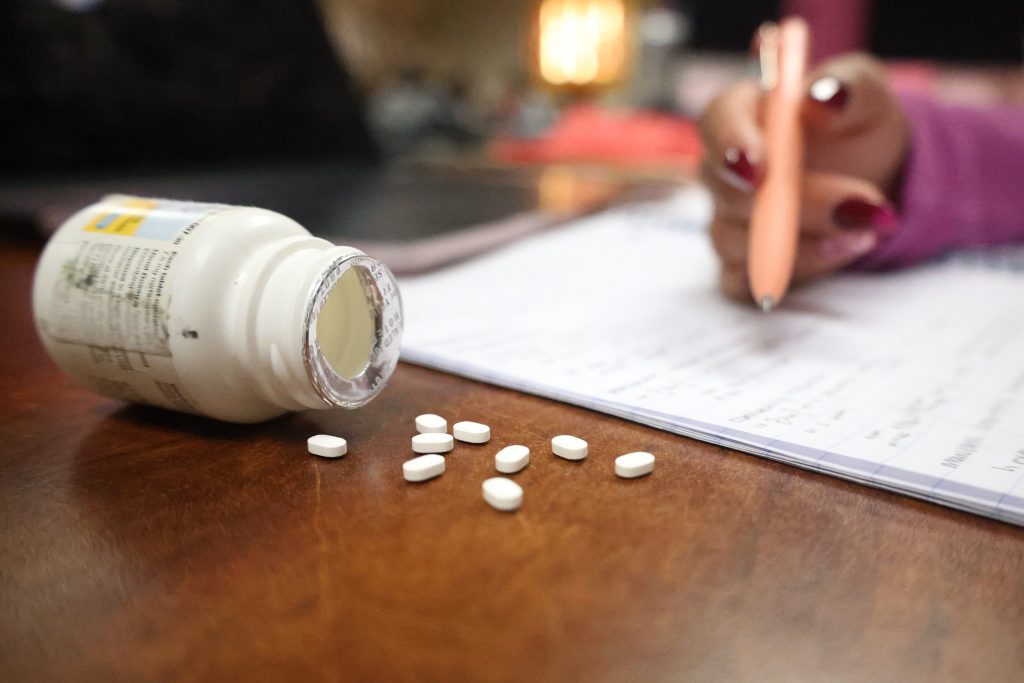
The use of “study drugs” to promote focus while tackling papers and exams has become ubiquitous on college campuses. Adderall, a central nervous stimulant prescribed to treat attention-deficit/hyperactivity disorder or narcolepsy, is commonly abused by students to increase productivity and academic performance.
In response to Pipe Dream’s informal drug survey, 28 out of 78, or approximately 36 percent of responders, said they have used Adderall, Ritalin or another stimulant before studying.
“I took Adderall at 10 p.m. the night before my chem final and could not sleep the entire night before it,” said one anonymous responder.
Binghamton Student Managed Adderall Research Team is a student-run research group focused on the abuse of study drugs and was founded in 2018 by Lina Begdache Ph.D. ‘08, an associate professor of health and wellness studies. Research from the group found that students who use Adderall as a study drug do so to promote concentration and determined that BU students often think Adderall is safer than caffeine, marijuana and cocaine because it is a prescription drug, Begdache told Pipe Dream.
According to a 2024 study led by Begdache, using study drugs can lead to addiction to cannabis, alcohol and other substances.
“Substance use promotes the release of the neurotransmitter dopamine, which is responsible for the initial euphoria and feelings of pleasure,” Begdache told BingUNews. “These sensations act as a positive reinforcement for further substance use. The continuous activation of the limbic system through drug use leads to dependence, in a sense that this substance is no longer producing pleasurable feelings. Individuals have to either increase the dose or resort to something more potent.”
B-SMART researcher Zachary Costanza, a sophomore majoring in integrative neuroscience, explained that college students are particularly susceptible to using study drugs.
“Ultimately, college is really the perfect storm for many of the risk factors that are associated with Adderall use,” Costanza wrote in a statement to Pipe Dream. “Students, especially here at Binghamton, face intense academic pressures, sleep deprivation, and an environment that often glorifies productivity at all costs. These factors, combined with the misconceptions that Adderall will improve academic outcomes, are exactly why stimulants get framed socially as an effective shortcut.”
Costanza described the various negative effects of adderall abuse for young people. Adderall increases dopamine levels in the brain, which “mimic[s] the effects of many other recreational drugs” and can eventually lead to a decrease in natural dopamine production. This can cause people to feel less motivation or focus overall, according to Costanza.
Chris Downey, the director of the University Counseling Center, explained some of the reasons University students might use stimulants.
“These may include academic pressure, attempts to improve efficiency, difficulty balancing energy and social/academic demands, self-managing underlying mental health concerns, concentration problems, euphoria or thrill-seeking, and cultural normalization,” Downey wrote in an email to Pipe Dream. “Study drugs can seem appealing as the impacts can be fast-acting and powerful, but their consequences can create short-term or long-term challenges and are rarely sustainable.”
The UCC provides resources for students struggling with study drugs, including a space to discuss the issue, identify healthier alternatives and perform a consultation for ADHD or significant attention problems. For students seeking treatment, the UCC offers individual counseling with an addiction specialist, group therapy and referrals to off-campus addiction service providers.
Begdache emphasized the dangers of reliance on Adderall as a study drug, arguing that it disrupts sleep, affects long-term memory and can permanently change brain function in young people. She recommends those abusing Adderall to “seek help right away” to prevent irreversible damage.
She also explained that because of the drug’s impact on long-term memory, its use might not result in improved academic performance.
“People take Adderall to improve their grades and we found that those who use it on a regular basis tend to have lower GPAs,” Begdache said.
While abusing study drugs can lead to dependency and other detriments to students, stimulants are often an effective treatment for certain conditions. However, even prescribed Adderall might have negative effects, Begdache added, and as a dietitian, she recommends physicians consider lifestyle factors before prescribing.
J. David Jentsch, a distinguished professor and chair of psychology and researcher of addictive substances, said that Adderall will have negative effects on anyone taking it, but in some instances, like for patients with ADHD, its positive impacts will outweigh the negative consequences. Dosage adjustments by medical professionals can also limit negative effects, he added.
“Any kind of prescription medication, there’s a reason they’re prescribed, because we need advice and consent in order to use them,” said Jentsch.
Editor’s Note (4/22): A previous version of this article listed Lina Begdache as an assistant professor of health and wellness studies. Begdache is an associate professor.