





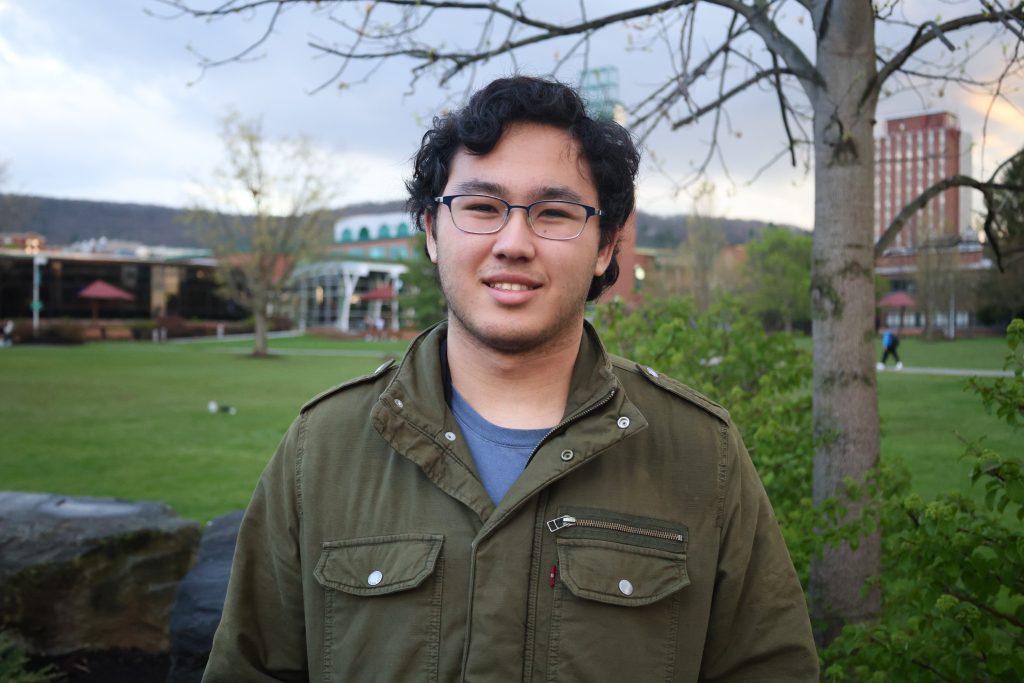
Compared to many of the other graduating seniors at Pipe Dream, I joined fairly recently — only a little over a year ago. Despite this, my relatively short time as a photographer at Pipe Dream has been one of the most formative experiences in my life.
Like most things in my life, I joined Pipe Dream on a whim. By that point, I had been pursuing photography as a serious hobby for a while, and I just so happened to be interested in photojournalism. “Might as well give it a try” was probably what was going through my head when I sent an email asking about open positions.
I began my work as a photojournalist woefully unprepared for the reality of the work. As a hobbyist photographer, I rarely ever had to talk to people, which reinforced my already shy nature. As a photojournalist, however, you often have to talk to people and ask a lot of questions. Not in the interview sense, but things like, “Hi, is this event xyz?” or, “What time does the event begin?”
Being too shy to ask important questions like that, I initially made a lot of mistakes. Even a year later, I still make mistakes, but forcing myself out of my comfort zone to talk to people and ascertain situations has made it so that I’m much less likely to mess up than before, and I’ve grown a lot more accustomed to talking to people I don’t know.
Working as a photographer for Pipe Dream also significantly changed the way I take photos for my own work. Before starting at Pipe Dream, my photos were very stylized, with significant editing in each photo —I used to say I liked editing more than taking photos.
However, photos taken for news work have to objectively portray what’s going on. Major changes to aspects such as an image’s exposure or color are explicitly not allowed under news standards. I quickly grew to appreciate the minimal — if any — editing of photos. While I still do like the look of edited photos, I’ve come to like the look of minimally edited photos just as much, if not more.
Another thing that was new to me at Pipe Dream was learning how to take photos of people. Until then, I was very uncomfortable with the idea of taking photos of people — I much preferred to photograph landscapes and cars. Being forced to take photos of things I wasn’t used to, such as events, sports and more, really helped me become comfortable taking photos of people. If my time at Pipe Dream hadn’t forced that growth, I doubt I would have the interest in portrait photography I now have.
My growth from my time at Pipe Dream is a result of forcing myself to become familiar with the unfamiliar and to push beyond my comfort zone. I know that everyone goes on about really forcing yourself out of your comfort zone, but I really do believe that it’s necessary for growth, both as an artist and as an individual.
Before I end my yapping, I’d like to thank the people whom I’ve met through Pipe Dream. Caspar and Jacob, thank you for teaching me the basics and really getting me started. Jared, thanks for being a great colleague and someone to talk to while I was still figuring things out. Abby and Emzie, thank you for running the photo department well during the past year. It was awesome working under you two.
I’m not a particularly good writer, so I’ll end things here. Being able to grow through my brief time here is something that I’m truly grateful for.
Kai Tucker, a senior majoring in geography, is a Pipe Dream photo intern.