





I’m currently stuck in a limbo.
One half of me feels like I’ve grown drastically from the beginning of the fall semester. My face has matured. I’ve started putting events on a calendar and keeping a to-do list. I’ve had to confront many things that make me uncomfortable. The other half of me feels like I’m still a high school senior.
I should be congratulating myself for my accomplishments, yet I feel like an empty husk going through the motions of daily life, rather than having intention in the things I do. The choice college provides between having a strict routine to keep up with the countless tasks and events, or freestyling it with room for adaptation and possibly for error, has been troubling me. The obvious choice would be the former, but is the sacrifice of “living” a fair exchange? I don’t mean to get existential in my last column as a first-year, as if I’m questioning who I am as a person, but I don’t think I’ve fully broken out of feeling like a robot since I’ve “locked in” on college.
Overall, I rate this school year a solid four out of 10. Now, let me explain my rating, but before that, I want to set a basis for it.
In statistics, we need to ensure a few criteria in order to have a valid experiment. All subjects must be under the same conditions, there must be a control group, we must effectively operationalize the dependent variable and we must test for confounding variables or underlying factors that may be affecting our results.
In my case, I’m going to be comparing myself at the beginning of the year to the end of the year, so a control group isn’t needed. For the conditions, I’m going to ignore things like my former roommate, who grumbled at us for the slightest footstep after he fell asleep, along with all the other variable experiences that can affect my rating that don’t happen to everyone. So, I’m just going to focus on two things — the fact that I attend Binghamton University and the fact that I’m a first-year student. I’m also going to focus more generally on the overall way a college functions, so I’ll be ignoring Binghamton-specific traits like health code violations in the dining halls.
By focusing on the overall way a college functions, I mean the way that college forces fast-paced learning, where you have to learn as much as you can for a course in the span of a semester. Outside of classes, you have to do at least nine and a half hours of work per week for a four-credit course. On top of that, you have to factor in extracurriculars and time to eat and sleep, all while trying to keep your sanity by doing the things you enjoy.
The reality is, I’ve never felt more simultaneously productive and lost than I have at college. There’s a certain illusion to college that it’s the time to carve out the direction you want to take. In a sense, it’s true that you can easily explore many things, but the speed at which it happens doesn’t feel meaningful and, at times, can feel like a waste of time.
Thus, the loss of devotion in a class you are interested in, for example, makes it just another task to manage. Even the gen-eds I’ve taken with high hopes and curiosity, I finish with complete indifference. At the end of all that burnout, labeling these classes as useful for developing life skills like critical thinking merely feels like a desperate attempt at justifying the time I wasted. I think college also just happens to be a point in life where people are exploring who they are anyway, painting the illusion that college is a catalyst for discovering oneself.
College has instilled in me the need to constantly plan ahead down to the hour and calculate how I’m going to allocate my time wisely. The short times I’m able to rest are filled with stress about upcoming assignments and exams. I’ve had to optimize my life for output, and the grades and achievements only serve for a small moment of satisfaction before I’m pushed back into the cycle.
I understand what I’ve said can and will make a lot of people angry, and that’s fair. I can’t shift all the blame onto a single institution. I chose this place. I choose how I balance my well-being with academics. You can definitely argue that I have agency to deviate from feeling like a robot.
However, I think when you’re put into a game with rigid rules, breaking said rules makes “winning” the game much harder. For instance, if I truly devoted my time to a class, my other grades would suffer, and, objectively, that’s a failure. On the other hand, if I were to follow the rules to a tee, I would’ve won the game in an objective sense. If I monotonously go through the motions of constantly focusing on my academics, my GPA and academic accomplishments will be the gold medal I’m allowed to show off. But, in a way, this just further turns people into machines that are made to follow a set of instructions.
I didn’t come to college to become an efficient doer. I came to college because I didn’t know what to do with my life, and college provided a buffer to help me decide before I joined the workforce.
So, that four out of 10? It’s a rating showcasing my role in this assembly line as the one on the conveyor belt. I’m allowing the college system to make me into a picture-perfect student ready for the “real world.” But perhaps it’s also a rating as a demonstration of self-awareness. I am acknowledging that there’s a problem, and I need to look for a way to find the position I feel most comfortable in.
As I finish up this semester, I’m taking it as a lesson to better understand how I want the rest of college to pan out. As I enter my summer break, I want to continue to understand myself better through exploring my hobbies, setting goals for myself and truly resting up. As I enter my sophomore year — well, I’ll deal with it when it happens.
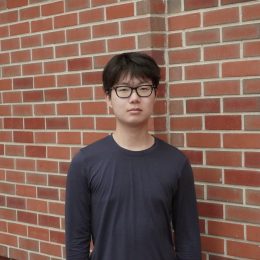
Joe Zeng is a freshman majoring in sociology.
Views expressed in the opinions pages represent the opinions of the columnists. The only piece that represents the view of the Pipe Dream Editorial Board is the Staff Editorial.