





As another fall semester begins, living in super occupancy housing continues to be an issue for some Binghamton University first-year residents.
Residential Life defines super occupancy housing as a temporary arrangement of three students in a designated double room, or three to four students in a lounge space. An extra bed and dresser are alloted to the room, and if the space allows, an extra desk, chair and wardrobe can be added. These super occupancy arrangements are designed to temporarily accommodate first-year students.
According to the ResLife website, these configurations are necessary due to high enrollment and the “very high percentage” of returning students choosing to live on campus. The University received a record-breaking 74,725 applications for the fall 2025 semester, with 61,200 first-year undergraduates applying, a 15.5 percent increase from last year. Over 3,160 freshmen enrolled in classes for the fall semester, a decrease compared to the 3,243 freshmen who enrolled in the fall 2024 semester.
“First year enrollment is not much different than last academic year and is not a driving factor,” Casey Wall, director of residential life and housing, wrote to Pipe Dream.
Wall said the ongoing construction around campus is responsible for the increased number of students in super occupancy housing. The renovation of Oneida Hall, a residential dorm building that housed first-year students in College-in-the-Woods, has decreased the number of available beds for freshmen on campus.
The building was shut down over the summer and is undergoing renovations to remove asbestos and install new flooring, ceilings and bathrooms. Construction is expected to be complete by the fall of 2026.
“The SOH we have been working our way through this academic year is directly correlated to the renovation project along with the continued demand for on-campus housing from students of all class years,” wrote Wall.
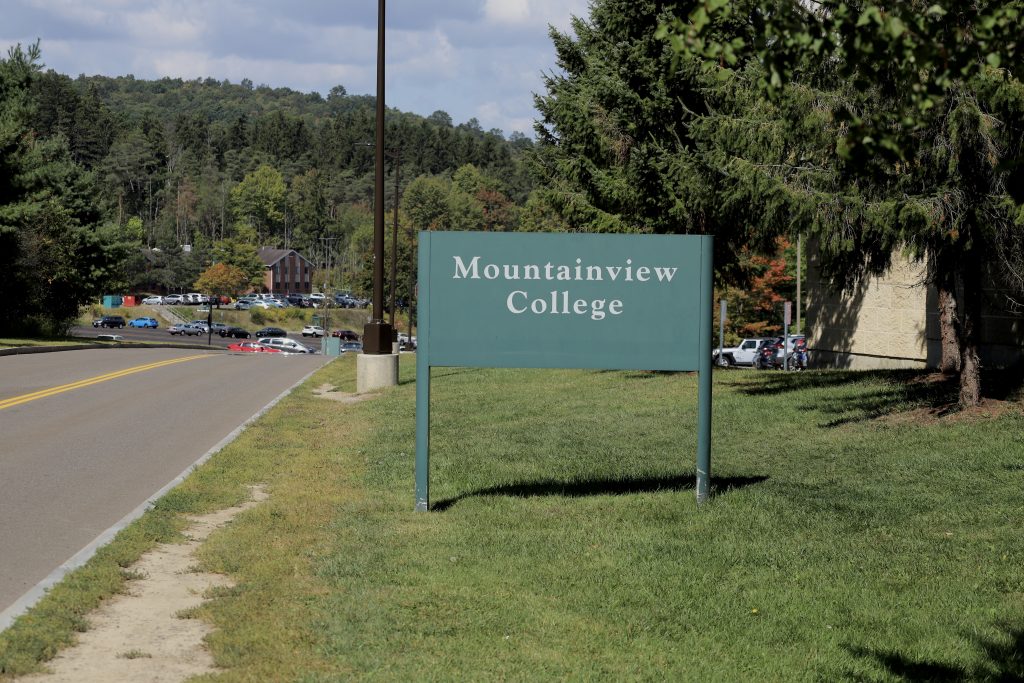
To accommodate the increasing demand for on-campus housing, a new residential hall will be built between Mountainview College and College-in-the-Woods. The project is expected to be completed by summer 2027 and will house about 350 students, alleviating some of the pressure on campus accommodations.
Angelina Ye, a freshman double-majoring in fine arts and business, has spent the first month of the fall semester in super occupancy housing in Old Rafuse Hall.
“Space is very limited in the room and you have to communicate and work with your roommates to make triple life work; this goes for what’s in the fridge, and sharing a desk, etc.,” Ye wrote in a statement to Pipe Dream.
Ye explained that her randomly assigned housing time slot was days after the housing portal opened, leaving her no choice but to live in a super-occupied room. She was told by her residential director that the situation was temporary and she would have to wait for standard housing to become available.
ResLife states that students in super occupancy spaces are the highest priority for being moved into standard rooms, with most typically relocated by the end of the fall semester. Students are assigned new living arrangements as soon as they become available, but those who wish to remain in their super occupancy housing are not required to move. The Reslife website claims that “that many students enjoy the arrangement so much, they choose to remain in a voluntary triple.”
However, not all students share this sentiment. Ye shared some of the struggles she faces in super occupancy housing, like using bunk beds and frequent power outages.
“Specifically in Old Rafuse, I feel that space is more limited when compared to dorms in new Dickinson, yet there are so many more triples in my building,” Ye wrote. “Every hallway has at least two triples in my building, which leads to problems of power outages.”