





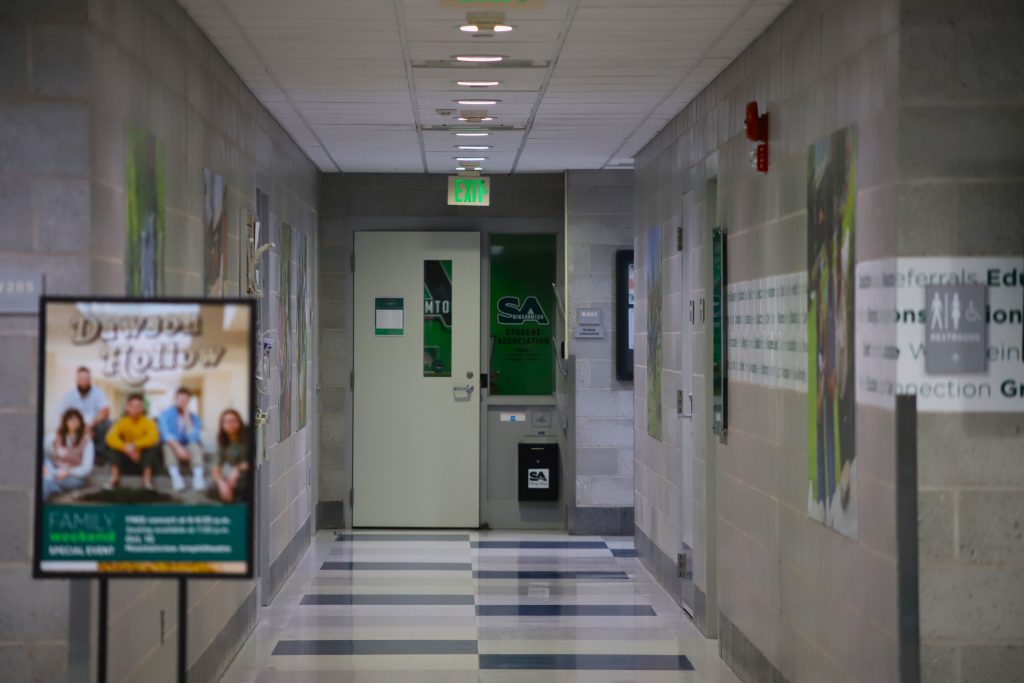
The Student Association will award $100 grants to some student organizations that make their emails more accessible to people with disabilities.
Throughout October, the SA will partner with the Vice President for Student Success office, Services for Students with Disabilities and the Disabled Student Union to host events for student organizations looking to increase accessibility in email messaging. Guidelines have also been posted on the SA website under its “Accessibility in Digital Media” page.
The required accommodations include: adding alternative text to any pictures or videos attached in emails; using descriptive subject lines; maintaining “sufficient color contrast” between the text and background; using simple, accessible fonts like sans serif; using headers for longer emails; and avoiding tables. Additionally, organizations are encouraged to test their emails with a screen reader to ensure accessibility.
The SA has previously released guidance on how to create accessible social media posts by things like adding captions on videos, minimizing emoji usage or capitalizing the first letter of each word in a hashtag.
“It is important students learn how to make these adjustments and put them into standard practice, so it will be easier to pass down this knowledge and emphasis on accessibility for the greater campus community,” Janmariz Deguia, the SA’s accessibility liaison and a senior majoring in human development, wrote in an email to Pipe Dream.
The accessibility liaison operates in the Vice President for Student Success office and helps connect clubs with other accessibility resources on campus.
In April 2024, the U.S. Department of Justice finalized a law requiring all local and state governments, including public universities, to ensure their web content and mobile apps are accessible under the Americans with Disabilities Act by April 2026.
From 2023 to 2024, about 2,310 Binghamton University students self-identified as having one or more disabilities, according to New York’s Department of Education. Of those students, 294 have a disability that requires them to use readers, note takers or instructional materials in an altered format.
Organizations wishing to participate in this accessibility campaign will be entered into a raffle. At the end of October, organizations will be selected and receive a $100 grant. The SA will vet all emails from those organizations sent in October to confirm that the winners followed the accessibility guidelines.
“The campaign is all about showing students how simple it is to make digital promotional materials accessible,” Kristina Donders, the current vice president for student success and a senior double-majoring in mathematics and political science, wrote in an email. “As the University works toward making all digital content accessible, the SA is committed to staying ahead of the curve and following suit.”
The SA plans to host presentations and office hours for organizations interested in learning these guidelines. These presentations will take place on Wednesday, Oct. 1 and Wednesday, Oct. 22, from 4 to 5 p.m. in University Union 122.
Beyond the SA, the SSD office coordinates accommodations in the classroom and around campus, working individually with students to identify their specific needs.
“Binghamton University is unwavering in its commitment to ensuring an inclusive environment for all students, including those with digital accessibility needs and/or disabilities,” wrote Christen Szymanski, the director of SSD. “For the past two years, SSD and the SA have partnered to raise accessibility awareness, and I am thrilled to see this continue.”