





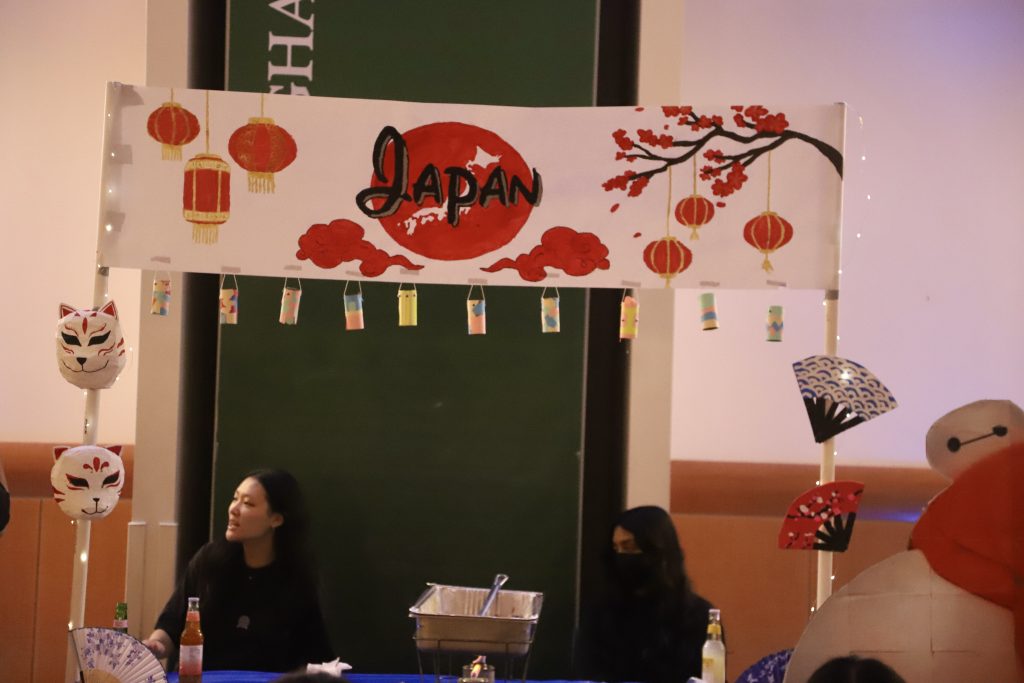
The Society of Asian Scientists and Engineers hosted its annual SASE Exchange event on March 22 in Old Union Hall. Themed “iPad Nostalgia,” the event showcased a variety of Asian cultures with sponsors from Moshi and Emerging Technology Studios.
SASE’s national organization was founded in 2007 to provide a space for those with Asian heritage to explore careers in STEM. SASE expanded to Binghamton University in 2011 and has since been a beacon for aspiring professionals and those seeking a welcoming community on campus. The SASE Exchange, a fair-style event, showcased a variety of countries in an afternoon full of food, games and prizes.
“From my time as a freshman ambassador, event coordinator, to president, SASE Exchange has always been my pride and joy,” Christian Tai, president of SASE and a senior majoring in mechanical engineering, wrote in the event pamphlet. “The sense of family and teamwork built during these past years have been truly unforgettable. I hope our community here can feel our love for this event the way I do.”
Jenina Dinh, secretary of SASE and a junior majoring in mechanical engineering, highlighted how this year’s theme brought together a diverse Asian community through common childhood experiences. The theme in question was inspired by early mobile games, including Cut the Rope, Where’s My Water and Angry Birds.
“This year, our theme is iPad nostalgia, and that stems from old iPad games and the childhood nostalgia and fun of being a kid in the 2000’s,” Dinh said. “Every country is based off of a different iPad game that is really common, and people have a fond memory of.”
For South Korea, SASE chose gonggii, a common childhood game involving tossing and catching small stones, while Indonesia had engklek, a “hopscotch-style game traditionally using stones.” Mongolia was represented by archery, as it is one of the “Three Manly Games” alongside wrestling and horse racing— all a part of the annual Naadam festival, a celebration of strength and skill that dates back to the time of Genghis Khan. These nostalgic games align with the pixelated ones showcased in the decoration all around the event.
Attendees also participated in a scavenger hunt, tasked to take photos playing each of the games and posing with a giant iPad and decorations of Taipei 101, a landmark skyscraper in Taiwan. After completing the scavenger hunt, students were placed into a raffle for the chance to win an iPad A16, a karaoke machine and a Squishmallow.
Over the years, the SASE Exchange has grown to highlight communities that are not always at the forefront of cultural conversations. This meant that countries like Mongolia, Malaysia and Indonesia were given their own booths alongside more well-known nations like South Korea, India and Taiwan.
Sunnie Pao, treasurer for SASE and junior majoring in biomedical engineering, told Pipe Dream that the organization has made strides to represent a variety of countries since her first year as a member. She said that this year was “a good mix” of both widely known and underrepresented countries.
This effort was shown in the home-cooked food provided by SASE, reflecting the culture of the featured countries. The extensive process of making the food themselves proved rewarding as they learned first-hand how to cook these traditional dishes.
“We wanted to be authentic to each country,” Pao said. “I don’t think it would be really fun to be like, ‘Hey, we’re gonna represent Malaysia! We’re gonna serve you fried rice,” you know? Like, that’s not very Malaysian. So, we researched each country’s main, most popular dishes and tried to find dishes that we could replicate to some extent.”
Ultimately, the dishes chosen were braised cabbage from Taiwan, chicken satay from Malaysia and nasi goreng from Indonesia. Aside from food, the countries were represented through a variety of games guests could play for the opportunity to win an iPad, karaoke machine and Squishmallow.
By highlighting the little things that bring people together, SASE hopes to foster community through sharing culture.
“I just really hope people get to learn more about different countries,” Dinh said. “I feel like, personally, a lot of people know about the very common East Asian cultures — which is amazing — but just highlighting underrepresented cultures that not everyone knows about or might not know the history and background about is really great.”