





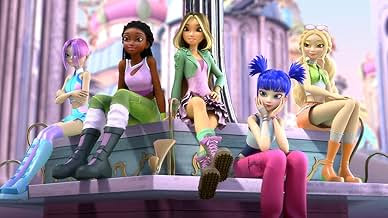
The first half of “Winx Club: The Magic is Back” was released internationally on Netflix on Oct. 2, rebooting the original “Winx Club” (2004-2019), a modern fantasy saga revolving around the friendship of six fairy girls who use their magic to fight evil.
The series shares creator Iginio Straffi and his production company Rainbow S.p.A with “Winx Club,” with the reboot debuting with a new 3D, CGI animation style primarily done by Hampa Animation Studio. As a result, the show captured the bright, feminine, fashionable and whimsical essence of the original, unlike the dark and broody live action adaptation “Fate: The Winx Saga.”
Fans, eager to defend the original show, quickly expressed outrage against the animation, redesigns, plot and alleged use of AI in the reboot. Although the reboot has some successes, it was vastly overshadowed by its many failures.
In streamlining the storytelling and introducing many characters right from the beginning, the plot overall lacks complexity, seemingly dumbing it down for children. This is epitomized by a new character, Damien, who serves as a cheap and uncreative way to sidestep the antagonist having ingenuity or any connection to the protagonists to solve his problems and rise to power. He is essentially just a deus ex machina for the new villain, Vexius.
This plot, which hinges on the addition of a frustrating and underdeveloped character, was successfully executed, if a bit rushed. Like the original, pieces of essential information are littered throughout each episode, making it so the latter episodes continuously build upon the previous episodes while maintaining self-contained adventures. Although the development of the plot was exceptionally fast-paced, with the villain nearly defeated in the mid-season finale and Bloom unlocking her true power, it still comes across effectively.
Additionally, the friendship between the six girls remains pivotal to their successes, frequently exploring their various dynamics and personalities. Improving upon the original, women are represented as “specialists” and men as “warlocks.” The reboot streamlined the world-building as both fairies and witches now attend the same school, Alfea College, with specialists joining them for some classes.
Some character redesigns like Bloom, Sky, Musa, Riven and the Trix replace their original look with an updated, more modern aesthetic. Others, like Tecna, improve on their original look. Overall, the new looks and character models underscore the high-school age of characters, something less apparent in the original.
Despite these successes, many other redesigns, such as Diaspro and Daphne’s human forms, look hideous, and Flora is notably paler. What’s worse is the allegations of AI use in the design phase, most notably with Aisha’s fairy form, although Straffi denied these claims. As a result, not only do many designs fail to represent the charming aesthetic of the show, but they do a disservice to the characters they represent and lack the creative attention to detail of a human artist.
Reinforced by the often stiff animation, this lack of attention to detail results in mistakes that occasionally manifest as terrifying facial expressions. Moreover, the animation of action scenes, which occur frequently, looks lazily made, slow-paced and soulless, leaving these scenes feeling anticlimactic or humorous.
Similarly, the occasional overuse of Gen Z and internet slang, like “shipfic,” “cringetastic,” “giving me life” and “those retro bangs are low-key fire,” feels lame, dated and hard to hear spoken aloud. Otherwise, the dialogue in this show is largely acceptable, especially considering that children are the target demographic.
With the positives and negatives of “Winx Club: The Magic is Back” covered, it is important to similarly scrutinize the original “Winx Club,” which has many similar issues. Many fans of the original fail to recognize its shortcomings, relying largely on their nostalgic relationship to it when giving it praise. Both shows share some awkward animation and dated dialogue, but the original also struggles with questionable voice acting and poor translations.
Moreover, throughout the course of the seasons, the characters are gradually more and more whitewashed. This issue and the show’s general decrease in quality came as a result of seasons five through eight being produced with Nickelodeon Animation Studios and from Straffi changing the target demographic to young children.
Considering just the first two to four seasons, which were generally the most liked, the original “Winx Club” was far more successful in crafting a creative and complicated storyline and character dynamics with better animation in action scenes than that of the reboot.
Even so, the reboot can still be enjoyed, especially by a younger audience. Still, its alleged use of AI, unfortunate plot choices and rough animation, which does not meet modern animation standards, result in a poorly executed show. Hopefully, the rest of the season and any future seasons will address these issues and take more time and care into the production of any Winx-related content.
Rating: 2/5