





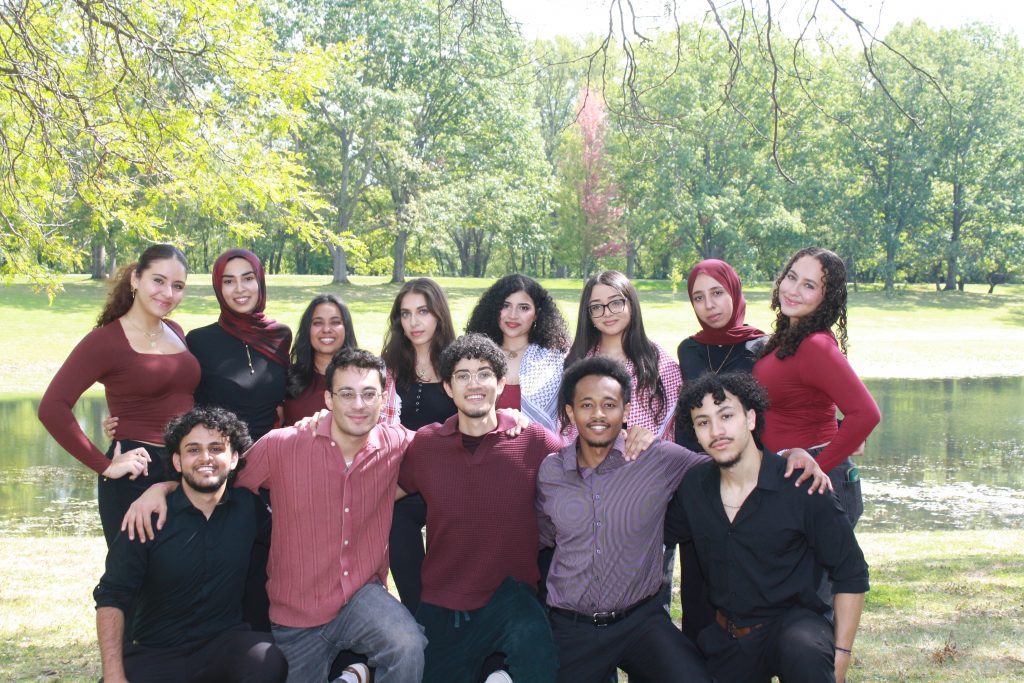
In the three years since its establishment, Binghamton University’s Arab Cultural Student Association has expanded from a group of about six students into a lively community. Among the newest and fastest-growing cultural organizations on campus, the ACSA offers a welcoming space for students to feel comfortable, connect with new people and have fun while engaging with the many traditions of Arab culture.
Nezeeh Kaakour, a senior majoring in biomedical engineering, is president of the ACSA and one of its founding members. He discussed his experience as a sophomore in the fall of 2023, when the University still lacked an organization dedicated to the culture and heritage that he and many other students shared.
“I really wanted to join a cultural org that represented me and my identity, and there wasn’t one,” Kaakour said. “There was no Arab cultural org.”
Rather than allowing this absence to remain, a small team, consisting of Kaakour and five friends, saw it as an opportunity to create something new. They began organizing events that embraced Arab cultural traditions and provided a social environment in which students could feel at home.
The value the ACSA adds to the University’s community is made obvious by just how quickly it has developed and grown. The organization was formally recognized by the student association in the spring of 2025 with a provisional charter. Despite the success garnered by the ACSA’s leadership, there remain obstacles to overcome for the group to reach its goals. As Kaakour explained, the association is still working toward an official charter, the next level of recognition, which would include benefits like funding from the University and allow for more large-scale events.
The ACSA’s contributions extend far beyond the campus, organizing fundraisers in partnership with the Memorial Sloan Kettering Cancer Center in New York City and in support of the people of Gaza and Sudan. The association has ambitions to provide for the community in various ways, but its primary mission is essentially to spread happiness through Arab culture.
“We’re all about hospitality, about solidarity and about coming together and having a good time,” Kaakour said.
This objective is easily surpassed with every ACSA event, as E-Board members make the comfort and well-being of all attendees a priority. Marvy Erian, the association’s cultural and historical chair and a junior double-majoring in biology and English, described the social environment of the organization’s gatherings.
“We’re very big on hospitality, so I’d say we like to just make sure we talk to a lot of people, so people feel safe and feel welcome to our events,” Erian said.
Along with weekly meetings, which offer food and activities, each semester is bookended by major ACSA events — Layali Cafe at the start and a potluck at the end. For Layali Cafe’s evening celebration, members make traditional Arab drinks, including Moroccan mint tea, chai and pastries such as Nescafe cake and baklava.
The potluck event also revolves around sharing cultural meals. Salma Moussa, ACSA’s vice president and a senior majoring in psychology, noted the powerful ways in which this event and others like it can bring people together. She emphasized the feelings of family, warmth and unity that these gatherings instill in all who participate.
As the spring semester continues, the most exciting and important of all ACSA events approaches — the organization’s first-ever banquet, which will be held on April 25. While the event is still in planning stages and some of its specific features are yet to be revealed, attendees can expect the ACSA’s largest celebration yet. The evening will be themed “Arabian Nights” and boast plentiful food and drink as well as music, dance performances and guest speakers.
Both Erian and Moussa expressed how meaningful the banquet is to the association and its members. Erian told Pipe Dream that the banquet allows the ACSA to “share a lot of culture, tradition, performances.”
“I’m excited for people to be able to see how beautiful our culture is,” Moussa said. “And how there’s so much more to us than just what the media perceives us.”
Considering how far the ACSA has come, the banquet is sure to be a memorable landmark in the organization’s history. For Kaakour and those who have been with the ACSA since its inception, the occasion will be especially momentous.
“It’s one really big celebration of Arab culture and anyone that’s interested, they’re gonna come and have a great time,” Kaakour said.
“When you walk into Old Union Hall and you see all the lights, all the decorations, the tables, the food and you hear the speakers, you see the performances and you see all the hard work we put into it, that’s gonna be really rewarding,” he continued.