





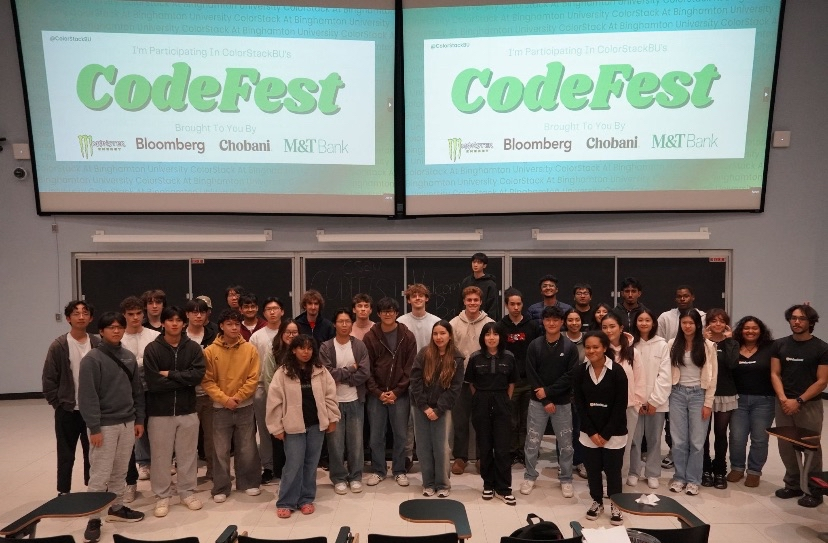
Binghamton University’s chapter of ColorStack helps students learn skills in computer science and supports career development, all while fostering a supportive community.
Founded in 2023, ColorStack aims to support all students interested in computer science, with a focus on Black, Latine and Indigenous students. Its parent organization has chapters at over 1,000 schools and a body of more than 14,000 Black and Latine students.
“We’ve only been around a short time but we’ve been able to make large impacts on students whether it be getting them opportunities for their career, helping them find friends in their community, or learning how to prepare for classes and internships,” Janelle Mosquera, president of ColorStack and a junior majoring in environmental science, wrote in an email.
ColorStack’s founder and CEO, Jehron Petty, was studying computer science at Cornell University, where he noticed the underrepresentation of Black and Latine students and computer scientists. After founding a chapter of ColorStack at Cornell, he expanded the organization to encourage underrepresented students across the country to pursue careers in computer science and find successful jobs in the field.
To prepare students for careers in computer science, ColorStack organizes three kinds of events — technical development, professional development and social. Practice interviews, resume-building exercises and LinkedIn review sessions help students find jobs, while technical prep sessions and workshops on topics like cybersecurity develop important skills such as software development and experience in programs like GitHub and Microsoft Excel.
Johnathan Persaud, ColorStack’s events coordinator and a senior majoring in computer science, said the organization works to help students avoid burnout, which can be common in the industry. Events like arts and crafts provide a space for students to relax and foster a supportive, welcoming environment.
ColorStack is preparing for its third-annual CodeFest, which will take place next semester. Over the course of a weekend, participants of all skill levels will develop a project and have the opportunity to meet other students interested in coding and software development. Last semester, students won a variety of prizes, including a $150 Overall Winner award.
Mosquera told Pipe Dream that ColorStack is also planning on creating a project team to help support software and websites to solve campus problems.
“Projects like these support our mission by helping the students who work on them to be involved in real problem solving technical projects which provide them with experience that can help them in their academic and professional careers,” Mosquera wrote.
Computer science is a predominantly white field, making up around 64 percent of the field as of 2021. Less than 12 percent of computer scientists are Black, Latine or Indigenous, a gap that ColorStack strives to address.
“With tech itself being such a predominantly white community, it can create barriers for people coming from a less common background to have access to the same level of opportunities,” Persaud wrote. “In the tech field, mentorship, networking, and connections hold so much weight in the success that you are able to achieve, and a lack of diversity in the field means it’s much more difficult for students from these backgrounds to form connections in their field with people who share similar experiences with them.”
“That’s why ColorStack is so important, because it bridges the gap that comes with navigating a predominantly white field of work, and it provides students with resources and connections that they otherwise may not have had access to,” he continued.
To support underrepresented groups looking to pursue careers in computer science, ColorStack promotes a welcoming environment with ample opportunities for both professional development and finding a community. Both Mosquera and Persaud said that their favorite part of ColorStack was the strong, friendly community that helps students thrive.
For students exploring computer science as a future career path, Mosquera and Persaud recommended joining campus organizations like ColorStack to meet others interested in the field and learn about the various jobs in the industry. From software development to cybersecurity, ColorStack helps students prepare for fulfilling careers and expand their network.
“As students in the industry, we know the struggle of not knowing where to begin and what paths are available in computer science,” Mosquera wrote. “We have the resources and experience to help guide you in the direction that best suits your needs.”