





New York state awarded Broome County over $2 million to fund several water quality protection and environmental improvement initiatives. The funding will address issues related to salt storage, water waste treatment and a restoration project of the Oquaga Creek.
Gov. Kathy Hochul announced that water infrastructure projects received a total of $3.8 billion during the state fiscal year 2025. New York’s Clean Water Funding Report highlighted $1.1 billion in water quality grants similar to those received in Broome County. The 52nd state senate seat, which includes parts of Broome County, was awarded $16.7 million.
“Access to clean water and strong climate resilience are essential to the health, safety, and economic stability of our communities,” said State Sen. Lea Webb ‘04. “This $16.7 million in funding will help municipalities across Senate District 52 modernize aging water infrastructure, protect local waterways, reduce pollution, and prepare for the growing impacts of extreme weather.”
The Water Quality Improvement Project, a competitive grant initiative through New York’s Department of Environmental Conservation, provided funding projects that deal with restoring or enhancing water quality and habitat.
In 2025, six projects in Broome County received project funding, compared to only two county projects receiving these grants each in 2023 and 2024.
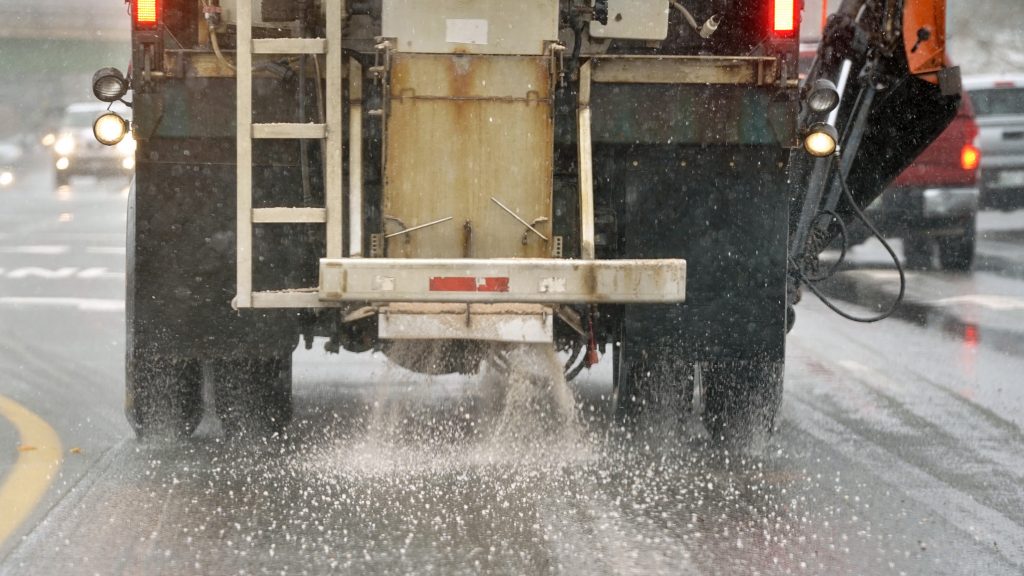
Around 43 percent of the funds distributed to Broome County this year were set for road salt storage and reduction, including a $360,000 grant to the Broome County Soil and Water Conservation District.
In an interview with Pipe Dream, Justin Puglisi, a representative for the conservation district, said the district awards money to projects aiming to improve water quality and promote sustainable agriculture. While efforts to reduce road salt waste were a high priority this year, Puglisi explained that the conservation district supports local communities through many different projects.
“Some years we’re writing grants for maybe stream bank armoring or riprap and some years, it’s always changing,” said Puglisi. “It changes. Whatever municipalities or the resource needs of the landowner or the farmers, whatever folks come to us and ask for is what we try to help them out with.”
According to George Homsy, Binghamton University’s director of environmental studies and an associate professor of public administration and policy, ensuring that road salt is stored correctly is critical to maintaining environmental health. When salt enters the environment through roads, it affects wildlife, plant growth and the chemical composition of the water.
“A lot of these fixes that we need are not very sexy,” Homsy said. “It’s like, ‘we need to fix the salt storage bins.’”
Homsy added that maintaining clean water quality is especially crucial because of Broome County’s proximity to the regional water supply. Local water is sourced from the Susquehanna River, which flows through the state and eventually into the Chesapeake Bay.
Along with road salt reduction, state funding will support ecological restoration projects across the county. The Friends of the Upper Delaware River’s Oquaga Creek Project aims to restore local waterfronts.
Drew Jacobs, the watershed program coordinator at the organization, told Pipe Dream that with state funding and support from the National Fish and Wildlife Foundation, they will be able to stabilize streams damaged by recent flood events.
“Flooding affects everybody, right?” said Jacobs. “We have a big flood event, if a road washes out, that’s affecting the people who live on the road. It’s affecting the municipalities who have to maintain the roads. It’s affecting the fish and wildlife who maybe are losing habitat because of the flood events.”
The restoration project will help to rebuild fishing sites, bringing in opportunities for tourism and promoting the economy. Additionally, the water banks will be strengthened to withstand future floods.
To Homsy, water conservation also serves as a reminder that environmental protection is a shared responsibility.
“We’re all in this together,” Homsy said. “And there’s no better way to see that than through a river.”