





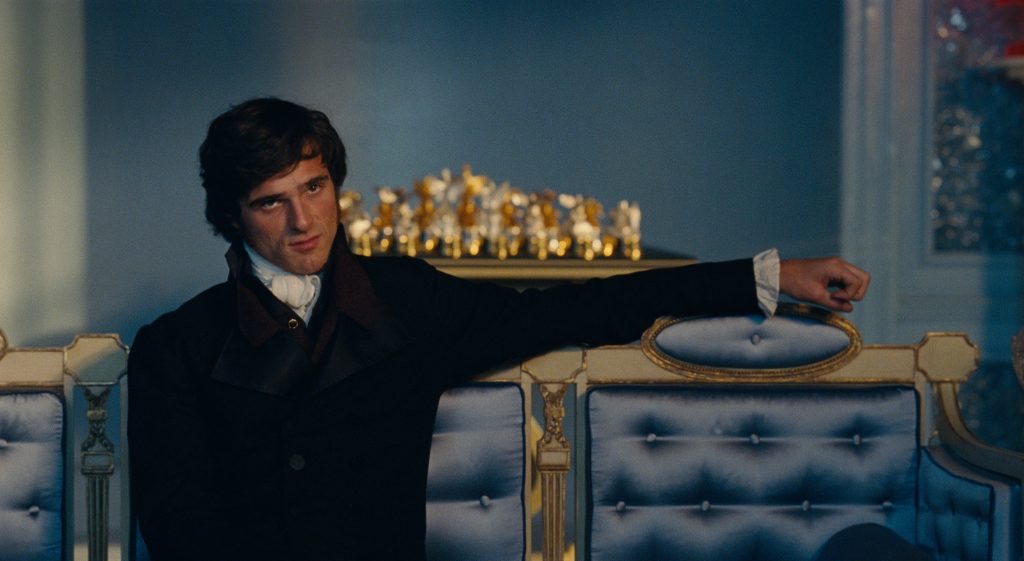
“Wuthering Heights,” filmmaker Emerald Fennell’s adaptation of Emily Brontë’s 1847 novel, premiered this Friday, Feb. 13 — right in time for Valentine’s Day weekend. Margot Robbie stars in the film as Catherine Earnshaw, the center of the novel’s tragic love triangle. Her brooding admirer, Heathcliff, is played by Jacob Elordi.
The original novel follows two estates and their families, the Earnshaws and Lintons, in the Yorkshire moors. The Earnshaws’ foster son, Heathcliff, and his love for Cathy are a source of conflict between these families and result in a gothic tale of love, revenge and grief.
Elordi’s casting was met with much controversy before the film’s release. The character of Heathcliff is described in the novel as Romani, with a complexion that is “dark almost as if it came from the devil.” His dark skin color causes him to experience prejudice from many characters in the novel. This ultimately contributes to his fall from grace and into gloominess. Because of this, many readers and Brontë scholars have imagined Heathcliff to be a person of color. This, along with Charli xcx providing music for the soundtrack and an anticipated finger-sucking scene, caused fans of the literary classic to worry whether the adaptation would be true to its roots.
To say that the rumors were true would be a gross understatement. Rather than a respectable adaptation, the film reads more like a Bridgerton-style, over-sexualized historical fantasy that has little to do with the novel.
The film opens with a vision of a man being sentenced to death. This could have been an emotional start, except for the fact that the man being hanged has a glaringly obvious erection. Shortly after, Charli xcx’s “House (featuring John Cale)” cuts across the scene, which feels entirely out of place for the historical setting.
This exposition foreshadows how sex-centered the rest of the film is. Major parts of the original plot are removed or altered to the point where viewers might question why the movie was marketed as an adaptation at all, when it could have been a stand-alone, soft-porn production.
The plot focuses solely on Heathcliff and Cathy’s turbulent relationship. Cathy meets Heathcliff as a child when her father, Mr. Earnshaw, rescues him from the street and brings him to Wuthering Heights. Mr. Earnshaw is later shown to be physically violent and an alcoholic, which leads the kids to form a bond in protecting one another.
Some years pass and the wealthy Linton family moves in nearby. Cathy plans to seduce Mr. Linton to elevate her social standing, much to the jealousy of a now wild and bearded Heathcliff. After the pair spot two of the house’s servants having a kinky sexual encounter in the barn, they begin to have their own sexual fantasies and tensions around one another. Cathy meets Mr. Edgar Linton shortly after this and later accepts his proposal.
Afterward, Cathy consults her servant, Nelly, about doubts she is having. She confesses that she is in love with Heathcliff but could never marry him. Heathcliff overhears only the latter part of the conversation and flees.
Years later, Cathy is married and living with the Lintons — her husband, Edgar, and his sister, Isabella. She feels constrained by her opulent lifestyle and longs for freedom, especially after she learns she is pregnant. Heathcliff returns with a total physical transformation, in which he has become mysteriously wealthy and well-groomed. He purchases Wuthering Heights and continues to visit Cathy at the Linton house, where he attracts the attention of Isabella. This causes tension between Cathy and her sister-in-law, especially as she begins to carry on a steamy extramarital affair with Heathcliff.
Upon learning about Cathy’s pregnancy, Heathcliff seduces Isabella and marries her out of spite. The two enter into a marriage defined by its bizarre BDSM, master-slave dynamics, much to the horror of the Lintons and their servants. Cathy learns from Nelly that Heathcliff overheard her conversation all those years ago and that her entire marriage could have been avoided. Heartbroken, she locks herself in her room and starves herself to death and her baby is miscarried. Heathcliff arrives to say goodbye, only to find that she has already passed. He holds her dead body and begs her to haunt him.
The plot diverges from the novel’s in drastic ways. Cathy’s alcoholic brother, a central figure to the story, is completely absent from the film. Mr. Earnshaw, who is kind to Heathcliff in the novel, is reduced to an abusive drunk and his wife is nowhere to be seen. The entire second generation of Lintons and Earnshaws, who are such a central part of Heathcliff’s villainous downfall, never comes into existence.
This completely changes the course of the story and amounts to the entire film unfaithfully covering only about 30 percent of the original book. It is also worth noting that the novel contains no sexual content.
As for the casting, Elordi and Robbie did have significant on-screen chemistry. However, this paled in comparison to the glaringly obvious fact that they are two people well into adulthood attempting to play teenagers. The racism that forms Heathcliff’s character is also completely erased, which makes him entirely void of sympathy or moral ambiguity — he is only sex-crazed and jealous.
There is an entire montage of Cathy and Heathcliff having sex everywhere and anywhere. This includes the fabled finger-sucking scene, which occurs not once but several times. The overabundance of these moments and a lack of emotional intimacy detract from the intended yearning and romance between the pair.
Heathcliff’s abuse of Isabella Linton is also reduced to a master-slave kink in which he ties her up in chains and commands her to bark like a dog while he sits back and watches. Gone is the master planner who seeks justice for his racist and classist abuse, replaced by a “Fifty Shades of Grey” inspired dominator. Not even Elordi’s sex appeal is enough to keep his character from falling flat.
One good decision was the casting of Owen Cooper and Charlotte Mellington as the child versions of Cathy and Heathcliff. Cooper delivers emotional lines with a grace beyond his years. Although young Cathy is without a doubt meant to be annoying and petulant, Mellington portrays her with a charm that makes the young heroine tolerable — a feature that is completely lost when Robbie takes over the role and develops it into a whiny caricature of an overgrown child.
The film’s merits are mostly in its cinematography and costume design. The Linton house set is beautiful in its opulence and enhances every scene that takes place within its walls. There are also some very creative camera transitions, which, although often unnecessarily sexually suggestive, add to the film’s visual beauty. Margot Robbie dons stunning gowns and capes with vibrant colors throughout and Heathcliff’s suits are elegant and well-cut.
Eroticism and sadism are prioritized at the expense of class and familial conflict, which made the original tale so timeless. Despite the fact that the film was heavily marketed as an adaptation and shares the same name as the original book, some claim it should be evaluated as a standalone and not compared to the novel.
However, even if the film is reviewed as an independent entity, it still relies on montages, shock value and awkward erotica, which do not make up for underdeveloped protagonists and a complete lack of story development.
Final rating: 1/5