





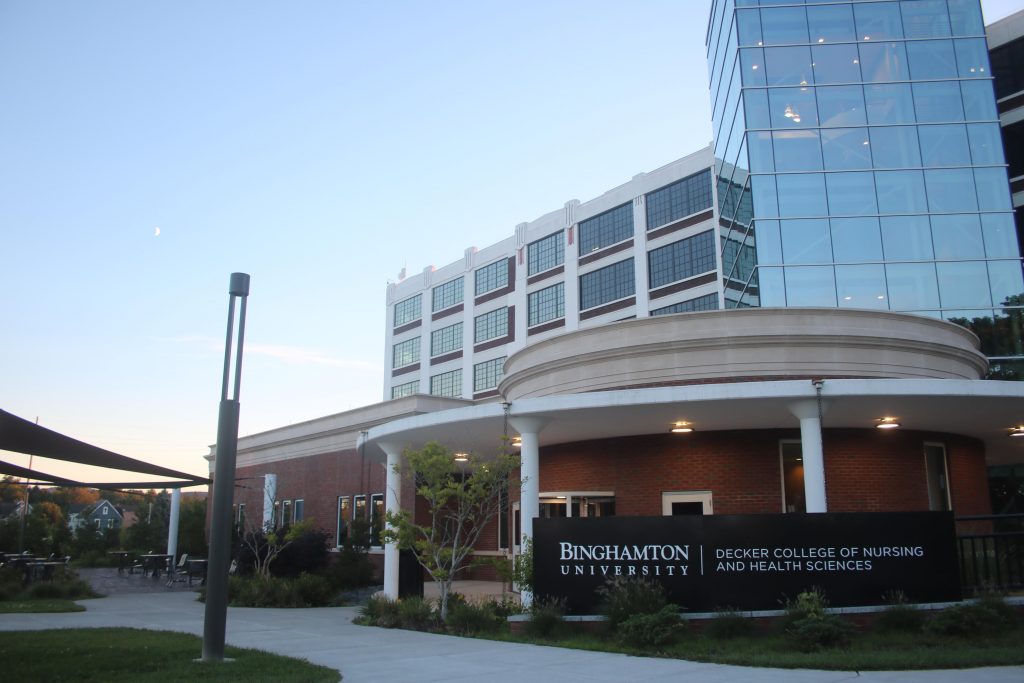
The Trump administration will no longer consider nursing a professional degree for graduate loan-borrowing purposes under the “One Big Beautiful Bill Act.”
On Nov. 6, the U.S. Department of Education’s Reimagining and Improving Student Education committee concluded negotiations to revamp student loan borrowing limits in accordance with the new law. The proposed changes would eliminate the Grad PLUS program, which allowed students to borrow federal loans to cover the cost of attending graduate school and redefine what is considered a “professional” degree for the purpose of obtaining loans.
“The consensus language agreed upon by the negotiators today will help drive a sea change in higher education by holding universities accountable for outcomes and putting significant downward pressure on the cost of tuition,” Nicholas Kent, the U.S. under secretary of education, said in a Nov. 6 press release. “This will benefit borrowers who will no longer be pushed into insurmountable debt to finance degrees that do not pay off.”
The DOE’s RISE committee classified 11 degrees that meet these requirements, including law, medicine, dentistry, pharmacy, veterinary medicine, chiropractic and theology. Degrees like nursing, education and social work will not be eligible for higher borrowing limits.
Under the new guidelines, which will take effect in July 2026, annual loans for new graduate student borrowers will be capped at $20,500 with a $100,000 aggregate limit. For “professional” degrees, federal loans will be capped at $50,000 with a $200,000 aggregate limit.
“When starting the [Baccalaureate Accelerated Track] program, I was told by faculty that our program was considered ‘professional school’ and therefore we must hold ourselves to a higher standard,” wrote Emily Mets ‘24, a student in the baccalaureate accelerated track program for nursing. “It is this guiding principle that influences the way I approach my didactic coursework and clinical practice. Now, I wonder if my chosen profession is even considered credible in the eyes of the Department of Education. Excluding nursing as a professional degree makes me doubt how attainable it is for me to pursue an advanced practice degree in the future.”
“I find this decision even more unsettling in light of the supposed healthcare provider shortage our country is facing,” she continued. “Nurse practitioners provide valuable care to many populations across the nation, and by limiting access to these degree programs, the government is compounding the healthcare crisis.”
According to the Bureau of Labor Statistics, an average of about 189,100 positions for registered nurses are projected to open each year for the next decade. The American Association of Colleges of Nursing cites a lack of enrollment in nursing school programs as one of the reasons for this shortage.
Following the Trump administration’s announced loan changes, the American Nurses Association urged the DOE to include nursing as a “professional degree.”
“Nurses make up the largest segment of the healthcare workforce and the backbone of our nation’s health system,” said Jennifer Mensik Kennedy, the organization’s president. “At a time when healthcare in our country faces a historic nurse shortage and rising demands, limiting nurses’ access to funding for graduate education threatens the very foundation of patient care. In many communities across the country, particularly in rural and underserved areas, advanced practice registered nurses ensure access to essential, high-quality care that would otherwise be unavailable.”
“We urge the Department of Education to recognize nursing as the essential profession it is and ensure access to loan programs that make advanced nursing education possible,” she continued.
According to the DOE website, 95 percent of nursing students borrow less than the annual loan limits and will be unaffected by the new changes. The website also states that 80 percent of the nursing workforce does not have graduate degrees and that the loan limits will not affect undergraduate programs.
Critics argue that the new changes are intended to exclude female-dominated professions. According to the U.S. Bureau of Labor Statistics’ Current Population Survey, women make up 87 percent of employed registered nurses. Amy McGrath, a Kentucky Democrat running for U.S. Senate, criticized the proposed changes, saying in a Nov. 20 Facebook post that it “isn’t a coincidence” that excluded programs “include many fields dominated by women like healthcare, counseling, and social work.”
Along with eliminating Grad PLUS loans, a cap will be placed on Parent PLUS loans that allow the parents of undergraduate students to borrow directly from the DOE at participating schools, rather than having the student’s name attached to the loan.
The programs will be replaced by a new repayment assistance plan based on the students’ adjusted gross income. Under the plan, loan borrowers will be required to pay a percentage of their income, with deductions made for having dependents.
“We continue to monitor the situation and are very proud that our programs prepare future leaders in nursing, healthcare and healthcare research with a particular focus on solving the most challenging health problems in rural and other vulnerable populations; and continue to educate the public about emerging and established healthcare regimens,” Ryan Yarosh ‘02 MPA ‘09, Binghamton University’s senior director of media and public relations, wrote in a statement to Pipe Dream.