





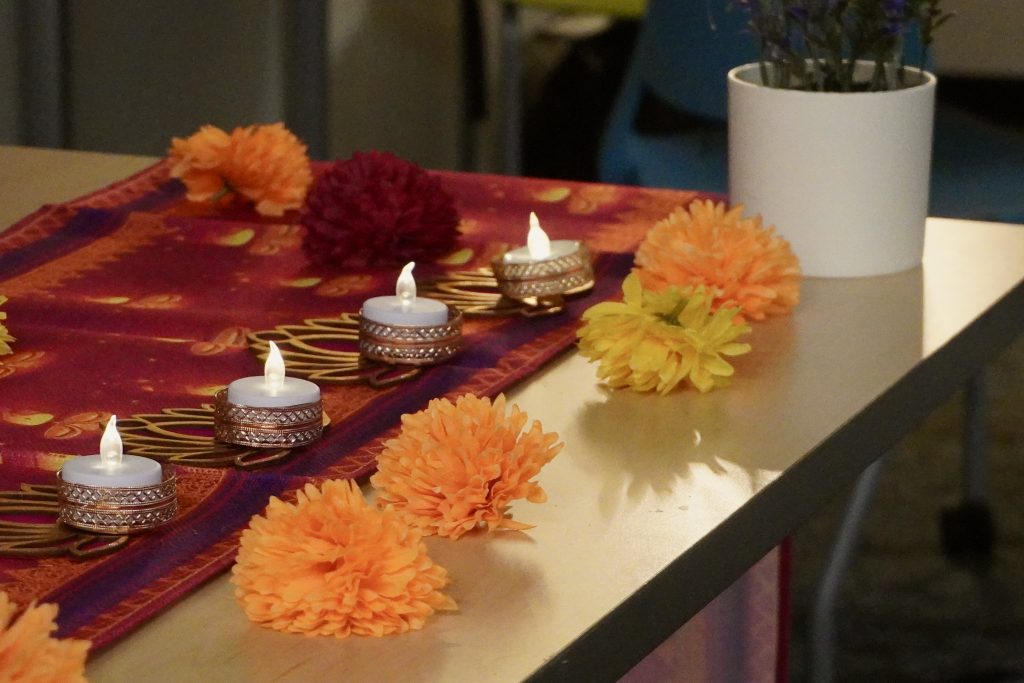
Fairy lights draped the walls of the Multicultural Resource Center lounge on Monday, setting the scene above a homemade chalk rangoli on the floor and a small table decorated with candles and marigolds. Many graduate and undergraduate students came together for the small and intimate Diwali celebration.
The celebration, also known as the Hindu festival of lights, is honored each year by a multitude of religions, including Hinduism, Sikhism, Jainism and some sects of Buddhism. The celebration symbolizes the spiritual victory of Dharma, the moral law of cosmic order in many Indian religions, over Adharma, actions or intentions which go against Dharma — light over darkness, good over evil and knowledge over ignorance. Diwali has been recognized for over 1,500 years around the world, and MRC provided a space to celebrate on campus.
Kayla Colon, a coordinator at the MRC, organized the Diwali celebration. Colon discussed the efforts that went into organizing the event and all the ways that it honored the traditions of Diwali.
“I basically planned everything and invited different student groups to come join us,” Colon said. “The Hindu Student Council, I reached out to them as well so they could come join and share their background and their stories, their traditions related to this event.”
Many people socialized with one another and enjoyed the food, based on a custom menu Sodexo had provided for the occasion in collaboration with Colon. There were a plethora of options for people to indulge in, including aloo gobi matar, dal tadka, chicken tikka masala, vegetable pakora, gulab jamun and semiya.
Nilambari Kashikar, a first-year graduate student studying biomedical engineering, attended the Diwali celebration in hopes of enjoying the food and community.
“At my hometown, we celebrate Diwali for a week long,” Kashikar said. “It starts from the first day of the moon cycle, and then it continues until the second — it’s for seven days — phase of the moon.”
The traditions of Diwali truly make the celebration special for each family and community honoring it. The decorations, laughter and discussion in the MRC lounge truly reflected the community values.
Tejas Wani, a second-year graduate student studying computer science, worked as an intern at the MRC over the summer. Wani recognized that many aspects of the event correlated to his experience from when he used to celebrate Diwali in his hometown, including the food and the lights. The homemade rangoli also resembled the culturally significant rangolis that families often make during Diwali.
“Most of the people that culturally like rangoli use color powders,” Wani said. “So, we have color powders, and they make intricate patterns and decorations on the floor. And as per my knowledge, its significance is to welcome God into our home. So mostly rangoli is drawn outside the door of our home, and when God enters our home, it’s just sort of decoration to welcome them.”
The rangoli, which Colon made for the event, was placed in the center of the floor. People used plastic knives to spread glue on each part of the design, and then poured colored glitter into each section. Everyone clapped and smiled when those working on the rangoli flipped the board up and the excess glitter fell off, revealing the final result.
According to Wani, the celebration “brings friends and families close together.”
This sense of community was depicted through the laid-back and welcoming environment in which the celebration was hosted. Historical pamphlets were laid out on a table in the middle of the room for attendees to learn the significance of the celebration while enjoying traditional Indian food.
The event allowed for the University community to come together and either learn about or indulge in the familiar atmosphere that it created for many who celebrated it in their hometown. The importance of honoring light over darkness and good over evil was overall greatly rewarding for people to enjoy substantial conversations, and understand or participate in common traditions of Diwali