





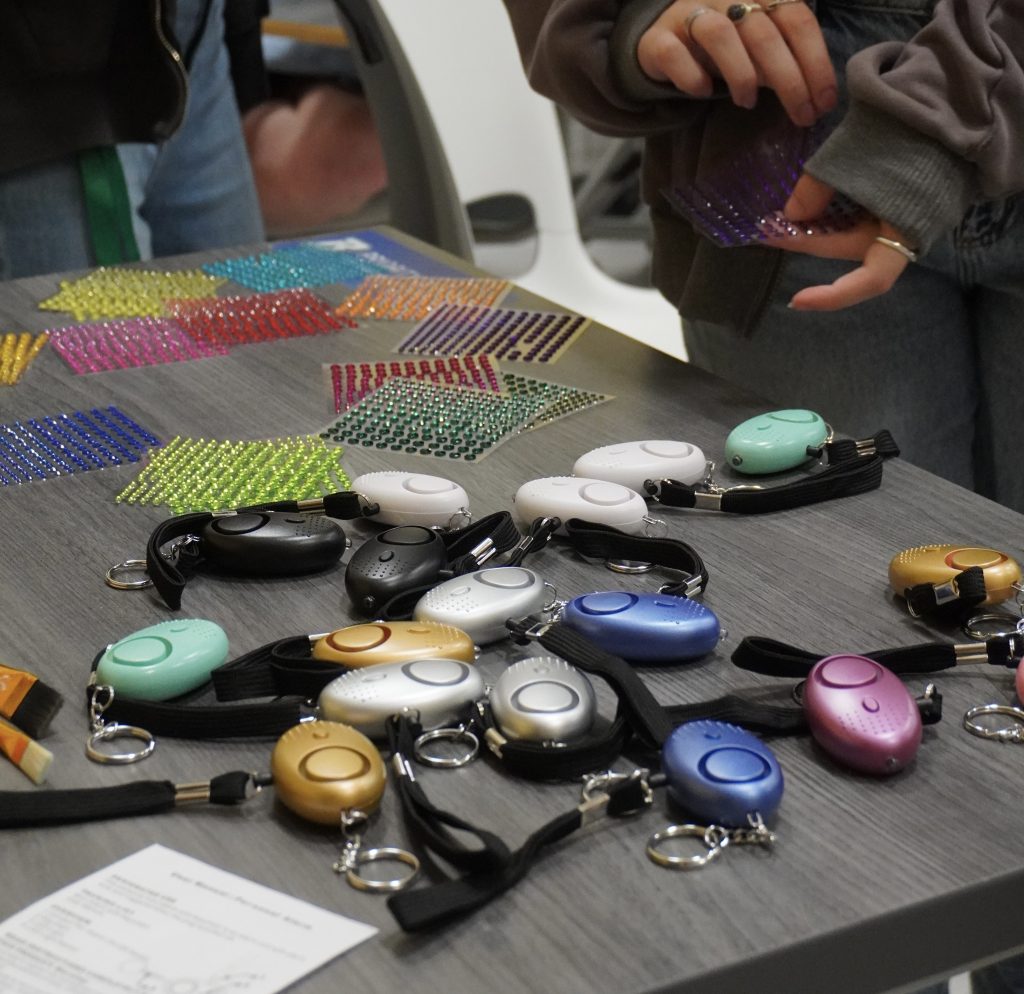
The Feminist Collective hosted a series of events last week to inform and educate students about the “Red Zone,” a period of time where the majority of sexual assaults on college campuses occur.
The Red Zone begins at the start of the fall semester and lasts until Thanksgiving, a time when new students might be unfamiliar with their university campus and other students. More than half of sexual assaults on college campuses occur during this time.
From Tuesday to Thursday, the Feminist Collective, which advocates for intersectional feminism and the rights of marginalized groups, held a chalking event on the Spine, an informational presentation and a showing of the movie “The Hunting Ground” to raise awareness of on-campus sexual assault.
“I don’t think there’s enough spaces for people to comfortably talk about activism, especially to the extent that we engage in it,” Olivia Rutherford, the Feminist Collective’s co-public relations chair and a junior majoring in philosophy, politics and law, said in an interview. “It can be difficult to find spaces, even among friends, classmates, coworkers, to discuss activism and feminism and engage in that kind of rhetoric with other people who are also passionate about it.”
The events focused on sharing stories from sexual assault survivors and important statistics about sexual violence on college campuses in the United States. According to the American Psychological Association, up to 25 percent of female college students have reported being a victim of sexual assault, with women in their first year of college facing the highest risk of being assaulted compared to other college students.
“For us here, the main specific changes we’re advocating for is increasing knowledge of comprehensive sexual assault,” Gillian Rohde, president of the Feminist Collective and a senior majoring in biology, told Pipe Dream. “What is consent? What is coercion? What counts as rape?”
On Tuesday, students chalked a variety of messages across the Spine, including contact numbers for resources that are available both on and off campus. The University’s Violence, Abuse and Rape Crisis Center, located on the third floor of Old Johnson Hall, offers both private and confidential services for students, including meetings with a sexual assault advocate, deputy Title IX coordinator and bystander training coordinator. The Crime Victims Assistance Center, a local resource assisting all victims of crime, recently hired a new campus advocate coordinator [HYPERLINK: https://www.bupipedream.com/news/crime-victims-assistance-center-hires-new-campus-advocate-coordinator/168900/] to help student victims of sexual violence, stalking, harassment, domestic violence and other crimes.
The next day, an educational forum was held for students to learn about sexual violence risk in college, particularly at events hosted by fraternities. Rohde spoke about an Instagram page known as @shareyourstorybing, which shares the stories of students who survived sexual violence at Binghamton University from 2019 to 2022. The account references faculty members, resident directors, student assistants and 26 fraternities that are still present on campus.
According to the University’s annual security and fire report, there were 14 rapes and 17 reported incidents of fondling on campus in 2024.
“However, we have to remember that 80 to 90 percent of rapes are actually not reported to the police,” Rohde told Pipe Dream. “So let’s say these round out to about 10. There were probably 100 that actually did occur.”
“But I would again hold that up higher, considering the fact that we have 20,000 students at this university, and we’re supposed to believe that only 15 to 100 were sexually assaulted here?” she continued. “I don’t believe that.”
On Thursday, the Feminist Collective hosted a screening of “The Hunting Ground,” a 2015 documentary that focuses on the experiences of survivors who attended schools like Harvard University, Florida State University and the University of North Carolina at Chapel Hill. The film also highlighted the lack of action taken by college administrators and the police in response to reported assaults.
When asked if she had any advice for new students, Rohde highlighted the importance of partying safely and suggested that students research the groups that host parties and events on weekends.
“The school has a list of banned fraternities and sororities that operate,” Rohde said. “However, you must look for that list yourself, and it is updated every semester. So the most recent one is for spring 2025 and on the school website, under fraternities and sororities, on the ‘For Parents’ section, they list all of the banned fraternities and sororities.”
“So when you get those little slips of paper under your door, definitely double check where you’re going and always go with friends,” she added.