





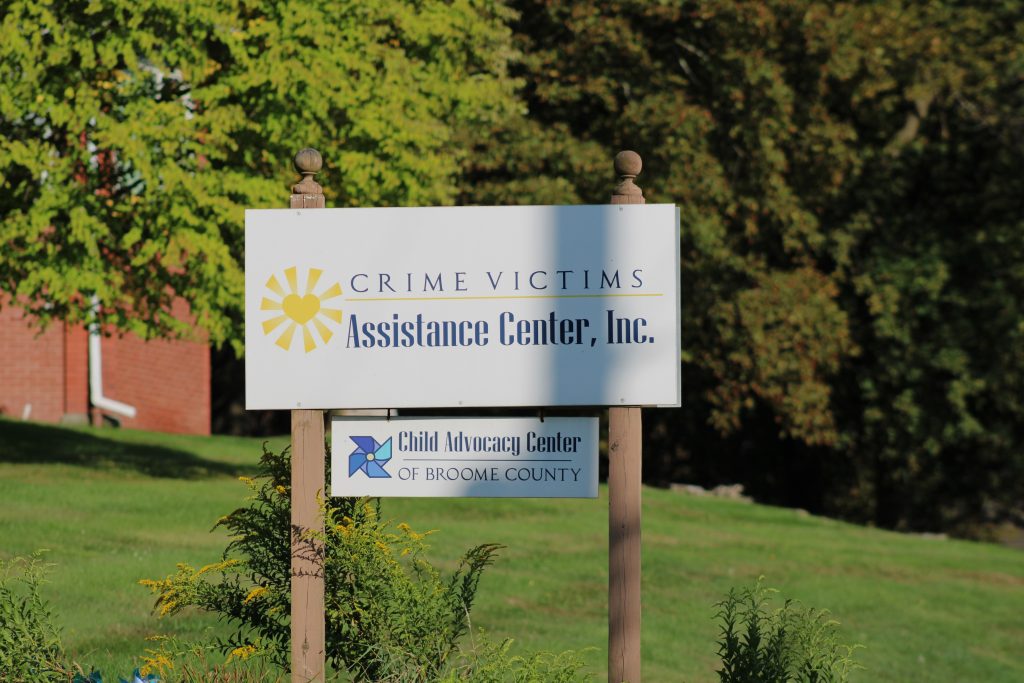
The Crime Victims Assistance Center brought on a new campus advocate coordinator to provide resources and support for students, faculty and staff impacted by crime.
Ariel Hochman ‘24 MPA ‘25 told Pipe Dream that she became involved with the center after she lost a family member due to domestic violence. As a graduate student wanting to serve the campus community, she interned for Binghamton University’s Healthy Campus Initiative, which provides resources to support all dimensions of student health. Building on her campus involvement, Hochman said her new position at the center fits “right in like a puzzle piece.”
As campus advocate coordinator, Hochman is available Thursdays from 1 p.m. to 6 p.m. at the University’s Violence, Abuse and Rape Crisis Center, located on the third floor of Old Johnson Hall. Alongside the campus advocate coordinator representing CVAC, VARCC offers private and confidential services for victims of sexual violence, including a sexual assault advocate, trauma recovery and reporting assistance.
Unlike private resource providers, who are mandated reporters for sexual violence, domestic abuse and stalking, Hochman’s service is confidential, so she is not required to report information students tell her unless someone plans to harm themself or others.
“If they’re coming to me just to tell me about crime that they’ve experienced and the trauma they may have gone through, I’m there to support them in that, and I’m there to also walk them through what avenues, what paths they may want to go down — whether that’s going to be going to Title IX at the University, going to the University police, going into the community and getting resources out of there,” Hochman said. “I can help be that guide for them and explain to them what their resources could be in the near future.”
Students seeking support during a medical or legal appointment can ask Hochman to accompany them to the hospital or court as an advocate.
CVAC offers resources to victims and survivors of all crimes, including sexual violence, stalking, harassment and domestic violence. Much of its funding comes from New York’s 2015 Enough is Enough law, which requires all colleges and universities in the state to adopt a uniform definition of affirmative consent and conduct campus climate surveys gauging student awareness of resources available to survivors of interpersonal violence.
The program helps fund 52 rape crisis programs in the state “to help provide services to student survivors of sexual assault, dating violence, domestic violence and stalking,” according to New York’s Office for the Prevention of Domestic Violence. Additional funding comes from other sources, including the Office of Victim Services, which provides resources to crime victims and their relatives.
The center also provides custom training for faculty and staff on topics like relevant law and what to do if a victim comes forward seeking help.
In 2019, a survey conducted by the Association of American Universities found that 13 percent of students experienced “nonconsensual sexual contact by physical force or inability to consent.” Female and transgender, genderqueer, nonbinary or otherwise gender nonconforming individuals experienced the highest rates of harassment, intimate partner violence and stalking.
In the study, less than a third of women who reported sexual assault connected with a supportive program. When asked why they did not reach out, 15.9 percent of those women said they felt “embarrassed, ashamed or that it would be too emotionally difficult to seek assistance.”
“I think that there’s a huge stigma around victimization in general because nobody feels like it’s going to happen to them until it does, and then when it does, a lot of victims may feel a lot of shame around what has happened to them,” Hochman said. “They’ll go down a rabbit hole mentally about what they could have done differently and how they’re going to proceed in the future and all of these different things.”
“Every victim has their own story and their own method of healing from that,” she continued. “And so part of my role is to guide them through that healing as well.”
Other spaces offering confidential resources include the University Counseling Center, the Student Association’s Title IX Peer Advisors and the Decker Student Health Services Center.
For students looking to get involved, CVAC offers internships and volunteer opportunities where participants are trained in crisis counseling and provide administrative assistance.
“The University is fortunate to have the collaboration and support of such well-trained advocates as those working for CVAC and our students,” Beth Riley, assistant dean for early intervention and crisis management at the University, wrote in a statement to Pipe Dream.