





The National Science Foundation awarded over $4.4 million to six Binghamton University faculty members as part of its Faculty Early Career Development Program.
The grants are aimed at supporting novel research in areas related to psychology, biomedical and industrial engineering, computing, physics and systems science. These awards are given to academic researchers early in their careers who demonstrate potential in leading groundbreaking research to advance their department’s mission.
The winners include Ana Laura Elías Arriaga, assistant professor of physics; Jia Deng, associate professor of systems science and industrial engineering; Fuda Ning, assistant SSIE professor; Yincheng Jin, assistant professor of computing; Sung-Joo Lim, assistant professor of psychology; and Qianbin Wang, assistant professor of biomedical engineering.
“Binghamton University is fortunate to add six new faculty members to a long list of those who have previously won NSF CAREER Awards,” said Donald Hall, provost and executive vice president for academic affairs, in a statement to BingUNews. “This award routinely recognizes brilliant and hard-working faculty members who grow to become internationally respected leaders in their fields.”
“These six individuals are going to make our world a better place through their research and scholarship,” he continued.
University faculty received more NSF CAREER Awards this year than any other SUNY school. This recent set of award winners each received between $580,000 and $815,000 to further their research.
“I am excited to investigate the environmental and neural factors that support efficient learning, particularly in the challenging area of perceptual skill learning in adults,” Lim wrote in a statement to Pipe Dream. “By examining how adults acquire complex non-speech and foreign speech sounds, I hope to gain deeper insights about brain plasticity while working more closely with the community that may benefit from this research.”
Jin plans to work alongside the Deaf and hard-of-hearing communities and learners of American Sign Language to develop an ASL training platform that incorporates artificial intelligence and wearable devices. He hopes his project will create valuable datasets that can be used in future research on human-computer exchanges.
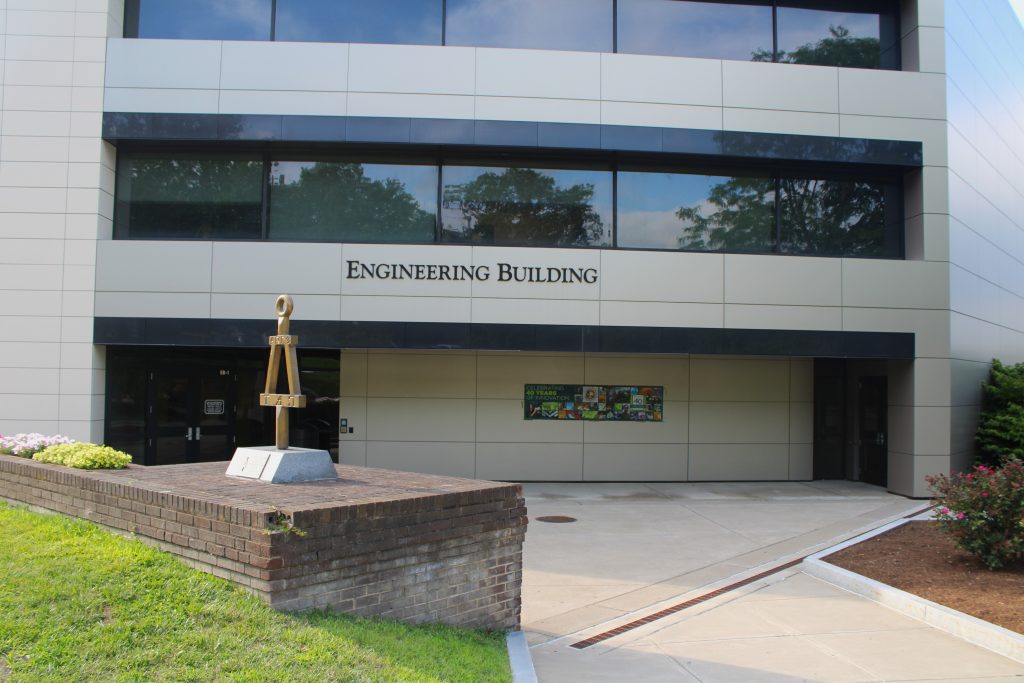
Within the Thomas J. Watson College of Engineering and Applied Science, Deng and Ning will use their grants to advance the technology industry. Deng aims to explore probe-based nanomanufacturing to improve the performance of electronics, while Ning’s research will focus on improving 3D printing, which can benefit industries ranging from medicine to astronomy.
“This is not just my personal effort,” Ning said in a statement to BingUNews. “The SSIE School’s support, collaborations and, of course, my students’ hard work also made this award happen.”
Elías Arriaga was awarded an NSF CAREER Award to build on her “one-pot synthesis” method, a technique that stacks ultra-thin materials with layers of different atoms to develop new properties. This building process can be used to create microchips and improve clean energy technology, among other implementations. Elías Arriaga also designed educational modules for the Physics Outreach Project, which can introduce physics and science to hundreds of K-5 students from various socioeconomic backgrounds.
Finally, Wang, who came to the University in 2023, will use his funding to explore causes of glaucoma, a neurodegenerative disease and the second leading cause of blindness worldwide.
“Currently, we are at a point where materials science, neural engineering and AI can work together to make a real breakthrough,” Wang said in a BingUNews feature. “I think my role is just to build some bridges between these fields. Then, we can make better tools, either for the early detection of glaucoma or some kind of treatment.”
News of these project grants comes as the Trump administration proposed significant cuts in federal funding for many areas of scientific research. New grant funding this year is at its lowest since at least 1990, (2) per reporting from The New York Times. Early-career researchers, in particular, often rely on grant funding to obtain tenure and continue their line of study.
“The NSF CAREER Awards are an incredibly prestigious honor and distinction for early-career faculty,” said University President Harvey Stenger in a statement to BingUNews. “To have six faculty members receive these awards should instill the entire University community with a great deal of pride.”
“I am impressed by the range and the scope of their work, which is undoubtedly going to continue to inspire their peers, our students and Binghamton’s alumni,” he continued.