





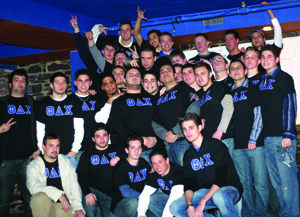
As of fall 2008, the organizations under the Professional Fraternity Council (PFC) will be moved under the Fraternity/Sorority Board.
Currently, the PFC is an SA chartered, student-run organization made up of seven professional fraternities, including Alpha Kappa Psi (business), Phi Alpha Delta (pre-law), and Phi Delta Ipsilon (pre-med).
“The executive board of the PFC requested more than a year ago that their member organizations be allowed to affiliate similarly to social fraternities and sororities and that they be advised by the Greek Affairs adviser,” said Brian Rose, the vice president for Student Affairs.
According to Rose, the PFC renewed this request shortly after he arrived to Binghamton.
In the current system, some of the professional fraternities under the PFC are recognized through the School of Management while others are chartered by the SA, according to Rose. Still others are not formally recognized at all.
“I believe the organizations and the students who join them are best served by University advising support,” Rose said.
Though Campus Life declined to comment on the situation, Rose stated that he discussed the situation both with them and the Greek Leadership Board.
“While there are some differences there are many more similarities between PFC member organizations and social fraternities and sororities,” said Rose. “Accordingly, I believe they can best be advised by the same organization that serves social fraternities and sororities.”
Chrissy Vasquez, the director of Member Development for the Alpha Kappa Psi Fraternity Headquarters, said the move is not common among other chapters of the organization.
“Alpha Kappa Psi is not in favor of our chapters belonging to the local campus IFC,” she said. “Very few campuses have organized our chapters under the social greek umbrella.”
According to Rose, Campus Life will work with the Fraternity/Sorority Board to develop a plan that will extend recognition to PFC organizations as of next semester.
Under the new system, the professional fraternities will be held to the same criteria for recognition as the social fraternities and sororities.
“That it will happen is finalized,” Rose said, though he added that the details are still being worked through.
“I don’t think I can accurately answer more specific questions at this phase beyond saying there will be a process to recognize PFC groups in place for next semester,” he said.
Dan Levin, the president of the PFC, declined to comment on the situation.
“I don’t understand why they’re coming in,” said Eric Feuer, the president of the Interfraternity Council (IFC). “They need a separate government so people from our frats can be in their groups and vise versa.”
“If they wanted to be in greek life they should have joined our fraternities,” Feuer added.