





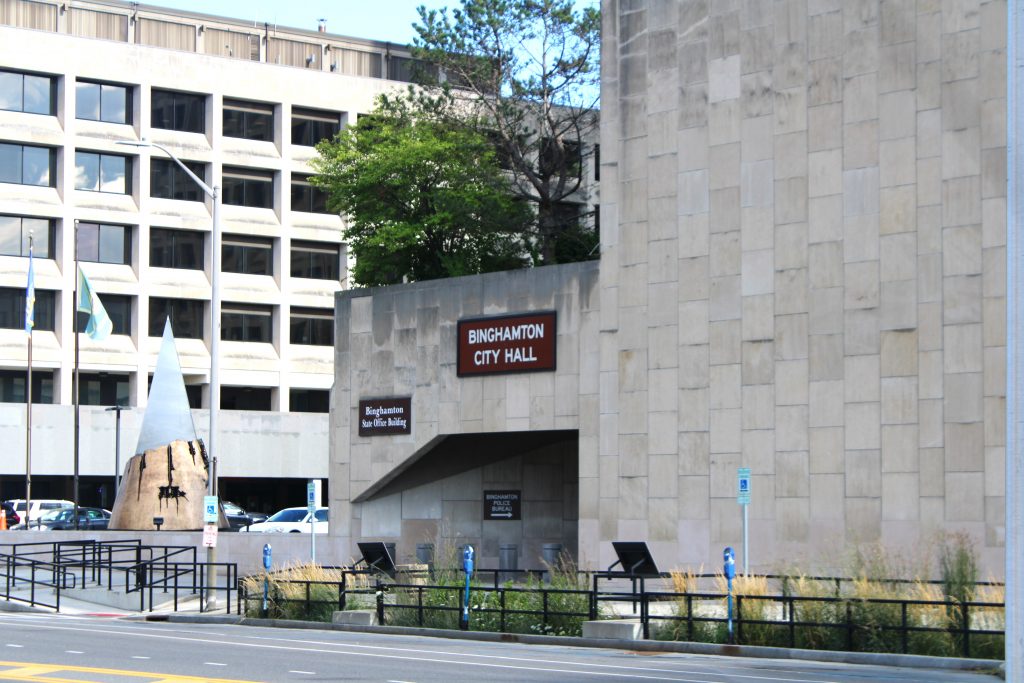
Nearly a year after Mayor Jared Kraham proposed a law cracking down on illegal cannabis sales, the Binghamton City Council appears divided on whether to move forward with tougher enforcement.
Unveiled last October, the measure would create a “Unlicensed Cannabis Activity” in the city’s code and allow for the inspection of stores suspected of distributing unregulated cannabis products, especially those located near schools, houses of worship and youth facilities. Those who are cited multiple times or considered an “imminent threat to public safety” could be shut down by the Binghamton Police Department pending a court review.
Those who unlawfully sell cannabis would receive a civil fine between $100 to $10,000 each day the activity continues, with a maximum penalty of $25,000.
Some supporters of the law claim it would bring fairness for taxpayers and legal dispensary owners. Cannabis retailers are required to pay a 13 percent retail tax on the sale or transport of legal cannabis products. Additionally, distributors must pay a 9 percent tax on the sale or transfer of products to a retailer, according to New York’s Department of Taxation and Finance.
Last year, Chris Myers, the owner of Greenery Spot in Johnson City, said in a press statement that illegal cannabis stores, or “sticker shops,” undermine the efforts of legal retailers to “create a level playing field.”
“While we partner with local farmers to support the community and provide regulated, lab-tested products, sticker shops are often bringing in unregulated, out-of-state goods,” Myers said. “By enforcing stricter laws, we can ensure that everyone in this industry is held to the same standards, creating a safer, more trustworthy environment for our consumers.”
Sticker shops refer to businesses that sell items like water bottles or stickers at the same price as a marijuana product and then exchange the item for this cannabis product, representing a covert way to bypass licensing. These shops continue to proliferate in the local area despite attempts in recent years to shut them down.
Nate Hotchkiss ‘12, who represents the fourth council district, previously called the proposed law a “misguided attempt to solve a much deeper problem” but told Pipe Dream,, in April that the spread of sticker shops likely pushed Kraham to seek tougher enforcement measures.
“As mayor, I support the legal cannabis industry,” Kraham said last year in a press release. “However, we must not tolerate the sale of unsafe and illegal cannabis products in our community. These unregulated shops are stealing from taxpayers and putting consumers at risk with unknown, untested and untaxed products.”
Rebecca Rathmell, a Democrat who represents the sixth council district, claimed Kraham’s proposal differs from existing legislation because it gives law enforcement more power to investigate illegal sales. In a statement to Pipe Dream, Rathmell said the New York State Office of Cannabis Management, formed in 2021, already has an enforcement division that can investigate businesses and shut down stores selling illicit products. Under the proposed law, the city’s police department would expand investigative power into civil code enforcement and claims.
“The Office not only acknowledges the decades of disproportionate enforcement and over-criminalization of cannabis prohibition within Black and Brown communities, but is governed by a Control Board tasked with creating and implementing a regulatory framework that prioritizes social equity in enforcement and licensing opportunities,” Rathmell wrote. “We have, alternatively, seen no such acknowledgment regarding disproportionate enforcement or over-criminalization from Binghamton Police Department leadership and no such commitment from the Mayor’s office that he would strengthen oversight to ensure equitable enforcement.”
While illegal cannabis sales did increase after New York first legalized recreational marijuana, Rathmell said these sales are projected to decline as the legal market continues expanding.
Other councilmembers are more supportive of Kraham’s law. Councilwoman Kinya Middleton is seeking ways to advance the law, according to the Binghamton Press & Sun Bulletin. In a recent interview with WBNG, Robert Cavanaugh II, who represents the third council district, recently told WBNG that he supports stricter oversight of cannabis sales.
“Since the city of Binghamton voluntarily chose to opt into the legal cannabis market, I feel the city has a responsibility to do its part to ensure that cannabis retailers are following state law,” Cavanaugh said. “The immediate need for supervision can be addressed through legislation, allowing the Binghamton Police to conduct inspections in a similar manner to OCM personnel.”