





The U.S. Department of State temporarily suspended visa interviews for international students looking to study in the United States.
According to The New York Times, Marco Rubio, the secretary of state, gave the order in a cable message to U.S. embassies and consulates on Tuesday. The suspension comes as the department considers expanded review of applicants’ social media activity.
“Effective immediately, in preparation for an expansion of required social media screening and vetting, consular sections should not add any additional student or exchange visitor (F, M, and J) visa appointment capacity until further guidance is issued [separate telegram], which we anticipate in the coming days,” the cable read, as first reported by Politico.
Applicants who have already scheduled their visa appointments can still attend.
To obtain a student visa, an individual must first be admitted to a school participating in the Student and Exchange Visitor Program. After filling out a form, paying a fee and registering in a federal information database, the prospective student can make an appointment with a U.S. embassy or consulate. Applicants aged 14 to 79 are required to attend an interview.
Since 2019, the department has “required visa applicants to provide social media identifiers on immigrant and nonimmigrant visa application forms,” according to a spokesperson who declined to comment on “internal communications.”
“Every visa adjudication is a national security decision,” the spokesperson added. “Every prospective traveler to the United States undergoes interagency security vetting. Prohibiting entry to the United States by those who might pose a threat to U.S. national security or public safety is key to protecting U.S. citizens at home.”
On March 25, Rubio ordered consular officers to refer certain visa applicants to the “Fraud Prevention Unit” for a “mandatory social media check,” first reported by The Handbasket, an independent news site. Officers were instructed to look for any “derogatory information” indicating an applicant is “advocating for, sympathizing with, or persuading others to endorse or espouse terrorist activities.” Enhanced vetting will also be performed on individuals who held a student or exchange visa between Oct. 7, 2023 and Aug. 31, 2024 or had their visas terminated since Oct. 7.
Two weeks later, U.S. Citizenship and Immigration Services announced the agency will consider “social media content that indicates an alien endorsing, espousing, promoting, or supporting antisemitic terrorism, antisemitic terrorist organizations, or other antisemitic activity” when evaluating immigration benefit requests like a green card application.
On Wednesday, Rubio said in a press statement that the administration will “aggressively revoke visas for Chinese students,” who make up a large portion of international students. He said that students with “connections to the Chinese Communist Party or studying in critical fields” will be among those facing visa revocations.
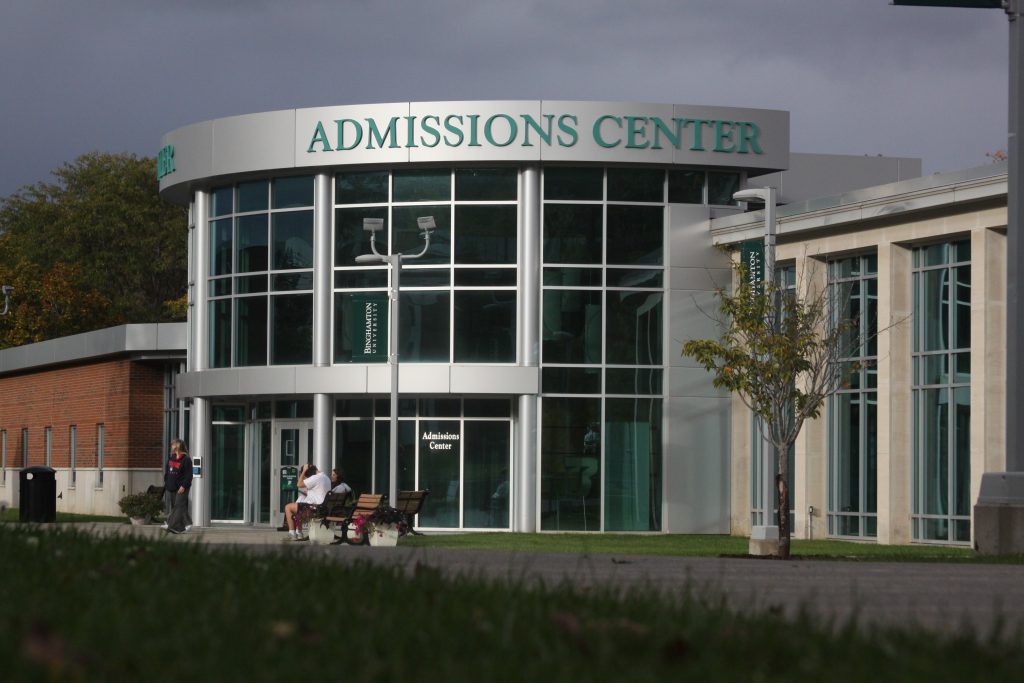
In the 2023-2024 academic year, 277,398 Chinese students attended schools in the United States, about a quarter of all international students. Around 17 percent of international students attending Binghamton University are from China.
In early April, a University spokesperson confirmed that five students had their visas revoked. The students, who have since had their legal statuses restored, were among 46 SUNY students impacted. On April 25, a Justice Department lawyer told a federal judge the reversal was temporary while officials create a new system to review and terminate records for international students.
Last Friday, the Trump administration revoked Harvard University’s ability to enroll international students, a decision temporarily blocked by a federal judge later that day. Harvard enrolled nearly 6,800 international students for the 2024-2025 academic year, comprising 27.2 percent of its student body.
More than 21,000 international students enrolled at SUNY campuses in fall 2024, with 2,048 attending BU.
Foreign students contributed $43.8 billion to the country’s economy last year, according to estimates from NAFSA: Association of International Educators. In New York, international students contributed $6.3 billion.
“International students represent nearly 6% of SUNY students, and these federal actions are a threat to enrollment at SUNY and colleges and universities across the country,” a SUNY spokesperson told Pipe Dream. “The ability to attract talent from around the world contributes immeasurably to the strength of American higher education and our national economic competitiveness.”