





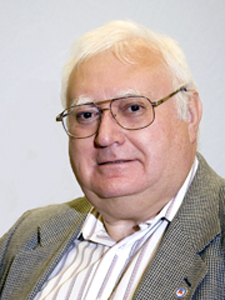
An engineering professor who is being detained overseas was hospitalized yesterday for kidney failure, and faces trial today for charges of currency smuggling.
Binghamton University distinguished professor Victor Skormin, 62, has been held abroad for more than two weeks in Astana, Kazakhstan. Since then the diabetic has run out of his prescribed medication.
Skormin, a native of the former Soviet Union state, was stopped in customs while on his way out of the country with $14,221 in American currency. He was in the country recruiting students for BU’s graduate school and meeting with Kazkh professors at different universities, according to a journal he’s kept since his arrival on Sept. 12.
Skormin took a three-week absence from BU with permission from his department chair, and had made arrangements for his class to be covered during that time.
The money Skormin was carrying included $1,000 he had brought himself, along with the money he earned and was reimbursed for from the two schools he visited.
Skormin’s friends and family have been concerned over his medical problems — which include high blood pressure and diabetes. Jim Moronski, an adjunct lecturer at BU and friend of Skormin’s, said Skormin had enough medication to last a few days longer than his scheduled trip, but that he has since run out and been forced to find the drugs abroad.
The professor checked himself into a clinic — at a price of $1,000 — on Oct. 17 after his feet began to swell, and officials determined Monday that one of the medications he’d been taking was counterfeit.
Doctors at the clinic released a notice the same day recommending that Skormin be returned to his home country as soon as possible.
Moronski said that the earliest Skormin could come home is Thursday, depending on the verdict of the trial and whether either side files for an appeal.
THE HOSTAGE DIARY
In his journal, entitled “The Hostage Diary,” Skormin chronicled his airport ordeal.
After passing through security the professor wrote he was moving to the next booth, which he assumed to be passport control, when he was stopped by a local official. The official asked if he was carrying any foreign currency, and Skormin told the man in uniform about the $3,000 in his wallet. The cash was split up among Skormin’s belongings so the remaining money was kept in his luggage.
Following the exchange, the official escorted Skormin to a small room where he was informed that he could be arrested for illegal money trafficking, and was detained and questioned for the next 14 hours, according to Jim Moronski, an adjunct lecturer at BU and friend of Skormin’s.
Moronski said that Skormin provided official documents for the sources of the cash, but that both he and the professor believe the latter was being “shaken down for a bribe.”
“It was clear that they were expecting me to offer them a bribe, but I am not familiar with this side of life and do not offer bribes,” Skormin wrote.
According to a report approved by the Department of Customs Control in Kazakhstan, Skormin committed a crime by “improperly declared currency.”
Skormin’s diary states that he received the cash on the last day of his trip. He didn’t foresee it as a problem because of the documentation he could provide, so he did not wire the money. Additionally, he wrote that John F. Kennedy International Airport in New York City, his return destination, does not require travelers to fill out custom declarations regarding currency.
“I don’t know that he was aware that he had to fill out a form when he was leaving,” Moronski, who has spoken to Skormin at least twice a day since the experience began, said.
Reports from the Press & Sun-Bulletin state that anyone carrying more than 3,000 tenge, the country’s currency, must complete a customs declaration form. The amount of money Skormin was carrying is equivalent to 1,703,675 tenge, the article states.
After being stripped of his money and other possessions, the BU professor escaped jail with help from a Kazakh university president who vouched that he’d stay in the country until his trial was over. Skormin was allowed to keep his credit card.
UNIVERSITY STEPS IN
Binghamton University spokeswoman Gail Glover said members of the BU administration have spoken to Skormin a total of three times in the last two weeks, in addition to keeping in daily contact with his son. Glover also said that the BU officials have contacted the U.S. Embassy and alerted them to his medical issues.
“We are working very hard to monitor Professor Skormin’s health condition,” she said Monday. “We have spoken to him again today and have sent a letter of support to his lawyer in Kazakstan.”
But Moronski said that the University waited too long to contact Skormin, and that BU officials have taken action only a handful of times.
“I don’t believe that they have done for their employee what I would have done for mine,” he said.
Moronski and other colleagues, along with Skormin’s family and friends, have worked to contact the State Department, along with the offices of Senators Clinton and Schumer, and Congressman Hinchey.
Attorney for BU Barbara Westbrook Scarlett and Stephen Zahorian, chair of the department of electrical and computer engineering, have written letters in support of Skormin’s character. The letters, which have been forwarded to Skormin’s lawyer, are set to be used during the trial.
“I’m worried about him,” Moronski said. “I know this has ruined the last couple weeks of my life.”