





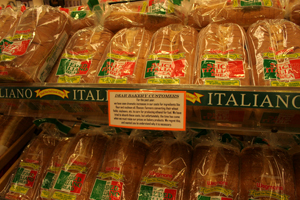
As popular Binghamton restaurants and eateries continue to raise their menu prices, students will soon start to feel the effects of the rising cost of food.
Food prices have increased 4 percent in the last year, the highest rate since 1990, according to a March 25 CNN article. Costs are expected to go up the same amount this year.
The two main factors driving up the price of food are a growing world economy and ethanol production, according to Kenneth Christianson, an economics professor at Binghamton University. Rising oil prices also contribute, as they increase distribution costs.
“As countries like China and India grow they place a greater demand on our food products,” he said. “Our food is cheaper to the rest of the world, so the rest of the world wants it.”
The inflation isn’t isolated to the U.S., though, as 37 countries worldwide face food crises, and 20 imposed price controls on food as of December, the CNN article stated.
“Across the board, the price on everything has gone up,” said Carl Dile, a manager at Nirchi’s Pizza on Vestal Parkway. “It’s an avalanche effect, not just one item.”
The price of flour has more than tripled in the last month and a half, according to Dile. Similar increases have been seen in the cost of cheese and in oil, which have doubled in price in the past two years.
Nirchi’s isn’t the only eatery facing the consequences of rising food costs, according to Dan Giannicchi, a manager of Moe’s Southwest Grill on Vestal Parkway.
“We held it off as long as we could, but pretty much the whole menu went up,” he said.
And the effects won’t be isolated to restaurants, according to Bob Griffin, marketing director for Sodexo Campus Services.
“Food prices are a topic of concern for us,” he said. “It literally is going to affect everything, especially corn, which has tons of uses all over the place, and is in 60 percent of all food products.”
Sodexo holds an annual review with the Dining Services Contract Committee to decide what percentage increase is expected for meal plan prices for the coming year, according to Griffin. The costs of producing a recipe, labor and production, along with what’s happening in the marketplace all go into consideration.
This year the increase will be 3.58 percent. But that number is “not really higher than normal,” Griffin said, as meal plans usually jump anywhere from 3.5 to 4 percent.
“We need to see how our costs will be adjusted due to food prices,” he said. “If costs have increased substantially then in the fall we’re going to have to take another look at it to see if we need to make an adjustment.”
Such price increases and adjustments correspond to the growth and inflation of the economy, Griffin said.
“We don’t want to do it, but we’ll be forced to if the marketplace continues to beat us up,” he said.
Christianson echoed Griffin’s concerns on how corn prices are rising because of the demand for ethanol, a biofuel made from corn. The Food and Agriculture Organization (FAO) predicted ethanol will drive up cost of corn, sugar and soybeans “for many years to come.”
“The more we use corn for ethanol, the higher the demand for it, and the higher the price,” Christianson said. “Higher prices for corn then lead to higher prices for things we use corn products in.”
Though food prices are expected to stabilize eventually as farmers begin to grow enough grain for both fuel and food, preliminary projections are that people will still face at least 10 years of more expensive food, according to CNN.
“As consumers have to spend more on food, they’ll have less disposable income for other services,” Christianson said. “Restaurants, theaters and vacation spots may see less business, especially with rising gasoline prices.”