





The National Science Foundation has granted a Binghamton University research group $550,000 to support a project based on group decision making.
The group, named Collective Dynamics of Complex Systems Research Group, called CoCo for short, meets twice a month to discuss complex systems, such as human decision making, the stock market and the Internet, among other topics.
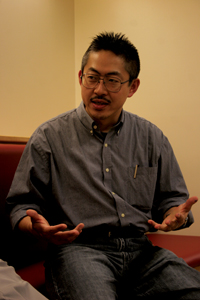
According to Assistant Professor Hiroki Sayama, director of CoCo, the group’s latest project is a study on team decision making, and what kinds of thinking would make these environments the most productive.
“We know that quite often teams don’t work,” Sayama said in a press release. “Five people should be five times more capable than an individual, but sometimes that doesn’t happen.”
Another member of the group, Shelly Dionne, who is an associate professor with the School of Management, also stressed the importance of teamwork. She said that better decision making in the workplace can have a monumental impact on larger organizations.
CoCo applied for a grant last year from the NSF for the same project, but was rejected. This year they were accepted after they redrafted their original plan, which received some criticism.
The $550,000 grant received from the NSF will be used to enact computer simulations and real-life experiments, where CoCo’s concepts and ideas can be tested.
“We also plan to fund two graduate students to assist us with our research,” Dionne said.
According to Sayama, the group is currently in the drafting stages of several experiments.
“The research will take a few years to complete,” Sayama said.
An example of an experiment CoCo plans to conduct is to divide students into several groups, with each group being briefed on a concept. Some groups will receive more briefing than others. The goal of the experiment is to see how willing students are to accept new concepts when comparing them to the original ones they were told and to what degree.
After all the experiments are completed, the team hopes to include the information they found in course curricula at Binghamton University. Dionne said that their contribution could be very significant, considering that the evolution of ideas in a group format is an area that hasn’t been researched.
Dionne believes that group work is often difficult because students are being asked to set aside their personal agendas to become accountable for the actions of the group as a whole.
“Many times you may feel that your ideas are better, but the group decides on another view,” she said.
Sayama stressed that group discussion can be influenced by a variety of factors, such as the expertise a person has in a particular subject, or the ranking of power in a group.
“If a person has more authority than you, then you will have a different word choice when talking to them,” Sayama said.
Dionne emphasized the notion that CoCo contains professors from a wide variety of disciplines. She believes that because there is a diverse variety of thought in the group, more unique concepts can be discovered and researched.