





Binghamton University was ranked with Harvard College and Yale University this summer as one of the top 11 green schools in the country by the Princeton Review.
All 11 schools included in the report received a green rating of 99, the highest possible score, on the first ever “2009 Green Rating Honor Roll.”
“Our job at Princeton Review is to match great students with great colleges,” said David Soto, a college rating director at the Princeton Review. “Over the years we have found that 63 percent of parents and students value environmental policies, practices and programs about colleges.”
According to Soto, the Princeton Review sent copies of the survey to all 2,000 colleges and universities in the United States, to which about a quarter of that number responded.
The survey consists of about 30 questions designed to measure how environmentally aware each school is. Princeton Review does not rank the colleges, but simply gives them a score based on three major aspects.
The first aspect is whether a school is providing a healthy environment for the students. The second part focuses on whether there is an institutional commitment to the environment and whether the school is preparing students to use these safe practices for the environment presently and in the future. Finally, the last criteria used to grade the colleges is how environmentally responsible the school’s principles are.
According to Soto, each year the standards of environmental practices will rise and the methodology will become more difficult to adhere to.
BU is no stranger to environmentally friendly policies and has invested nearly $1.5 million in energy savings projects since 2007.
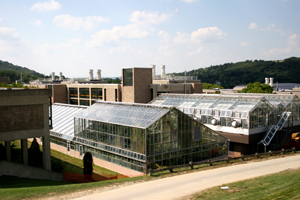
More than 40 environment and sustainability classes are offered each year and research is offered in the University’s 12,500-square-foot greenhouse facility.
As a result of the University’s use of alternative forms of energy, such as electric power and burning wood chips, BU has been able to reduce the amount of carbon emissions on campus.
Last September BU President Lois B. DeFleur signed a climate commitment to reduce carbon emissions.
“I think that what we are doing for Binghamton University’s environment is very good,” said Juliet Berling, Physical Facilities’ environmental resource manager. “But we always ask ourselves what we can improve upon.”
Some of BU’s latest construction projects also promise to stick to green practices in their finished products.
The renovation of the East Campus, which consists of the Newing and Dickinson living communities, is one of them. These new dormitories will be meeting the Silver LEEDS certification, which is mandated by the U.S. government. The new Dickinson dormitories are scheduled to be completed in 2011 and the new Newing dormitories should be finished between 2013 and 2014.
The Old University Union will also be “going green” following the completion of the current construction. The University is removing all the asbestos, which will make the ventilation more efficient. It will also monitor lighting to ensure that the building is more energy efficient.
Updates to the Susquehanna Community are also slated to follow more environmentally friendly practices. Through funding offered by the New York State Energy Research and Development Authority (NYSERDA), BU will install solar panels for a solar hot water system, which will preheat water before it enters the building. If this proves to be successful, BU will look to extend this new technology to other dormitories as well.