





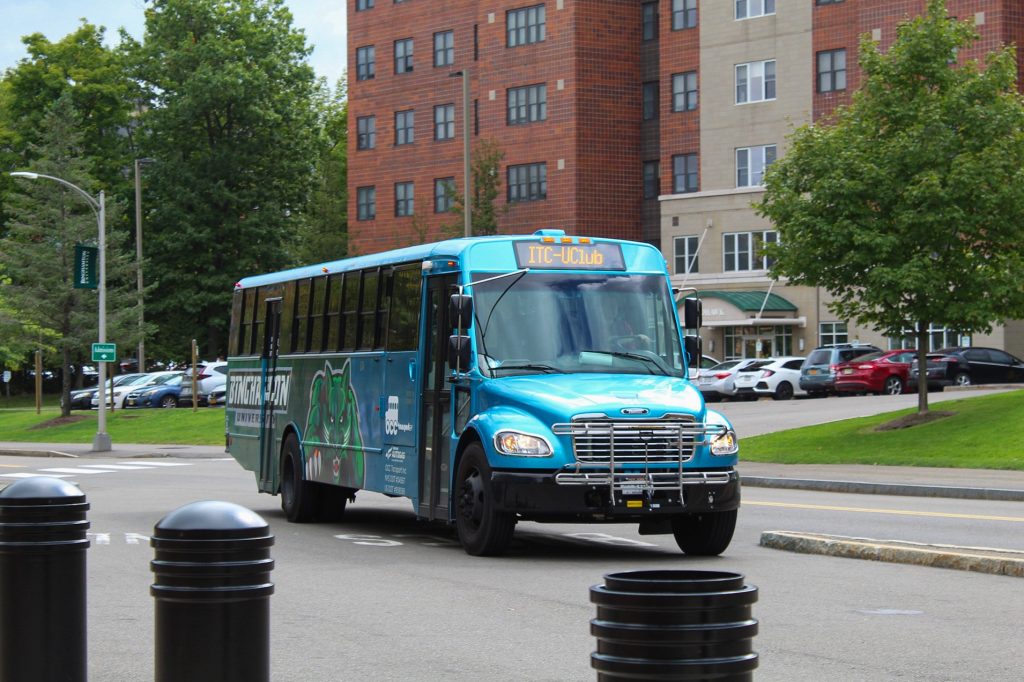
Don’t have a car? Binghamton’s bus systems can get you to most places you need to be — but sometimes navigating them takes a bit of finesse. Here’s a few tips to master public transportation and get exploring!
Know the Difference Between OCCT and BC Transit
Off Campus College Transport, or OCCT, is student-run and transports students from the campus to other spots on campus and off-campus locations. Every off-campus bus departs from the University Union, and every daytime inbound (meaning campus-bound) bus departs at the University Downtown Center.
BC Transit is Broome County’s public bus system and has a much broader network. BC Transit routes generally go farther from campus in the Greater Binghamton area. Both are free for Binghamton University students with a BU ID.
Plan Ahead By Using Online Bus Schedules
Before taking any bus, check its online schedules to know when and where it is supposed to arrive. OCCT and Broome County Transit both provide online bus schedules of every route at https://occtransport.org/routeschedule.html and https://broomecountyny.gov/transit/routes. Google Maps is also useful for planning a trip using BC Transit. Keep an eye out for holidays and weekends — both transportation systems use different weekday and weekend schedules and OCCT operates differently on University days off or holidays. Also, some routes have times or stops that only occur on certain days.
Track Your Bus
Both OCCT and BC Transit offer apps to know where buses are for each route. OCCT uses ETA Transit, which displays both the current location of each bus and the exact pathways and stops of every route. This is useful in tracking each bus and its estimated time of arrival and can show if a bus has departed. The BC Transit app has a trip planner as well as a live map of buses, which serves the same purpose as ETA Transit.
Arrive Early and Expect Delays
As with any public transportation system, OCCT and BC Transit may arrive at either its starting location or any other location on its route late. Additionally, buses may arrive at and depart a certain stop earlier than planned. This can happen due to traffic, weather, or other unexpected circumstances. To be best prepared for this, give yourself extra buffer time when using the buses and arrive at bus stops at least 5 minutes before the scheduled stop time. Using the necessary apps to track your bus can also be helpful.
Always Have Your BU ID
A BU ID provides free access to both OCCT and BC Transit. Without a valid ID, you may have to pay to use BC Transit, or may not be able to get on a bus at all. It helps to keep it easily accessible, such as in a wallet or phone case, to make the process of getting on the bus faster.
Check Service Alerts and Modified Schedules Beforehand
Temporary route changes, construction and weather conditions, may affect the service of a bus route, or whether it runs at all. In order to avoid this, check both route schedule webpages and tracker apps before your trip. During breaks or extended weekends, OCCT and BC Transit may operate on alternate schedules, or not run at all. In order to prepare for this, check the schedules prior to days where there are no classes.
Memorize Patterns Between Commonly Taken Routes
Some bus routes operate on a repeating basis, with buses departing on an incremental basis. For example, the OCCT weekday Vestal Shopping Shuttle departs every hour, and the weekday Oakdale Commons Shuttle departs every two hours. Knowing when commonly taken routes depart can make planning more efficient when going off-campus.