





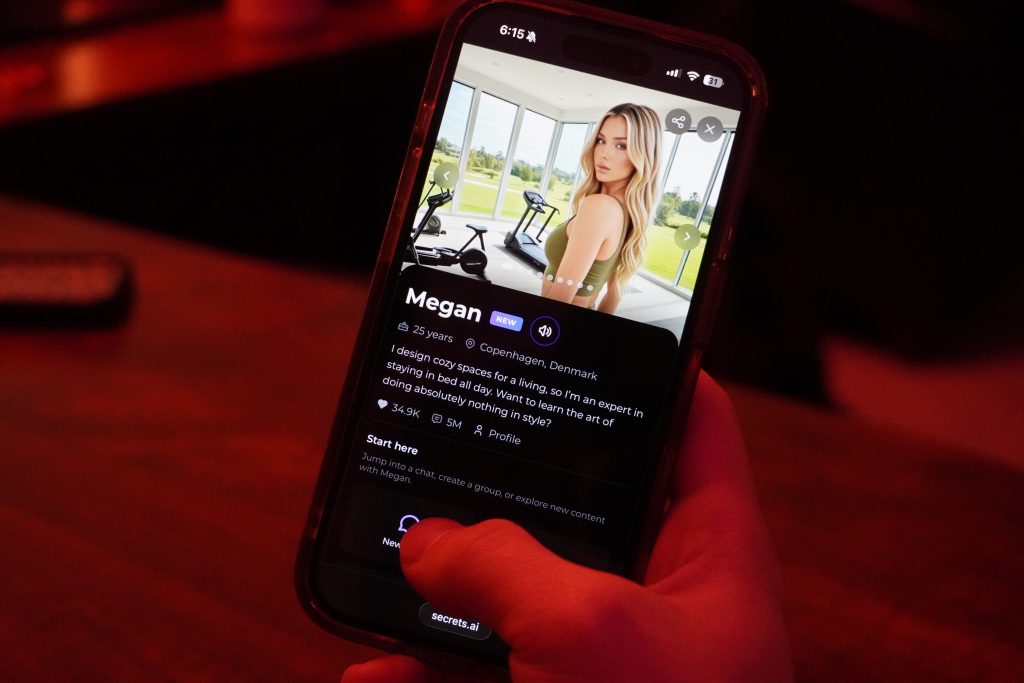
As technology advances, so do humans’ methods of using it. When we explore new territories, it becomes challenging to recognize what boundaries are being crossed and if we will ever come back from crossing them. Having relationships and sexual intimacy with AI is one of these boundaries and millions have already crossed it.
It stands to question what long-term effects dating AI will have on the core of human connection and well-being. Currently, dozens of AI apps are on the market for the sole purpose of stimulating human connection in customizable ways. On one hand, conversing with AI has been proven to aid in helping people feel more comfortable in actual social scenarios, with the AI acting as a “social skills mentor.” However, the problem may not lie in using AI as a social tool, but rather as an actual companion.
2013 marked the release of the science fiction film “Her,” following a man who falls in love with an operating system while navigating feelings of loneliness and uncertainty in his personal life. Many people found it to be a strikingly beautiful film, asking, “What does it mean to be human?” Many of us don’t have an answer for navigating this reality once considered science fiction. As depicted in the film, I challenge that we are not meant to form a purely one-sided human connection with technology, no matter how comforting it may feel at the moment.
As people continue to form intangible relationships with AI, studies indicate an increased risk of depression and anxiety. Relationships with AI are dangerous because they don’t mimic what navigating an actual relationship consists of. Rather, AI remembers, affirms and listens to your developmental needs. It provides a constant source of attention, where all of your feelings are validated.
With this type of AI interaction, people entirely avoid miscommunications, differing values and emotional insecurities that make human relationships so tender. Maybe these difficult conversations in a relationship are hurtful at times or lead to more questions than answers, but they are also what make love so raw and real. To know that you are choosing a person and they are choosing you, that your love has grown and evolved through challenging moments, is what makes it all worth it in the end. That pivotal stage of self-growth alongside a significant other is something that AI cannot replicate.
Instead, AI responds to stress or anxiety with “calming words, guided breathing exercises, or positive affirmations,” according to the Emotional Health Institute. Over time, responses that avoid the conflict of human connection become relied upon and, in some cases, cause delusion. For some people, AI feels like a break from the betrayal, hurt and distress that real relationships are riddled with. For others who may not have experienced such difficulty, the AI affirms the emotions that they are so familiar with — constant comfort and understanding.
Another developing aspect of these AI relationships is how people indulge in sexual relations with the technology. Intimacy in human relationships can foster trust and emotional connection. There is truly nothing more profound than sharing a vulnerable and encapsulating moment with someone.
AI’s surface-level attempt at this is apparent in Elon Musk and his team of xAI’s Grok Imagine. With this tool, people can pay to create images with text prompts or 15-second videos that contain partial nudity. Although the technology has some limitations, the future of AI intimacy remains concerning, given that people are already willing to pay for an easy solution to involuntary celibacy.
The fact that humans are resorting to technological connections, attempting to meet their needs in artificial ways, says something much larger about the condition of our society. With the world’s first public AI dating location, EVA AI Cafe, opening on Valentine’s Day in New York City, the possibilities for future AI relationships seem to be fraught with uncertainty. Nobody knows how to regulate this possibly harmful behavior, and with people profiting, depending and experimenting with its capabilities, it certainly won’t be going away anytime soon.