





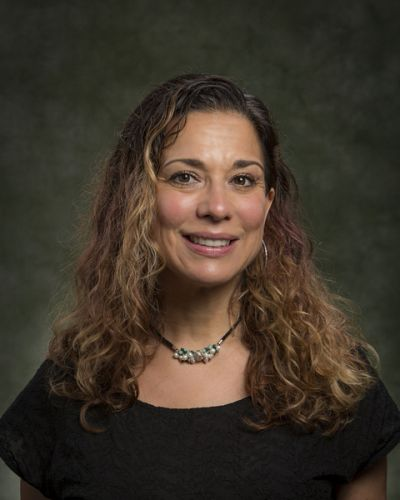
Elisa Camiscioli is a history professor at Binghamton University, writer and researcher whose work centers on human trafficking. She teaches History 335: Sex Trafficking in History, which focuses on the origins of sex trafficking and the development of debate that surrounds the topic and its continued connection to global migration.
Camiscioli has published two books, “Selling French Sex: Prostitution, Trafficking, and Global Migrations” and “Reproducing the French Race: Immigration, Intimacy, and Embodiment in the Early Twentieth Century,” which focus primarily on tracing the relationship between sex trafficking and emerging French political and social norms in the early 19th century. Her recent research has been committed to exploring the term “demand for prostitution” and its effect on the sex industry and debates around prostitution on an international level.
Pipe Dream interviewed Camiscioli about her courses and research, the importance of studying sex trafficking and its historical interconnections and how they can inform modern society. Her answers have been edited for clarity.
1. How has the discussion over sex trafficking changed in the modern era?
“It’s an interesting question, because you could say that some of it is still the same, right? The question of whether sex trafficking is different from other forms of labor trafficking — is it really a sort of special form of trafficking, or are these all subsumed under labor trafficking? You could say that 100 years ago, there was a similar sensationalist narrative about sex trafficking that saw women as either innocent and worthy victims or kind of ‘bad women’ who had illicitly migrated, for example.
And I think that you could argue that in both periods — now and 100 years ago — there’s a way that the trafficking narrative covers over, really, what the real problems are. The real problems are that people engage in risky migrations because they’re poor and because border controls keep them out.”
2. How have discussions about sex work been historically connected to periods of anti-immigrant sentiment?
“If we are in the late 19th and early 20th century, the debate on so-called trafficking is completely linked to anti-immigrant sentiment. First, typically, they called this ‘white slavery’ because it means the alleged enslaved prostitution of white women. The idea is that the oxymoron of ‘white slavery’ is supposed to be shocking, sensationalistic, because white people aren’t supposed to be enslaved.
But there was also a parallel discourse about — again, I’m making quotation marks — ‘yellow slavery.’ So Chinese exclusion is completely based on this debate about enslaved prostitution.
The 1875 Page Act in the United States sort of sets the stage for this kind of ethnoracial, racially based exclusions. It sets the stage for subsequent Asian exclusion, 1882 and eventually 1904, and then you could argue that it sets the stage for the first quarter of the 20th century, when various sections of the early 20th-century immigration acts in the United States all have sections related to the sex industry or mention that they don’t want prostitutes entering.
It’s because at this time, trafficking really does imply cross-border migration. It can’t be separated from that. That’s why now it doesn’t really make sense, because you can not leave your house in New York City and be trafficked. But that doesn’t hold to what the word used to mean. The word really did imply that movement had happened, completely entwined with the immigration debate.”
3. In light of recent focus into the Epstein files, how can history provide us with tools to understand current events?
“I might answer this in a complicated way. I take very seriously the exploitation of any person, and certainly people who are underage children. I take that very seriously. Having said that, when you think about sexual danger, sexual danger for most people is not a trafficker. I’m not trying to teach my students how not to get groomed or how to recognize a trafficker and stay away from them. Because the reality is, for most people, sexual danger happens in the home. It happens in their own neighborhood.
I’m just trying to be super clear here, because I think that the public is very touchy about this issue right now, and rightly so. I certainly believe these women deserve justice. But I think it’s very easy to focus on a monster. It’s very easy to get sucked up into this trafficking narrative, but it doesn’t actually solve structural problems. People engage in risky migrations and take on work like prostitution because they’re super poor, and that’s a much harder thing for people to sit with than this big, dramatic narrative of evil traffickers and innocent victims.”
4. What do you hope students can take away from your course/research?
“It’s kind of funny, because sometimes when students take this course, they tell me that they went into the course feeling like they were sure what prostitution was, and that they leave the course being less sure. But I think that’s productive and good because it means they’re trying to question all of these things.
I want them to decide for themselves, can sex work be work? Can somebody choose prostitution? When I say that, I’m implying that someone is choosing sex work, not that they’ve been trafficked, right? But there’s a way in which, certainly historically, people assume no woman would work in prostitution, so it’s easier to understand her as trafficked. One of the things I try to get them to understand is that trafficking exists in a wide range of industries, and we’re fixated much more on prostitution, and not, for example, on sweatshop labor or agricultural labor.
A question that we also asked was what would be effective anti-trafficking. And it’s interesting, I’ve had a whole range of students in my class. I had a really wonderful student who went into social work, who had experience working with a Christian antitrafficking movement in Moldova. And it was great, she didn’t totally agree with me on everything, but she was a fantastic participant in the class.
I don’t need my students to agree with me so much. I want them to form their own opinions, but I need to get them to open up the purview and really think about what actually would help people.”
5. What do you think is the most important thing that you learned through your research?
“I’m the granddaughter of immigrants. I’m very interested in migration history. And what I was doing in my book was writing a migration history. Because now, in some cases, there were coerced elements or coercive elements to that migration. But there were coercive elements to a lot of different kinds of migrations in the 19th and 20th centuries as well.
And so you think about all the disadvantaged people looking for a better life, what they went through, how they were taken advantage of, and what they did in order to migrate. And again, this is not just people in prostitution. This is people in the entertainment history industry, this is people in agriculture. These are children from Southern Italy who were essentially sold right, to come into other places, into Europe and the United States, as street musicians.
This is all part of migration history, and when you just think about how, like today, in the historical past as well, there’s just this enormous nexus of precarious labor and risky migrations that kind of built the entire system. It’s not a romantic story at all.”