





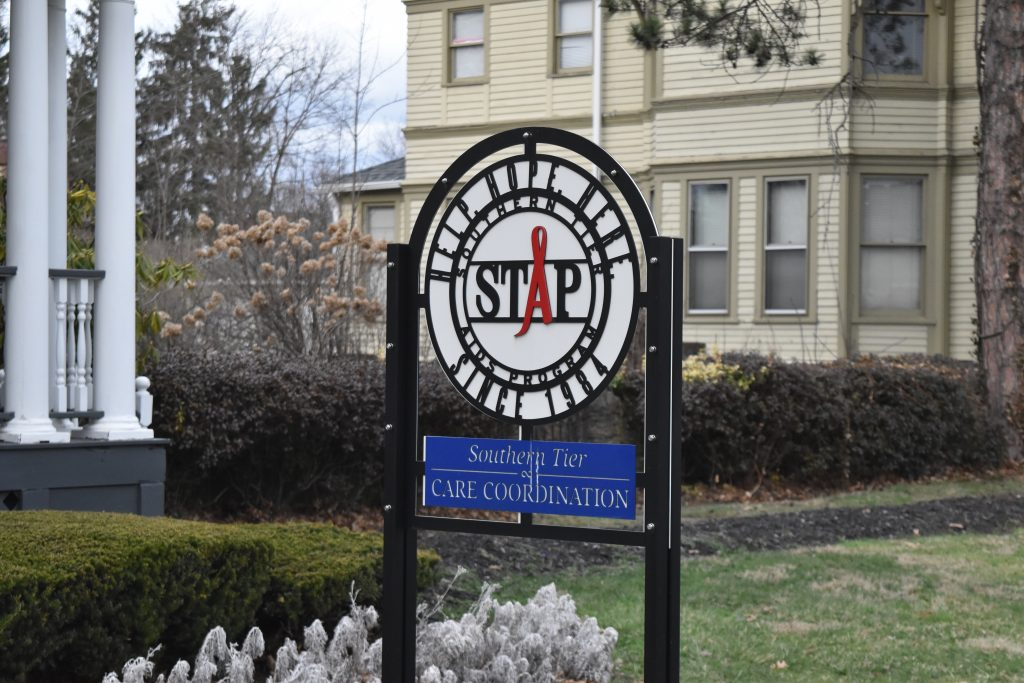
Over the past few years, the Broome County Health Department has documented an increase in positive HIV cases throughout the county, particularly among people with a history of intravenous drug use. With help from local community initiatives like the Southern Tier AIDS Program, the department has maintained efforts to provide access to treatment for those affected.
On Aug. 29, 2025, the department posted an advisory on Facebook addressing the uptick in cases, with positive cases coming from an existing cluster primarily made up of unhoused white adults between 35 and 45 years old. Along with drug use, transmission has also come through sexual activity, according to Dr. Lazarus Gehring, medical director of the Broome County Health Department.
As technology for detecting HIV has improved, medical professionals can document the spread of the virus among specific individuals and pinpoint where transmissions are coming from. While past reports of HIV cases in Broome County have typically originated outside of the local region, current evidence suggests that cases are coming from inside the county, Gehring said.
“So that was historic data, but we were noticing transmission within Broome County, which means that people were not being treated,” Gehring said in an interview with Pipe Dream. “So to speed up the time scale a little bit, as of [Feb. 12, 2026], there’s 39 people in the cluster. Three have died. There are a few who are incarcerated and there are a few in the hospital. And so that’s quite a blossoming of HIV. And this is being transmitted from a Broome County resident to another Broome County resident.”
The spike in cases was noticed not just by the health department but also by the New York State Department of Health and the Centers for Disease Control and Prevention, leading to a health advisory being issued by the state health department in July. The Broome County Health Department works with local organizations to take steps to treat those affected.
Because many of those who were newly diagnosed are unhoused and do not typically have a permanent address or phone number where they can easily be reached, local groups have conducted outreach on the streets, looking to assist people in need. About half of the cluster has received treatments thanks to the work of these groups.
“You can imagine trying to find these people without any of the usual modes,” said Gehring. “And so, the way you find them is with human contact and people being out on the streets looking and serving. And that can be whether a person comes to the hospital or comes to a shelter or is just offered a cup of coffee at the public library. All these places can hook a patient or person up with testing and treatment.”
The Southern Tier AIDS Program, an organization dedicated to providing HIV/AIDS services to the Southern Tier, has operated in the area since 1984 and provides a wide range of services through the federal Ryan White program, including care management, health education, housing assistance, food assistance, transportation and support groups. This program comes from the Health Resources and Services Administration and provides primary medical care, medication and support for low-income individuals with HIV.
Approximately 1.2 million people in the United States over the age of 13 have HIV, with one in eight cases being undiagnosed. John Barry ‘91, the executive director of STAP, shared how stigma surrounding AIDS and HIV has had a large negative impact on accessing care.
“Stigma is the reason that AIDS service organizations exist,” wrote Barry. “If AIDS were treated as most other diseases are it would have been dealt with and addressed through the existing public health and health system infrastructure in existence in the 1980s, but stigma and fear led to an inadequate response by those systems, which necessitated building an alternative system to deal with one disease.”
The county health department has looked into promoting programs through community outreach at local libraries, bus stops and other organizations to improve access to HIV treatment and resources. Along with this, the Broome County Health Department offers confidential and stigma-free services.
While this cluster of HIV cases generally does not overlap with Binghamton University students, the Broome County Health Department has extended a hand for volunteers on every front.
“We are starting at the health department later this month with a large collaborative effort to get more students involved in public health in our different departments, our different outreaches,” Gehring said. “And at the same time, of course, Binghamton University is looking at experience for their students, research for their professors and students and I think we’re finally hitting the very beginning of a great relationship between the health department and the University that will benefit our community and students.”