





Leading up to and following the start of the new year, my social media feeds were flooded with a trend that seemingly came out of nowhere — people begging to make 2026 the new 2016.
I have no idea how the trend started. Maybe it’s due to Zara Larsson’s “Lush Life” TikTok resurgence or simply a desire to return to a more carefree time. It has nevertheless taken over the pop culture scene, with nostalgia for a year that occurred a decade ago infiltrating our daily lives.
Everyone from casual social media users to influencers and celebrities are now sharing their throwback pictures, featuring key indicators of the time like the Snapchat dog filter, velvet chokers, green army jackets and color presets like the Rio filter on Instagram, giving the photos contents a pink-purple tint. Additionally, music popular in 2016 is making a comeback and everyone is seeking to emulate the vibrant energy of that period today.
And maybe it’s just because I was 10 years old in 2016 and too young to truly understand its significance, but I don’t see why we would want to go back. In fact, events since 2016 make it impossible — and maybe even dangerous — to readopt the hopeful, naive attitudes that dominated that time.
Many refer to 2016 as the “last good year,” with 42 percent of Gen Z respondents reporting feeling a sense of nostalgia for the 2010s, according to GWI. They blissfully remember a time when they were younger and everything felt lighter.
But things were not so light, even back then.
While 2016 featured many joyful moments, like the world coming together to play Pokémon GO , listen to Beyoncé’s “Lemonade” or watch the first season of “Stranger Things,” it was not without its flaws. Some of the defining moments of 2016 were also the election of Donald Trump to his first term of presidency and the Pulse nightclub shooting in Orlando — one of the first moments I remember grappling with the reality of mass shootings and hate crimes.
Even if we somehow ignore the terrible events that occurred in 2016, we could never replicate the hopefulness that many report as surrounding the year in their memory. Too much has changed.
Since 2016, things have only gotten worse — or at least harder to ignore. We have seen Trump run in two more elections since that year and his presidency has had huge impacts on both domestic and global politics, including the incitement of an insurrection. From 2015 to 2023, over 19,000 people were shot and either wounded or killed in a mass shooting incident. The events that I recall as tainting 2016’s memory — the election results and the Pulse shooting — were not isolated moments, but small fragments of larger issues that are still unfolding today.
For me, 2016 does not feel like better times. It feels like the beginning of the end.
What followed was 10 years defined by overlapping crises. We lived through a global pandemic that shut down everyday life. Russia invaded Ukraine in 2022, sending shockwaves across the globe and that same year, the Supreme Court overturned Roe v. Wade. We also experienced life-changing climate disasters, including Hurricane Harvey in 2017, which displaced over 30,000 people and caused $125 billion in damages, and the 2018 Camp Fire in California — the deadliest and most destructive wildfire in the state’s history. Nobody in 2016 could have predicted what the following decade would look like.
And that instability isn’t distant or theoretical. It plays out in real life, shaping how people treat one another and how the country functions.
Eighty-four percent of American adults say political debate has become less respectful in the last several years. We are more polarized as a country than ever before and the effects of the last decade can be seen all around us, with Immigration and Customs Enforcement agents conducting aggressive raids that resulted in civilian harm and a total and partial shutdown of our government in just six months due to policy disagreements among officials.
We are living in a time of unprecedented uncertainty. Now more than ever, we must charge headlong into the present, ready to fight for change rather than finding solace in the bliss of the past.
It makes sense why, in a time filled with unknowns about where our country might be headed, we would turn to nostalgia. The past is predictable, unlike the present and the future and the aestheticized version of 2016 we remember does, in fact, seem like a better time to live in than the one we live in now.
But nostalgia flattens history, and we remember 2016 as being better than it actually was. It wasn’t all flower crowns and pop anthems; the year had its own conflicts and hardships.
So instead of reminiscing on a perfect past that didn’t exist, why don’t we focus on making the present more livable?
2026 could never be 2016 and we shouldn’t want it to be. 2016 marked the beginning of a rough 10-year period. While the current moment may feel scary and uncertain, we can’t run from it. Rather than making 2026 into 2016, we should build a better 2026. Protest against unjust systems. Focus on advocacy and organize into strong resistance groups. Lobby your politicians to enact change. Use your vote to make your voice heard. Support and protect vulnerable communities.
The past may feel like a more comfortable place to live, but the future can too, if we stop running away from it.
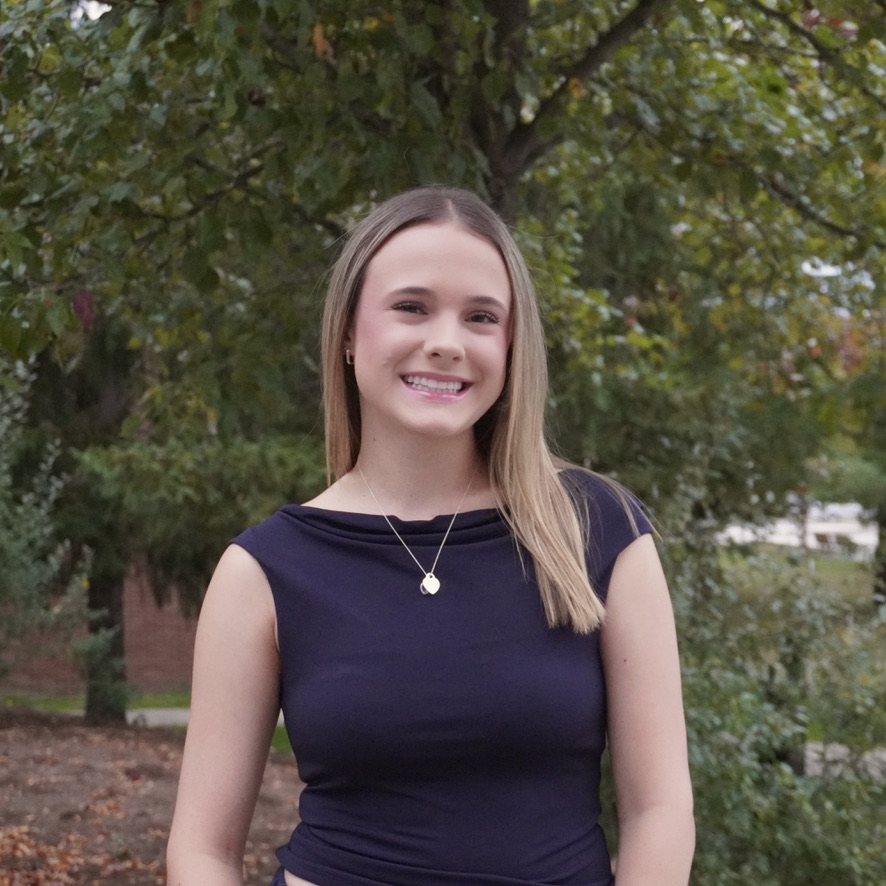
Danica Lyktey. a sophomore double-majoring in psychology and philosophy, politics and law, is Pipe Dream’s assistant opinions editor.
Views expressed in the opinions pages represent the opinions of the columnists. The only piece that represents the view of the Pipe Dream Editorial Board is the Staff Editorial.