





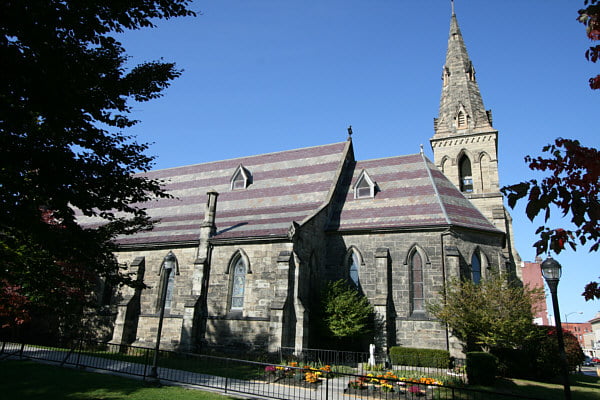
Christ Episcopal Church, located in Downtown Binghamton, has partnered with a nonprofit to eliminate $1.5 million in medical debt to assist local families.
In 2014, a group of former debt collection executives founded Undue Medical Debt, an organization that works to “end medical debt and ensure a future where everyone can access healthcare without fear.” The nonprofit buys medical debt from collection agencies at a discounted price and uses donated money to pay it off. Every dollar donated helps to pay off about $100 in debt. To qualify for relief, a person must either earn at least four times below the federal poverty level or have medical debt that makes up five percent or more of their annual income.
Christ Episcopal Church is open to all people regardless of age, race or economic standing. In a statement to Pipe Dream, Rev. Scott Parnell, the church’s rector, said the inspiration for purchasing and forgiving the medical debt is closely informed by faith.
“Purchasing and ultimately forgiving this medical debt is a way we are living into God’s dream of a redeemed world,” Parnell wrote. “We want to make tangible the goodness of God’s love.”
As part of its mission to help unhoused people in the area, Christ Episcopal Church is home to a food pantry and a free clothing closet. The church also collects donated mittens, scarves and hats for its Winter Warmth Project.
A homeless encampment set up on the church’s property was disbanded in September following the request of city officials.
According to the latest American Community Survey, 32.9 percent of residents in the City of Binghamton live below the poverty line. Data from the New York Health Foundation indicates that the Southern Tier has the second-highest median amount of medical debt in collections across regions statewide. The Urban Institute estimates that 10 percent of consumers in the Southern Tier have medical debt on their credit reports, including 5 percent of those in Broome County.
Parnell believes the program will have a positive impact on the community.
“First, that the burden of debt and the stress of debt collectors is lifted, that this is one less bill those burdened with medical debt have to consider and they are able to redeploy the funds used to pay them to other aspects of caring for themselves/their families,” Parnell wrote. “And second, we want to give hope to people — that somebody they’ve never met cares about them and is willing to sacrifice for them. But moreover, we want to confirm their hope that a better world is coming — where each person is able to flourish and be fully alive. It’s God’s vision of shalom and sabbath.”
Undue Medical Debt is also promoting policy change that could ultimately end the practice of collecting medical debt, advocating for measures like improving access to affordable healthcare coverage, simplifying billing practices, banning extraordinary collection actions and monitoring medical debt through data collection. While forgiving debt provides immediate relief, improving the “broken healthcare system itself” would help prevent new debts, according to the organization’s website.
“As we look to the future, we would love to do this again as more debt is available for purchase,” Parnell wrote. “And moreover, we would love to partner with other congregations and community members/organizations to do this work.”