





This summer, I spent the month of June in Slovakia, where I studied the history and culture of the Rusyn people, an ethnically Slavic minority spread across Central Europe. In Slovakia, I was sincerely expecting to find people driven by a desire to preserve and enrich their culture.
Instead, what I observed — the elitism, arrogance and abject ignorance of the leaders of the Rusyn movement — made me realize the supposed ambition to revive this culture is nothing but an outdated shell of its former self.
First, since this is a niche subject, I want to provide some background information. Rusyns are a community of Slavic people who reside primarily in Central Europe and are historically distinct from other Slavic peoples such as Russians, Poles or Ukrainians. What makes Rusyns distinct is that, unlike other Slavic peoples, they never created their own state.
There has historically never been a “Rusyn country,” and the Rusyn people themselves have been subjected to policies of assimilation or discrimination in whichever nation ruled them for the many centuries of their existence. Naturally, this creates a theme of resistance and yearning for self-determination that defines Rusyns as a people — their struggle to invent the Rusyn nation is the bedrock of their cultural mindset and enlightenment.
It is no wonder to me Rusyns embraced this spirit, organizing a period of national awakening throughout the 19th century to create their own distinct society, art and politics. However, the 21st-century incarnation of this heritage is a movement only in name.
From what I witnessed, the Rusyn organization is merely a collection of elite academics doing much less than the bare minimum to form a platform that can campaign for cultural rights and representation. The modern Rusyn movement is more focused on recreational social gathering than mobilizing a cultural movement.
What can be done with this lack of focus? If Rusyns, as people who never had a state to coalesce around, still want to preserve their identity, community and language, the old guard and its lack of care for the future must be openly challenged.
The main obstacle is that, unlike Scots in the United Kingdom who have the Scottish National Party, the South Schleswig Voters’ Association for the Danes in Germany or the Bloc Québécois in Canada, there is no political party carrying the Rusyns’ voice and identity to an elected assembly. There is simply no political momentum for seeking regional autonomy aimed at advancing the cause of representation and recognition for Rusyns.
This is squarely the fault of an elitist society out of touch with the basics of political praxis — the old guard of the modern movement not only ignores but outright denies the need for political representation, being content with small yearly gatherings that do not promote new actions.
This lack of care needs to be swept away to clear the space for a new and modern movement, led and organized by young activists who are energetic, talented and, most importantly, sincere about making the Rusyn cause mainstream.
There are three key factors at play — lack of cultural production, lack of dynamic leadership and, most significantly, lack of political motivation. The first problem was the easiest for me to witness; the modern movement barely moves the Rusyn culture and art away from the endless repetition of folk songs and poems from 200 years ago. There is simply no drive to enrich Rusyn art by incentivizing the use of the Rusyn language in new art forms, nor any ambition to popularize the cultural heritage by making it reach the mainstream.
The other two problems are inextricably linked and arise from the existence of each other. The old guard of historians and linguists who documented Rusyn history for the past few decades has, by now, reached a point of stagnation. Beyond regurgitating and embellishing old history, the people who founded societies and cultural organizations lack the ambition to participate in political campaigning and advocacy to make the community more widely recognized.
Since the old guard is also adamant about maintaining its grip and only passing down positions of authority to people who toe its line, the young activists and researchers who seek to push the Rusyn community into the mainstream get pushed aside. To my greatest surprise, they’re often ridiculed for being “annoying firebrands” compared to the supposed adults in the room who, in reality, do not ever meaningfully advance the collective cause.
I fully believe a true Rusyn cultural awakening can happen in this century, and the youth ready to lead it will use it as an opportunity to campaign for their rights to recognition and a cultural identity. This is, however, only possible if the movement is rescued from the grip of people who have no interest in connecting with people — activism, not isolation, is the answer for the future of Rusyns.
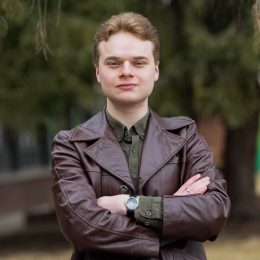
Deniz Gulay is a junior double-majoring in history and Russian.
Views expressed in the opinions pages represent the opinions of the columnists. The only piece that represents the view of the Pipe Dream Editorial Board is the Staff Editorial.