





We all are different — that is just a fact. But the idea of being different is often uncomfortable, and many have an urge to fit in and be more like “everyone else.” This occurs in almost every aspect of society, from kindergarteners changing their “favorite” color to be the same as their friends to the informal rules people learn to not draw eyes in public. These urges are a part of the overbearing presence of “norms,” or categorically “normal” behavior, that we establish socially even though, as a species, there is no inherently correct way to behave.
Rejection of others in our own desire to fit in is a prominent dividing factor in our increasingly heterogeneous society. Feeling different, out of place and excluded is not an uncommon occurrence, but it is what we choose to do when faced with this feeling that influences who we can grow to be. I have had the privilege of making friends with those who are very different from me. They have taught me about their cultures and languages, providing me with new knowledge of the world alongside their understanding of international “norms.”
My deepest relationships have all tied back to the transmission of differences rather than their denial, and I truly do not believe I would be the person I am today if I had not gone out of my comfort zone to learn how beautiful being different is. Difference becomes normal when one realizes they are learning more about oneself and the world, and I am lucky to know how insignificant following “norms” can really be when it overshadows one’s identity.
Unfortunately, however, American and Eurocentric ideologies have for centuries prevented the unanimous appreciation of these differences, fostering bigotry within the roots of norm construction. This is detrimental to the social fabric for a multitude of reasons.
To begin, a connection is born out of the desire to be understood. Specifically, when we connect, it grows through the transmission of unique thoughts, feelings and behaviors that in turn allow us to be more accepting of each other.
When we predesign a negative idea of someone in a light that paints them as an “other,” we sever the ability to connect and dissolve a path to interpersonal appreciation. This severance can lead to a spiral of hatred for the “other’s” cultures and knowledge, blocking off the route to a deeper understanding of human experience. As a country, we uphold the notion that being a well-off straight white person following casual styles is the “norm.” Those who do not or cannot fit under this label tend to experience bullying and bigotry.
As this issue has evolved, it has made its way onto TikTok, where I have seen countless examples of body shaming, discrimination, racial prejudice and hostile political discourse. However, I have also seen something hopeful: the rise in upstanding behavior counteracting these issues. I believe younger generations are becoming less tolerant of perpetuating stereotypes and are beginning to see how constrictive and destructive the upholding of Westernized norms can be, and the evidence lies in a recent trend.
This trend quotes Roald Dahl’s novel “The Fantastic Mr. Fox” and beautifully analyzes how feelings of difference can be negatively transmitted between people. Ironically, a trend is typically a movement that people begin to pick up and follow, though it is clear that most of the participants in these TikTok videos are, in one way or another, considered different, with bodily variations ranging from dyed hair to physical disabilities. In this unifying change, instead of hiding personality expression or uniqueness in attempts to fit in, these people began a trend that accentuates their differences with pride.
People who participate in this trend sign the quote, “I know what it’s like to feel different” and “I guess he’s just … different.” The final word “different” is emphasized through the pulling apart of the two index fingers, similar to the American Sign Language sign for “different,” almost as if pulling two people away from one another. The quote itself comes from multiple scenes in which the character Ash battles the reality that he does not fit in with the norms of his environment. His father — Mr. Fox — and Ash’s classmates are the main bullies of Ash’s uniqueness, shaming him for his height, how he dresses and his lack of athleticism, amongst other positive character traits Ash portrays including loyalty, creativity and passion.
Ash’s mother, Mrs. Fox, later reassures Ash, saying, “I know what it’s like to feel different.” Worried, Ash replies, “I’m not different, am I?” to which she responds, “We all are — (points to Fox) — him especially — but there’s something kind of fantastic about that, isn’t there?” The characterization of Ash’s father, the Fantastic Mr. Fox, as an “especially different” man challenges us to view difference not as a negative trait, but one that highlights the novelty of a person’s individual character.
Within the film, Mr. Fox portrays his own positive and negative traits, and it is clear he projects what he wishes for himself onto Ash. Projection is common and people can feel threatened when they encounter new perspectives. Still, this does not mean we should shoot down other lifestyles to preserve our own. Instead, learning about why people present, behave and feel the way they do can be an educational tool to understand the intersectionality of identity on a global scale. It also can prevent bias and unjust behavior against others by removing the idea that some people are “less than” for not following specific norms. In the modern era the understanding that, while we are all different, we are all also human, is one of the most crucial roads to peace between people, nations and governments. Acknowledging that difference is normal is a first step.
Embracing others regardless of their circumstances, tastes, backgrounds or personalities, can create opportunities for richer, more meaningful relationships. Engaging with the beautiful complexity of those around us strengthens our emotional and behavioral intelligence, helping us become more empathetic, confident and self-aware. When we surround ourselves with people who respect and support us for ourselves, instead of who they want us to be, we not only build stronger communities but also grow into fuller versions of ourselves. Embracing difference isn’t just beneficial, it’s transformative.
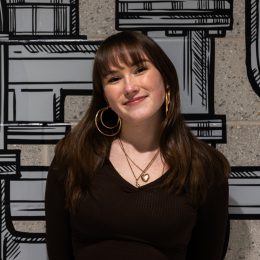
Merrigan Butcher is a freshman majoring in anthropology.
Views expressed in the opinions pages represent the opinions of the columnists. The only piece that represents the view of the Pipe Dream Editorial Board is the staff editorial.