





You probably thought, poor college student without any investments, that you wouldn’t be stung by Wall Street’s woes. Not directly, anyway. Sure, you’d spend less recklessly, but with no investments, what do you have to lose?
Try your tuition money.
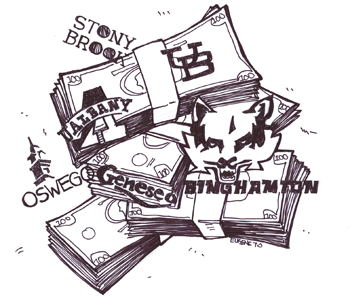
The State University of New York system and all of New York state receive 20 percent of their funding from Wall Street. So with $2.3 million already slashed from Binghamton University’s budget this year and more cuts looming as Wall Street slowly regains ground, SUNY’s need for money is clear.
On one hand, it’s hard to complain about a tuition hike. The SUNY Student Assembly voted for a 3 percent annual increase, intended to deal with inflation rates — it’s not that much considering how great a bargain public school already is.
But we wouldn’t be in this position had fiscal responsibility been practiced all along the chain — in the SUNY system, the state legislature and the stock markets. And there need to be some assurances given here.
The state can’t come back next year and tell SUNY once again that it has to cut spending by 30 percent. The Assembly’s attempts to make SUNY exempt from budget cuts would solve a lot of problems.
The extra money also needs to be effective. If programs, extracurriculars — whatever it may be — are still cut, SUNY won’t be keeping up its end of the bargain. Effective also means that the money is benefiting those paying it. At BU, the administration seems to be most concerned with the future instead of the present. If students are paying more next year, then treat them appropriately.
There’s one other issue here, not to be lost in the shuffle: Changes of this magnitude should have had a larger forum within the community. BU’s two Assembly reps made only a marginal effort made to gauge public opinion on the potential tuition increase. It’s everyone’s money, everyone should be made aware of what’s happening with it.