





Student representatives from 64 different State University of New York campuses are set to gather at Binghamton University this weekend for the SUNY Student Assembly’s fall conference.
“This conference is very pivotal,” said Juliette Price, the communications director for the SUNY SA. The conference, which is scheduled to run from Oct. 23 to Oct. 25, comes after two rounds of extensive SUNY budget cuts by New York Gov. David Paterson.
One of the main topics to be discussed at the conference will be the recent wave of cuts, and what students can do to protest them.
At the beginning of the month, Paterson ordered a $500 million cut in current-year spending for state agencies, and with 11 percent being cut across the board, SUNY faces with a $90 million cut.
A 2008-09 budget cut reduced funding for the SUNY system by $146 million after three rounds of cuts. In addition, last year SUNY trustees adopted a statewide tuition increase of $310 per semester for in-state undergrads and $1,130 for out-of-state undergrads, effective spring 2009 and into the current academic year.
“The conference is an official statement from the Student Assembly,” Price said, adding that the Student Assembly represents the voice of SUNY students.
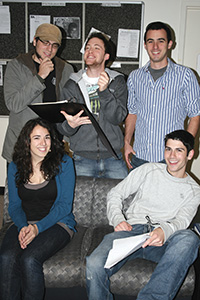
The five students who will be representing BU at the conference are Adam Amit, president of the Student Association; Elahd Bar-Shai, chair of the Student Assembly; Lawrence Faulstich, chair of research and planning for the Student Assembly; Jared Kirschenbaum, executive vice president for the Student Association and Jenna Goldin, president of the Junior Class Council.
At the conference, the student representatives will vote on a number of referendums, and each university delegation will present specific issues at the conference.
“Our main focus will be on unfair tuition increases and debilitating budget cuts,” Bar-Shai said. “We may also touch on issues relating to student representation on joint student-faculty committees.”
Faulstich, who spoke out against the lack of effectiveness of the conference two years ago, expressed his strong belief in this year’s representatives for BU and in the conference as a whole.
“They [the representatives] are all well-articulated … We tend to spearhead things,” Faulstich said. “I think everyone is pissed off and enthusiastic enough to get things done.”
According to Faulstich, throughout the week of the rally, the representatives from each SUNY school will work to get pre-written letters to Gov. Paterson signed by students who are against the budget cuts in the hopes of garnering press attention. Faulstich’s own goal is to get 6,000 to 8,000 student signatures.
In order to get government attention, individual representatives will be lobbying their state legislators.
This weekend, “Many SUNYs, One Voice,” a program created by the SUNY SA, will also be put into action.
According to Price, with “Many SUNYs, One Voice” the SUNY SA has asked every SUNY school’s student government to put together a rally on Oct. 28 and 29 with the hope of sending a unified message to the state government from the diverse campuses.
“SUNY SA basically functions as a lobbying liaison between SUNY schools and the state government,” Bar-Shai said.
The SUNY SA is made up of a representative body and an executive board. The executive board meets every month around New York state and the Assembly meets as a whole biannually, once in the spring and once in the fall.
Representatives come to the conference from each school in the SUNY system. The number of representatives from a school reflects the size of the school, whether the school is a university center and other determining factors.
To learn more about the SA and the fall conference, visit studentassembly.org.