





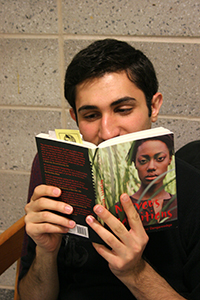
With papers to write and tests to study for, reading for leisure is probably the last thing on a Binghamton University student’s mind.
College is a place that is supposed to spark learning and give you access to some of the greatest pieces of literature of all time, yet even English majors seem to be reading less for fun and more to get an A.
Some students, like Aaisha Fatima, a junior biology major and a Discovery Adviser on campus, thinks that reading for fun should probably be the last thing on a student’s mind.
“You can’t read, hang out with friends and have time to be on top of schoolwork,” Fatima said. “You have to choose what you make time for.”
There are peak periods in a semester, particularly the third or fourth week of classes, when the amount of work seems to be the most overwhelming. The combination of work for all of your classes can detract from free time, and you may need to consider trying to read during the breaks to make it work for you.
However, some professors, like Joseph Keith, an assistant English professor at BU, are aware of how busy students can be.
“I am very conscious that students have a lot on their plates,” Keith said. “I try to put together a syllabus that’s challenging and fair.”
Students also tend to miscalculate the amount of work it will take to do well in their classes.
“Teachers don’t give too much work,” Fatima said.
Where you are living may also affect how much you read; you may be more productive when you live off campus.
“When you live off campus, you do not have the distractions of other people who live in your room, or as much noise,” Fatima said.
As a student, the sheer number of activities and duties that they are responsible for can be a little overwhelming. Students are bogged down with social lives, jobs, sports and school, and they get stressed from personal lives, family and academics.
However, while this may seem to be a reason to stray away from leisurely reading, reading can become an important stress reducer.
According to a March 2009 study by the University of Sussex in the United Kingdom, reading is the fastest and best way to reduce stress. In fact, by reading for only six minutes a day, you can reduce your stress levels by 68 percent, which eventually cuts down the risk of heart disease, helps your skin look younger and positively affects your relationships.
Keith also expressed that even though it may be difficult, he thinks students should try and make an effort to read while in college.
“I’d like to think that college also triggers a desire to read more outside of school,” Keith said. “School is about teaching students how to teach themselves. Part of that is reading.”