





Binghamton University will play host to the first ever State University of New York Social Justice Conference this weekend.
According to Mari Pfingston-Bigelow, a junior majoring in environmental policy and law, the event is aimed at fostering discussion among students across the system.
“This conference was created because a group of students felt the need for a network of students to be in place across the state that cared about similar topics and could mobilize around issues,” Pfingston-Bigelow said.
Though social justice covers a wide range of topics, Professor Reinhard Bernbeck of the anthropology department at BU said the subject looks at both past and present issues.
“Social justice works for equal rights and equal distribution of wealth, but takes into consideration the vastly unequal playing field at the outset,” he said.
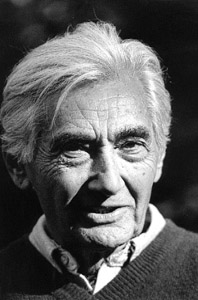
Social activist and historian Howard Zinn, who played an active role in the civil rights movement and wrote “A People’s History of the United States,” will be the event’s main speaker.
Zinn’s lecture is entitled “War and Social Justice,” and is set to take place in the Anderson Center this Saturday, Nov. 8, at 7 p.m.
“In the spirit of the conference, the talk will cast historical light on the role of students in past and present struggles and strategies for organizing and political action,” said Michael Quinn, public relations for the conference.
Carol Linskey, a doctorate student at Binghamton, is set to introduce Zinn on Saturday.
“Zinn wrote about history ‘from below’ … [We] thought he would be the right fit to help us publicize our conference and gain support,” she said.
According to Linskey, it takes courage to speak up and advocate for those who cannot do it for themselves, and to raise awareness that something may be counterproductive.
“Zinn has written about people like us — ordinary folks who want to make the world a better place to live in,” Linskey said.
Organizers have planned numerous events during the two-day conference.
“Workshops include presentations and discussions with people and groups ranging from Iraq Veterans Against the War, Mexico Solidarity Network, the Onondaga Nation [and] The Campaign to End Israeli Occupation of Palestine,” Quinn said.
Planning for the event started at the end of last semester.
The conference hopes to create a space for dialogue among people within and outside of the SUNY system, Linskey said. It is also aimed at organizing around specific social justice issues pertaining to the SUNY system.
The goals of the organizers do not end at the conference, collaborators said.
“I hope there are regional zones and annual conferences so campuses can mobilize,” said Imran Battla, an alumnus of BU who is helping to plan the conference.
“As I see it, this is a conference that aims to provide a forum for those who are often excluded from public discourse,” Bernbeck said.
Linskey said she and the organizers hope other SUNY universities and colleges continue the tradition of a social justice conference where participants can maintain and build contacts.
“It is all about building a network, raising awareness and trying to solve the problems that people face that might be invisible to an insulated college student like myself,” she said.
According to Quinn, the conference is more geared toward SUNY students, but everyone is invited. The sliding fee for the conference is $5 to $20, which includes musical performances, five meals, workshops and Zinn’s lecture.
For more information, including workshop and registration times, visit sunysocialjustice.org.