





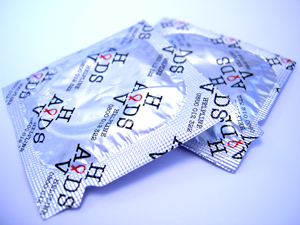
Readers beware: You are in the leading age group for sexually transmitted infection diagnoses and treatments.
Two-thirds of STIs in the United States hit people ages 15 to 24, said Bridget Saunders, associate director of health education at Binghamton University. There are 15 million diagnoses a year in the United States.
And one in 500 college students is believed to have HIV and/or AIDS.
Keep in mind, Saunders said, that sexual health statistics only represent people that have gotten tested, so the numbers could be deceiving. For instance, we don’t know how many people on our campus have STIs because testing isn’t mandatory.
But there are definitely students at BU who have tested positive for STIs and were treated and educated, according to Saunders.
She hears all kinds of reasons why students don’t get tested. Some young people, Saunders said, think they are invincible.
“The biggest misconception amongst students on campus is the mentality that it won’t happen to them,” she said. “Another misconception is that it only happens amongst homosexual men.”
The bottom line: Be safe and get tested.
“STIs don’t discriminate,” Saunders said. “Nationally, rates of STIs are on the rise.”
According to familydoctor.org, STIs are infections one can contract after having sex with an infected person.
“The only way to completely prevent contracting an STI is by not having sex,” according to the Web site.
The majority of HIV and STI cases, Saunders said, are transmitted by unprotected sex, primarily vaginal and anal.
“This should be of concern,” she said.
If a student has unprotected sex, they are at risk for HIV and STIs.
“This issue has fallen by the wayside,” Saunders said. “People think that because the issue is not in the media at the same level it has been in the past, that it’s not an issue anymore.”
According to the Southern Tier AIDS Project Web site, vaginal intercourse is the most common way HIV is transmitted in much of the world.
“If abstinence is not your preference, you need to think about what you can do to protect yourself,” Saunders said.
Some people say condoms aren’t effective, Saunders said. That’s not entirely true.
“I want to dispel that myth,” she said. “Condoms are effective if they are used consistently and correctly each time you have sex.”
It is better to use a single condom than two or more at the same time to prevent the spread of HIV and other illnesses.
“Friction is produced when two condoms are used,” according to the Southern Tier AIDS Project Web site. “Friction is a condom’s worst enemy.”
Some STIs, such as herpes, might not show symptoms right away.
“If you don’t have symptoms, you might not think to get yourself tested,” Saunders said.
Herpes can be contracted from skin-to-skin contact alone.
“Even if a student wears a condom, it can be passed on,” she said. “It can even be passed on from mouth-to-mouth or mouth-to-genital contact.”
HIV can be transmitted to a partner who’s receiving oral sex, according to the STAP Web site, but that’s considered “low risk.”
Having an exam for every new sex partner is a good idea, Saunders said.
“It’s good health care,” she said. “If you suspect you are having symptoms, don’t wait to have it checked out.”