





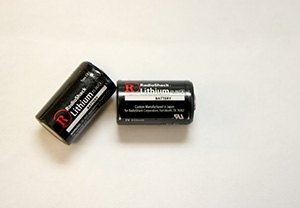
A professor at Binghamton University, along with researchers from Stony Brook University and Rutgers University, is in the midst of improving lithium-ion batteries — the chargeable, reusable and lightweight batteries commonly found in portable consumer electronics.
The University and Professor M. Stanley Whittingham, also an associate director of the Northeastern Chemical Energy Storage Center (NOCESC), received funding from the Department of Energy this past summer.
NOCESC captivates the interests of scholars such as Whittingham and a selection of graduate students for their goal to surpass scientific barriers in order to improve lithium-ion batteries. The project is focused on storing more energy while assuring the batteries are safe and lifetime affordable.
Whittingham, director of the Institute for Materials Research at Binghamton University, started working with lithium batteries almost 40 years ago for a project to develop hybrid electric vehicles during the last gas crisis in the 1970s. From this project, the technological world advanced to using lithium-ion batteries in order to power devices such as computers, cell phones and power tools.
According to Whittingham, the major goal for this project is to understand how materials react in batteries, and design batteries that are safe and cheap enough for use in large applications such as solar storage and plug-in hybrid electric vehicles (PHEV).
The next generation of lithium-ion batteries will have to be larger and have to last longer, he said. “They will allow you to drive 40 miles on the battery itself.”
If Whittingham’s prediction is correct, we could be seeing PHEVs on the road as soon as late 2010.
Whittingham isn’t the only one at BU involved in this research project. Several undergraduate students, as well as about 10 graduate students working toward their Ph.D. degrees, are also associated with the research.
Natalya Chernova, research associate at the Institute for Materials Research at BU, is also working with Whittingham on the lithium-ion batteries. She joined this project for the opportunity to work on the fundamental problems of battery materials, in collaboration with the best experts, using the most advanced experimental and theoretical techniques.
“Being part of such a big project is always beneficial for the University,” Chernova said. “We will be able to attract more students, get exciting results, get more funding and so on.”