


“Can you pass me the schlond poofa?” my dad yells from the roof.
No, we don’t live in “Barbie: Life in the Dreamhouse.” In my family, “schlond poofa” refers to some of the tools my dad uses to fix things around the house. Sometimes, when he takes on a project, he realizes that he needs a specific tool that he only knows the Russian name for. He usually shouts the Russian name to my Irish mom, who doesn’t speak any Russian. It happens so frequently that we started calling these tools “schlond poofas” to tease him.
“Schlond poofa” is not the only made-up word we use in my house. We have always called my brother “Scutty,” a play on scut — the Irish slang for rascal — and we started calling the people who blow leaves on our street “zhoo zhoos” when my brother, as a toddler, imitated the sound the leaf blowers made outside our house.
However, this isn’t unique to my family — it’s called “familect.” Nitsuh Abebe writes in his article “Every Family Has Its Own Private Language. What Does That Tell Us About Ourselves?” that familect is the word linguists commonly use to describe this unique shorthand used within family units. Familects can be a tool for effective, faster communication, but they are also a testament to the depth of human connection. Each family’s personalized vocabulary reflects their values, inside jokes and shared experiences. Mine reflects our multicultural household: My mom immigrated from Ireland and my dad from Russia, so words from both of their cultures have made their way into our shared vocabulary.
Familects are not strictly used in family units. My closest friends and I have developed mini lexicons based on shared experiences that only we understand. For instance, each time one of my friends and I say the same thing at the same time, we race to say “touch red, touch blue, touch me, touch you, touch the bottom of my shoe” first, and whoever says it first owes the other one a Big Kat, the larger version of a regular Kit Kat (and we keep a tally of how many we owe each other).
Two of my friends and I also always sing “Headlines” by Drake and get excited every time it comes on when we’re in public because we studied the lyrics intensely when we secured tickets to his concert. With another friend, we have a code of emojis we use to refer to people or convey certain emotions. For instance, whenever we misspell a word, we send a red phone emoji because the co-host of “The Basement Yard,” a podcast we both love, slams a red phone that hangs on the wall whenever he says a word wrong.
While working on this article, I asked some friends about the words that they use with their families. One friend told me that after hearing a Formula One announcer saying “oooh, I don’t know” in a high-pitched voice, her family started saying it when they didn’t know the answer to something. She also shared that my family became the source of one of her family’s phrases. After my mom jokingly said “stop hounding me” to me in front of her, the phrase caught on with her family, and they now say it all the time.
Another friend told me that instead of saying “zia,” Italian for “aunt,” her family says “titsi” because they always grew up saying it that way. She also told me her family calls her “Beh Beh” because of how her baby cousin mispronounced her name.
What resonated with me most as I surveyed my friends was that everyone could tell me exactly where their family-specific vocabulary came from. This silly shorthand was almost always born from fond memories.
Since coming to college, I have developed a “college-lect.” New words have entered my vocabulary that I never used to use. It feels like the more I settle into this new experience, the more my vocabulary shifts to accommodate it. Now, when I go home, I have to make a conscious effort not to say phrases that my friends back home don’t understand.
We express ourselves through our speech, and one of the most influential aspects of our lives is our community. To me, the most obvious sign of a close connection with someone is that we start speaking in similar ways. I think we should all embrace that.
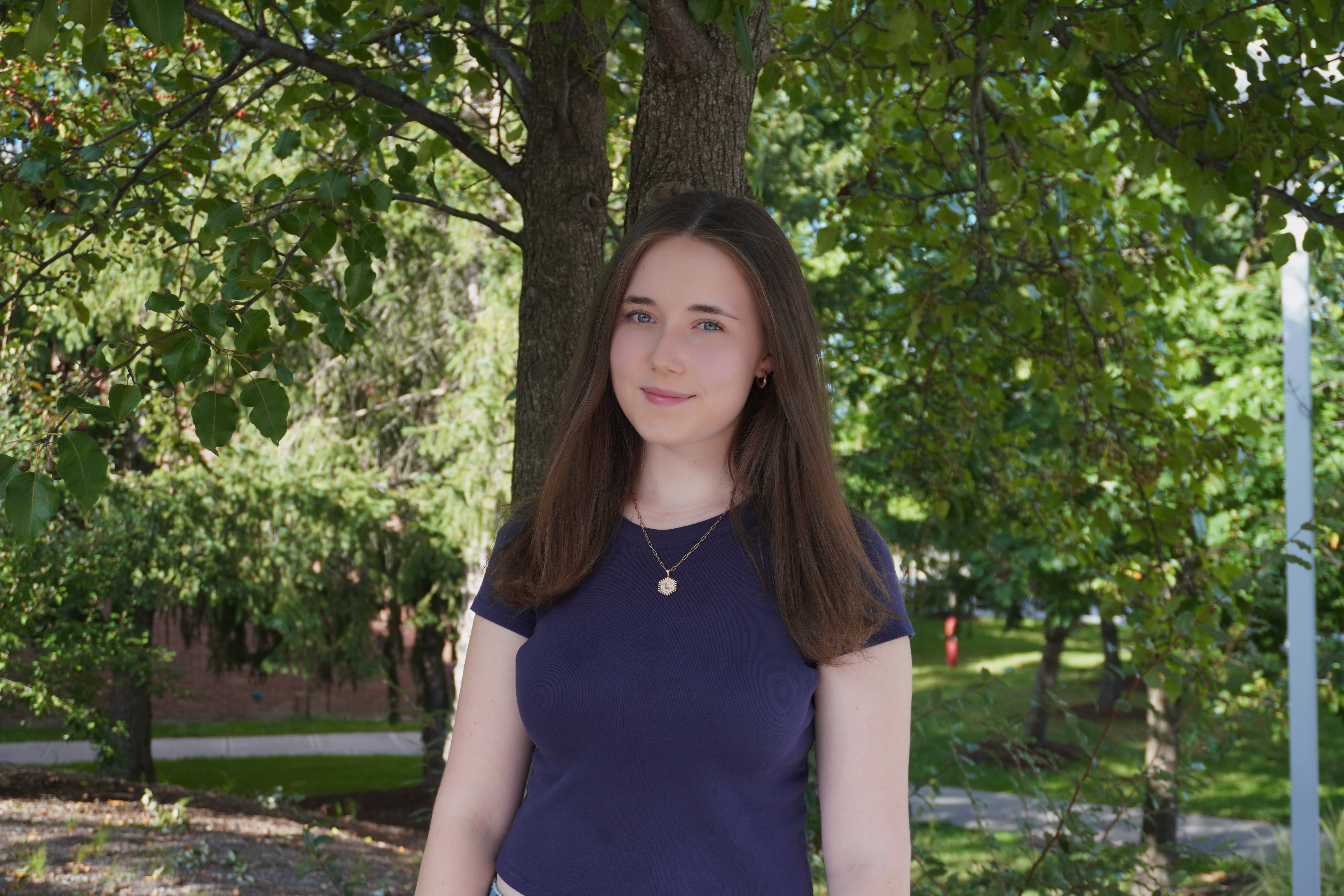
Lydia Krasnikov is a freshman majoring in psychology.
Views expressed in the opinions pages represent the opinions of the columnists. The only piece that represents the view of the Pipe Dream Editorial Board is the Staff Editorial.