





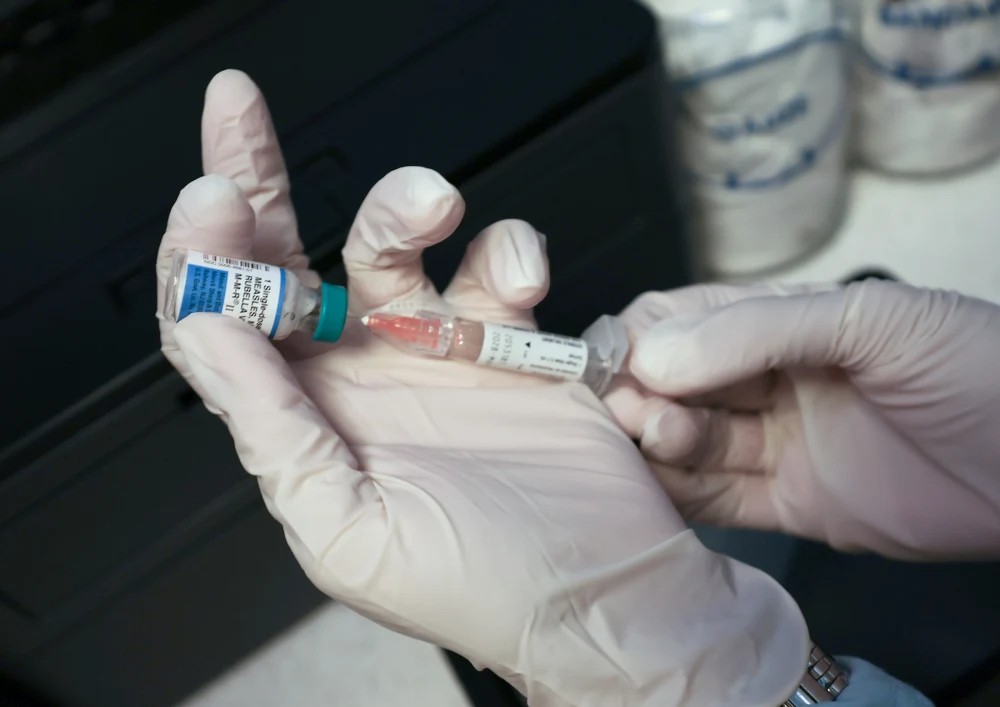
As of Sunday, Aug. 30, there are 25 lab-confirmed cases of measles in Upstate New York.
According to Dr. Lazarus Gehring, medical director of the Broome County Health Department, the Health Department is aware of many additional cases in surrounding counties that are not yet confirmed.
In New York, there are 31 confirmed cases of measles, six of them in New York City. There are currently zero official measles-related deaths in New York, but there was one official death in Lancaster, Pennsylvania.
In 2000, measles was declared eliminated in the United States, following a period of more than 12 months with no continuous local transmission of the disease. However, in 2025 there were 48 outbreaks reported, and in 2026 there have been 37 new outbreaks reported as of Aug. 30.
Robert F. Kennedy Jr., the secretary of the U.S. Department of Health and Human Services, claimed that the measles deaths in Pennsylvania were “fabricated” in an X post and has previously praised Amish communities in Lancaster County for not vaccinating their children, claiming that the best cure for measles is “chicken soup and vitamin A.”
Kennedy Jr. also held a press conference in April where he promised to address the cause of autism in the United States, which he called an “epidemic.” He has repeatedly linked vaccines to autism, although research on the topic suggests that there is no causal relationship between the two. Kennedy Jr. previously stated that “people should get the measles vaccine” in his first network television interview since becoming health secretary in 2025.
Since Jan. 1, 2025, 25 percent of measles cases in the United States have been in individuals aged 18 or older. In 1989, a measles outbreak affected 21 college and high school campuses across New York, leading New York to become the first state to adopt a two-dose schedule for measles immunization.
As of Friday, Aug. 28, there are no confirmed cases of measles in Broome County. However, there are confirmed cases in Tioga, Cortland and Chenango counties, all of which border Broome County.
Measles is a uniquely contagious virus — a single infected individual can transmit it to an average of 12 to 18 people in a susceptible population. Nine out of 10 unvaccinated individuals who come into contact with an infected individual will become infected. For comparison, someone infected with COVID transmits it to an average of two people. Measles spreads through aerosolized particles when a person coughs or sneezes, and can stay in the air for two hours after a person leaves the space.
To interrupt transmission of the measles virus in the United States, roughly 95 percent of the population would have to be vaccinated on a two-dose MMR vaccination schedule. However, a percentage of the population cannot be vaccinated, including children under six months of age and immunocompromised individuals.
Symptoms of measles have a delayed onset of seven to 14 days after contact with the virus. The first symptoms include a high fever that may spike to above 104 degrees Fahrenheit, runny nose, cough and red, watery eyes. Two to three days after these symptoms appear, tiny white spots known as Koplik spots may appear on the inside of the mouth. Three to five days after the symptoms begin, the measles rash will appear. The rash starts at the hairline with flat red spots, which then spread downward to the neck, torso, arms, legs and feet.
Patients who contract measles are recommended to call their physician first to minimize the risk of exposure. Unvaccinated patients who contract the disease should receive the MMR vaccine within 72 hours to provide some protection against recent exposure.
“What we do has import beyond our borders,” Gehring told News 34. “So, it’s simply important now to be on guard and to be prepared. We don’t need to learn the measles lesson again. There’s no reason to learn it again.”